





Sclerotinia stem rot, a.k.a. white mold, is caused by the fungus Sclerotinia sclerotiorum and can be a devastating foliar disease of soybean in Michigan and the Midwest. The fungal spores infect soybean flowers, and the disease develops in the plant, eventually forming white mycelial mats on the stem with dark sclerotia -- overwintering structures. White mold sclerotia can survive for up to 10 years when buried in the soil. The sclerotia will produce apothecia -- mushrooms -- that will produce spores in subsequent years. White mold outbreaks tend to be less impactful when sclerotia are left on the soil surface within the rotation.
Manage white mold with biologicals
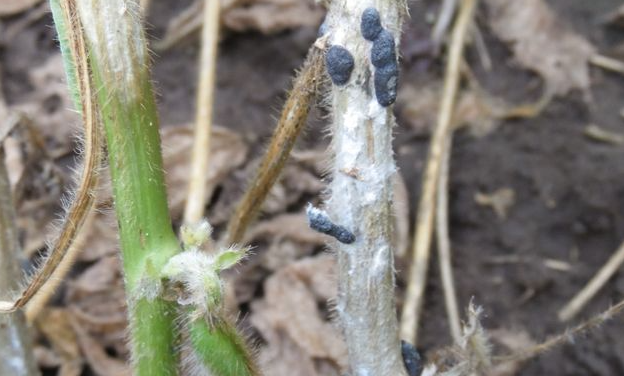
White mold growth is shown on soybean stems with white mycelia and black sclerotia.
Most Popular

Soybean seed diseases are showing up across Iowa, which isn’t surprising considering the wet weather experienced in parts of the state during …

Key Takeaways

The St. Louis River flows wide and swift as it meanders into Lake Superior. The river marks the divide between Wisconsin and Minnesota; 200 ye…

MARENGO, Wis. – Some treat the land as a commodity. They take every bit of value that can be squeezed out, looking for only short-term profit …

From 2014 to 2023, the U.S. Department of Agriculture’s Environmental Quality Incentives Program invested a total of $133.7 million in no-till…
