





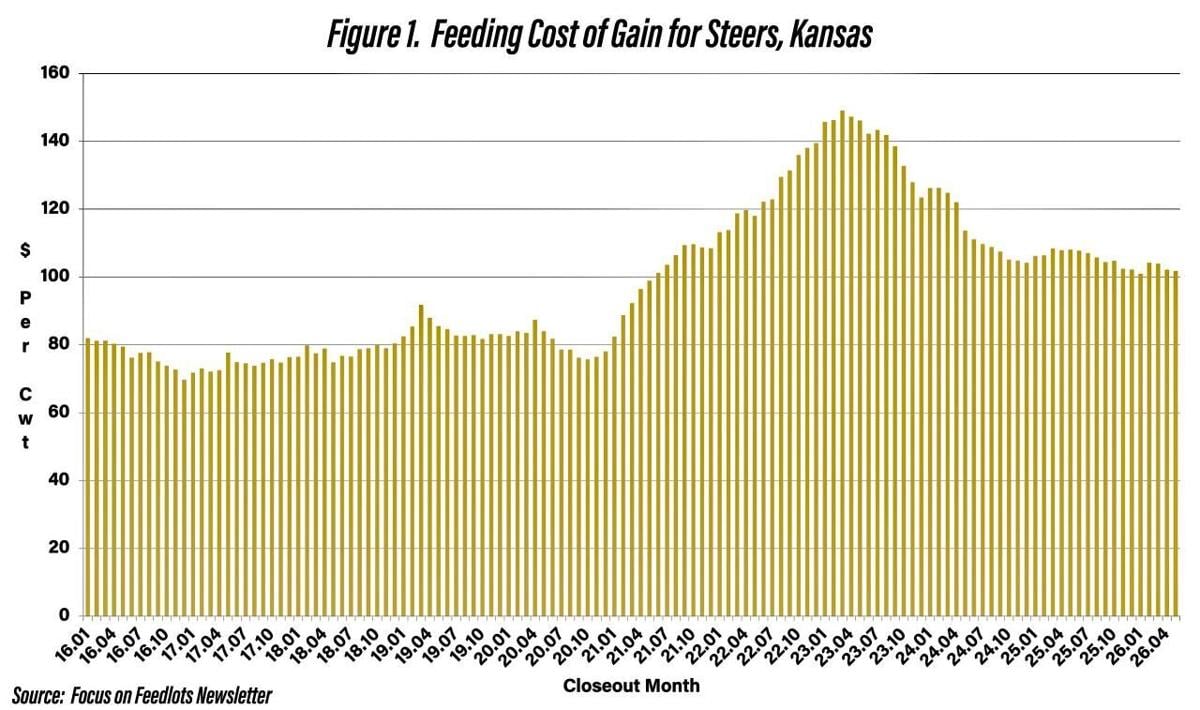
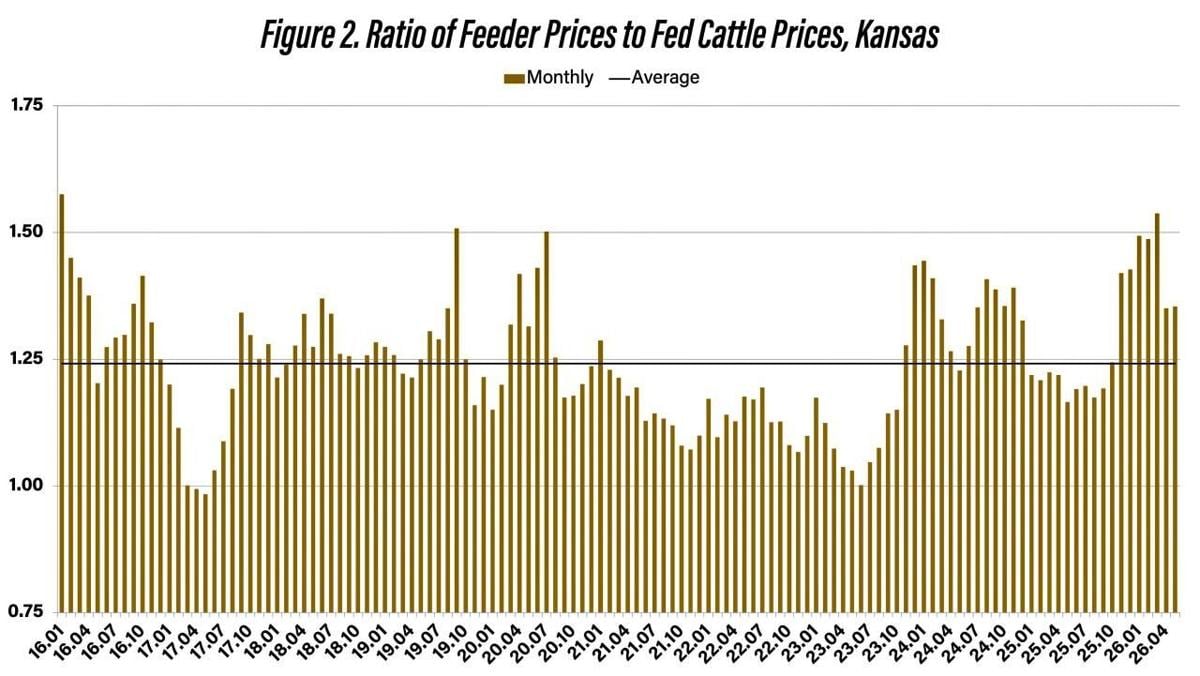
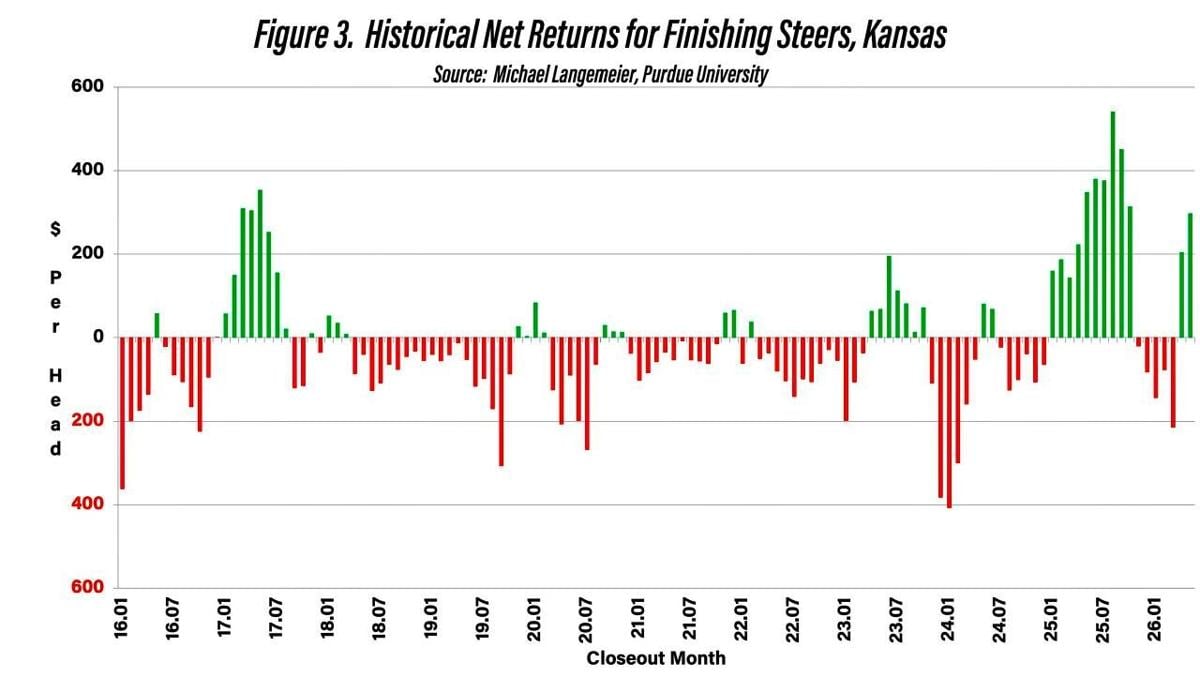
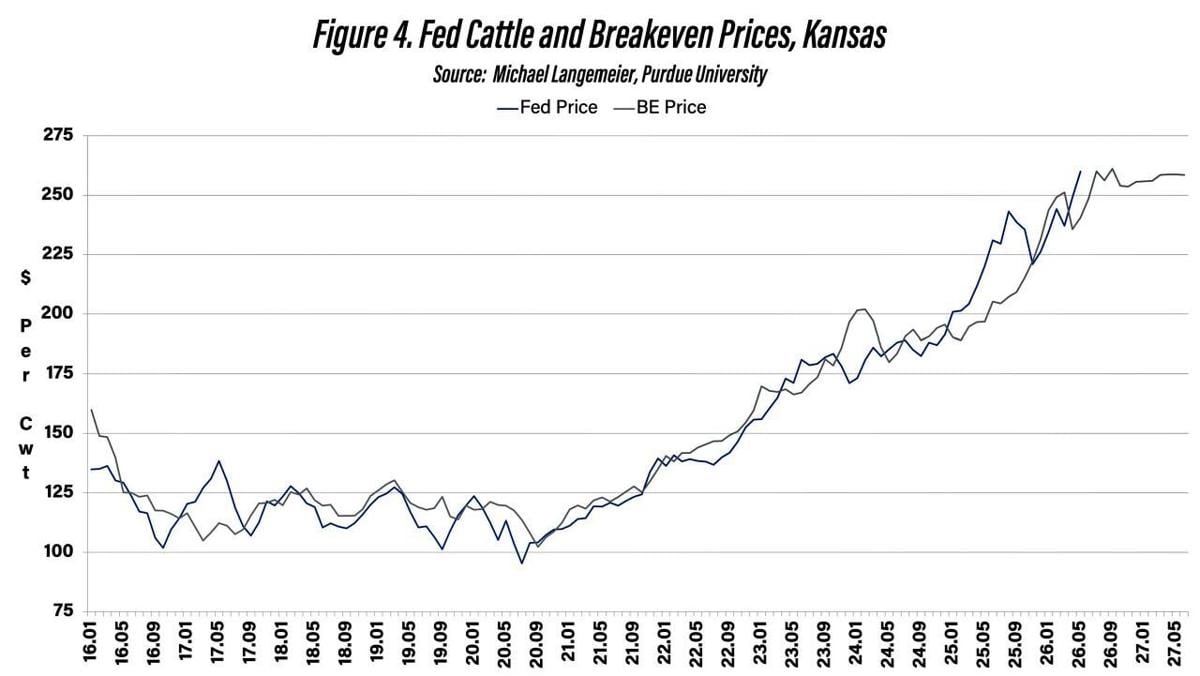
Cattle finishing is a tight-margin business where profitability relies on feeder-cattle prices relative to fed-cattle prices and feed costs. That means that relatively good fed-cattle prices, like we’re experiencing in 2026, or relatively reduced feed costs do not necessarily translate into strong net returns. This article examines trends in feeding cost of gain, breakeven prices and net returns for the past 10 years. Several data sources were used to compute net returns. Average daily gain, feed conversion, days on feed, in weight, out weight and feeding cost of gain were obtained from monthly issues of the Focus on Feedlots newsletter. Futures prices for corn and seasonal feed-conversion rates were used to project feeding cost of gain for the next several months. Net returns were computed using feeding cost of gain from monthly issues of the Focus on Feedlots newsletter, fed-cattle prices and feeder-cattle prices reported by the Livestock Marketing Information Center, and interest rates from the Federal Reserve Bank of Kansas City.
People are also reading…

Michael Langemeier

Michael Langemeier is the director of the Purdue University-Center for Commercial Agriculture and an agricultural economist with Purdue University. Visit ag.purdue.edu for more information.
