





Purdue University scientists have discovered a key mechanism that regulates how plants develop chloroplasts, essential structures responsible for the photosynthesis that sustains life on Earth by producing oxygen and food.
Discovery reveals photosynthesis secret
1 of 2

A wild type and three types of Arabidopsis seedlings generated in controlled experiments are pictured in magnification. The far-left seedlings are wild-type with native levels of TOC33. Second from left are TOC33 mutant seedlings, which lack TOC33. The third group are TOC33 mutants complemented with a wild-type version of TOC 33 -- containing similar levels of TOC33 as the wild-type seedlings. The seedlings at far are also TOC33 mutants but complemented with a mutant version of TOC33, in which serine 206 is altered, preventing phosphorylation and reducing protein stability.
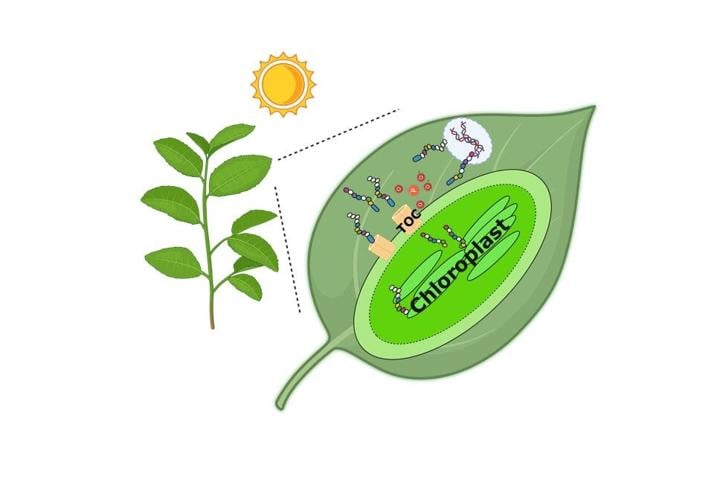
The molecular machinery of the chloroplast regulates how efficiently plants convert sunlight into energy through photosynthesis. Purdue University scientists have discovered a new mechanism that controls plant chloroplast development. To properly function, chloroplasts must import chloroplast-destined proteins through a gateway called the TOC complex. The Yoon lab found that a chemical modification called phosphorylation -- addition of PO₄³⁻ -- to those gateway proteins enhances that process by extending their lifespan, allowing more proteins to be efficiently imported into the chloroplasts.
Most Popular

An autonomous experimentation platform at the Great Lakes Bioenergy Research Center is poised to accelerate discoveries that will harness the …