






In calf rearing, the difference between health and disease is very often just a slight tip of a delicate balance that weighs calf and environmental factors with the bacterial, viral or parasitic agents to which the calf will be exposed. The infectious agents that are capable of causing scours, pneumonia or septicemia in young calves are ubiquitous. Calves will inevitably be exposed, several may become infected but only a few should catch the disease if the relevant risk factors are minimized and the sources of infection are diluted or by-passed.
People are also reading…
- Cattle-station cookbook helps disaster
- Propagating the prairie: Couple creates business out of raising native plants
- Wisconsin popular destination for turkeys
- Back to grass: Focused on conservation, Midwest farmers return cropland to prairie state
- How Mitchell-based Trail King powers heavy haul across North America
- Iowa pork producer grows with focus on efficiency
- From the ground up: Jade Jandel builds his cattle herd on functionality, longevity
- Speaking for agriculture: College student finds her calling an ag advocacy
- Missouri legislature extends ag tax credits
- 2026 Wisconsin Dairy Breakfasts
- Long time coming: Cattle to Canada, rain on the ground and remodel progress
- Back Home
- Families invited to experience dairy farming during South Dakota Dairy Fest
- Buyer beware: Problem cows, accessories sold separately
- Planting going strong, mid-May windstorm blows topsoil into ditches
Identification sick calves early
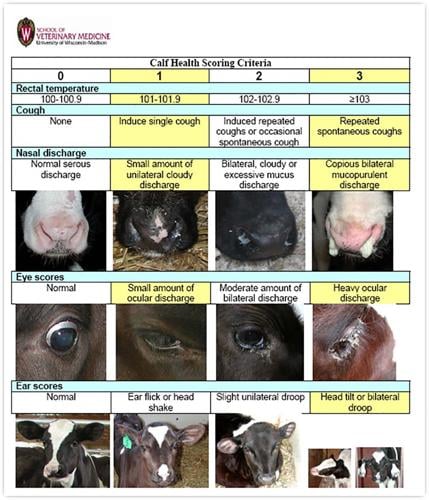
Successful treatment protocols for diarrhea and pneumonia depend on early identification of sick calves. These criteria can be used to trigger a treatment intervention:
• Early morning rectal temperature, taken at the same time every day for the first week of life or identified risk period, that exceeds 103 degrees F for two successive mornings or is accompanied by slow, reduced or no milk intake that feeding.
• Slow, reduced or no milk/milk replacer intake
• Watery and/or bloody diarrhea
• Cough, nasal discharge or labored breathing
• Head tilt, umbilical or joint swelling
• Weakness, inability or reluctance to rise
Identify the source
If the source of infection can be identified, it can be diluted or by-passed, using one of these strategies:
• Ventilation
• Bedding changes
• Sunlight
• Freezing
• Disinfectants
• Time between occupancy
• Space between occupants
• Change calving areas
• Change location of hutches or calf housing
• Eliminate overcrowding
Be the first to know
Get local news delivered to your inbox!


