






Jim Faulstich uses regenerative grazing practices on his Daybreak Ranch near Highmore, SD, to improve rangeland biodiversity, promote soil health, provide wildlife habitat, and increase forage production. He has a grazing plan already established for years when drought conditions become too severe.
People are also reading…

This fenceline comparison highlights the advantages of regenerative grazing practices. The pasture on the left side of the fence is grazed rotationally – a system of grazing in which smaller portions of a pasture are grazed for a shorter period and then allowed to rest before being grazed again. The pasture on the left was grazed for just 12 days and then allowed to rest, while the pasture on the right was continuously grazed. The rotationally grazed pasture has good wildlife cover, noticeably taller grass, and no weed pressure throughout the growing season. Forage production is lower in the continuously grazed pasture.
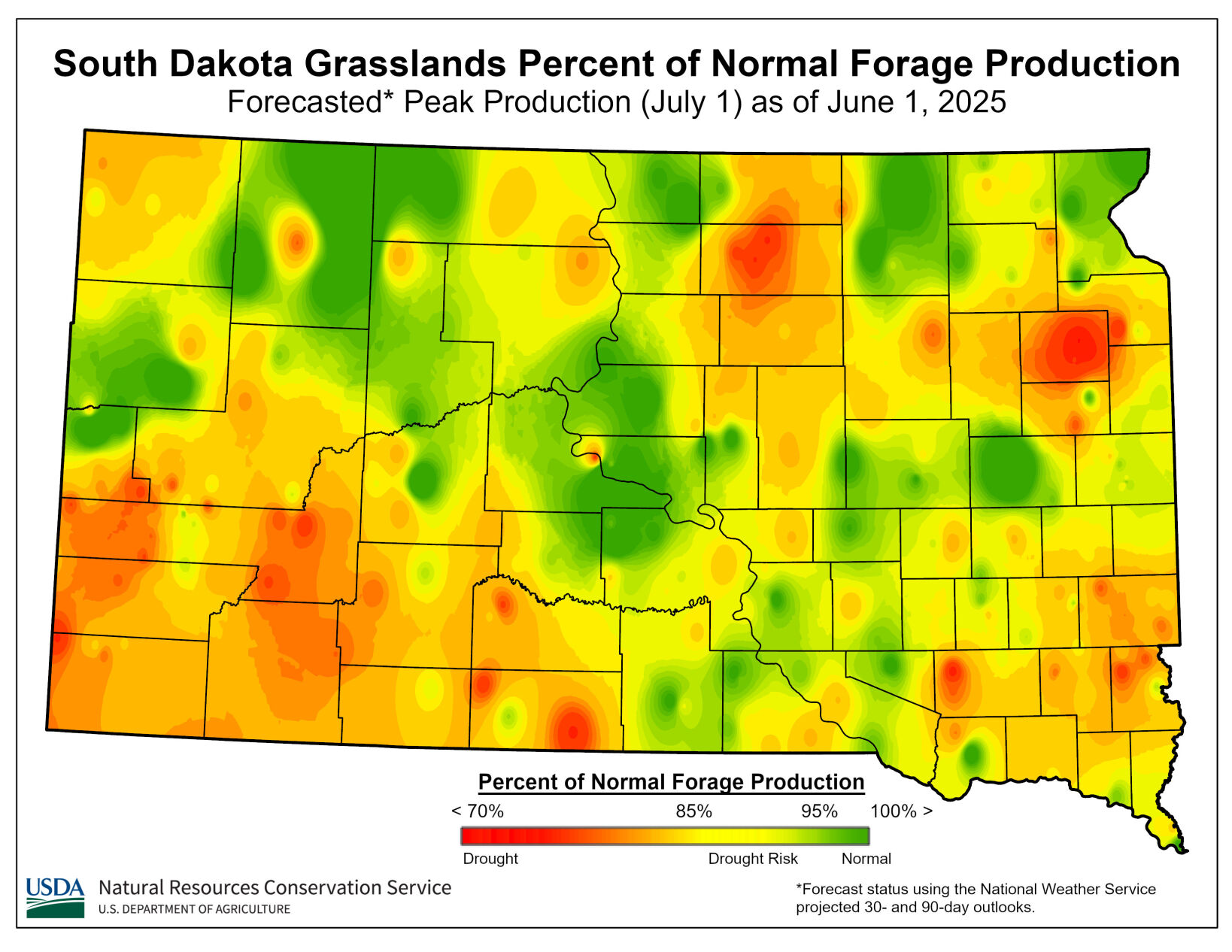
Much of South Dakota is expected to have lower-than-normal forage production in 2025.


