




Whether you remember him as “Dan the tree man” visiting your elementary class or listened to him passionately advocating for no till and cover crops at a Natural Resource Conservation Service (NRCS) meeting, the late Dan Gillespie had a heart for teaching.

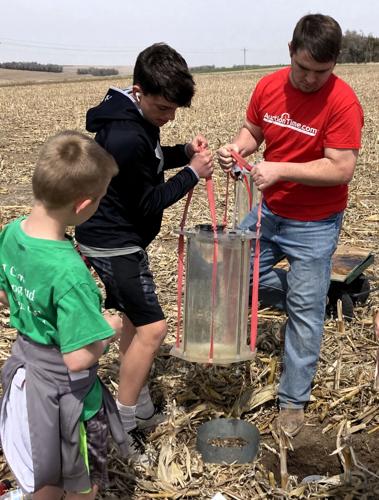
The Battle Creek FFA Chapter conducted on-farm studies about water infiltration, as well as nitrogen application rates and economics. Agricultural instructor and FFA advisor Billy O’Brien, right, helps Battle Creek FFA member Eli Anderson lower the Cornell Sprinkle Infiltrator into the ground before testing.
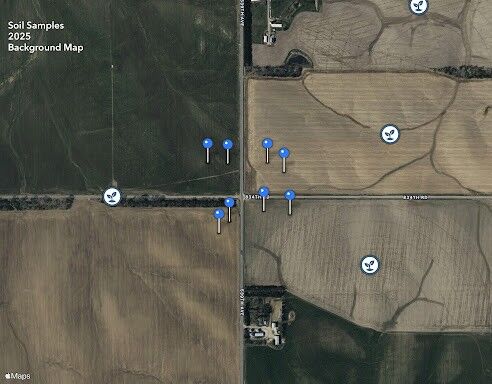
Students were given the unique opportunity to evaluate the long-term effects of four different farming practices within 200 yards in fields south of Meadow Grove, Neb. The field in the top left has traditionally been conventionally tillage, the bottom left 30-plus years no till and 15-plus years cover crops, the bottom right 30-plus years no till and the top right five years of alfalfa production.

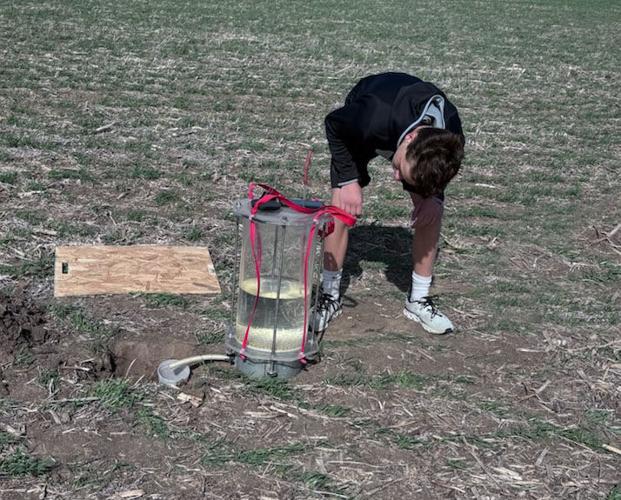
Battle Creek FFA student Eli Anderson monitors the Cornell Sprinkle Infiltrator, used to research water runoff and infiltration rates in four fields in Madison County, Neb.
People are also reading…

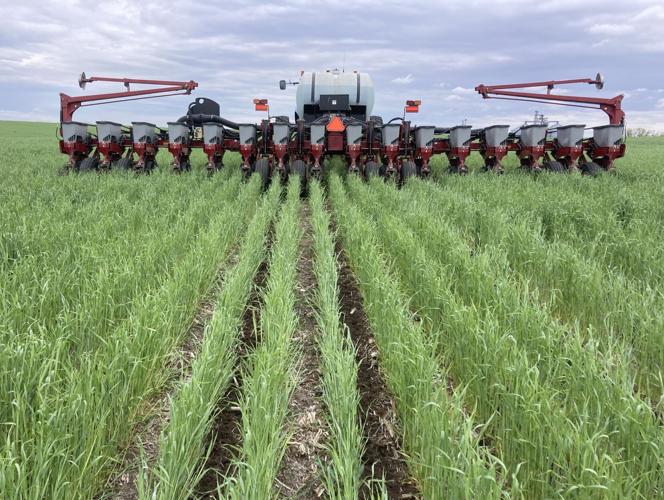
Cover crops were shown to significantly improve water infiltration rates.
Reporter Kristen Sindelar has loved agriculture her entire life, coming from a diversified farm with three generations working side-by-side in northeastern Nebraska. Reach her at Kristen.Sindelar@midwestmessenger.com.

Kristen Sindelar
Agriculture Reporter