




Across the Midwest, row crop producers face a familiar set of pressures: rising input costs, declining soil organic matter, nutrient loss, and increasing scrutiny over environmental impact.
While precision ag and new genetics continue to evolve, a quieter revolution is gaining traction beneath the soil surface; one rooted not in chemistry, but in microbiology.
Bokashi, a fermentation-based soil amendment system, is emerging as a compelling tool with the potential to reshape how producers manage fertility, residue, and soil health.
Veterans, Farming, Fish and Food (VF3), is a veteran-owned company specializing in bokashi and the impact it can make on farming operations.
Modern row crop systems have long relied on synthetic fertilizers to drive yield. While effective in the short term, these inputs can suppress soil biology over time, reducing microbial diversity and organic matter. Bokashi flips that paradigm by prioritizing biology first.
With sky high input costs, perhaps the most compelling case for bokashi lies in its potential to reduce annual costs. Early adopters report the ability to cut synthetic fertilizer use by 25% or more while maintaining or even increasing yields, said VF3 engineer Clarence “Cab” Baber.
The mechanism is straightforward: healthier microbial communities improve nutrient cycling, making existing soil nutrients more available to plants.
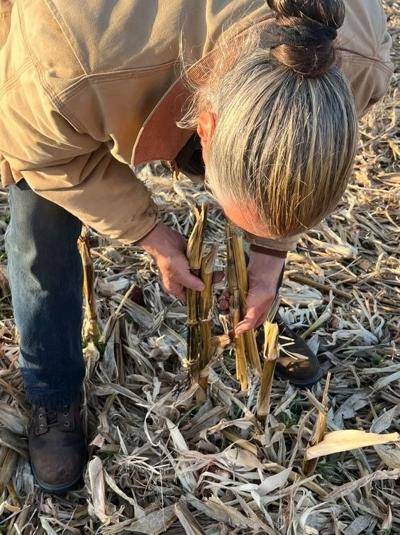
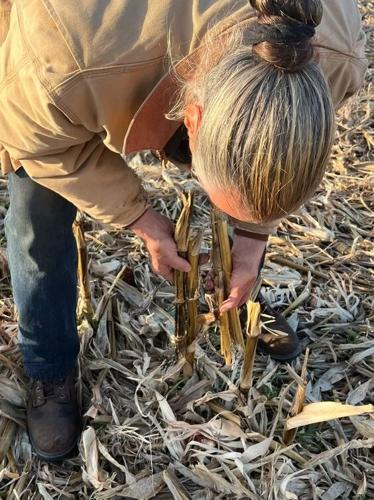
In one Iowa-based trial, corn stover began visibly degrading within 24 hours of application; an astonishing contrast to the typical one- to two-year breakdown timeline seen in conventional systems, said Baber.
Faster residue decomposition not only improves soil structure but also enhances nutrient availability for subsequent crops.
Equally important is the impact on soil organic matter. Tillage and chemical-intensive systems can reduce organic matter by 6–10% annually, Baber said. In contrast, integrating microbial systems like bokashi, especially alongside reduced tillage, can rebuild soil, with some advocates suggesting the potential to “grow” measurable topsoil over time.
“You can actually grow an inch of dirt a year in that field if you stop tilling and use microorganisms,” Baber said. That means not only can the next generation grow food in that soil, but several generations to come have more food and farming security.
For producers in the Corn Belt, where soil loss remains a critical issue, this represents both an agronomic and economic opportunity.
At its core, bokashi is the product of anaerobic fermentation using “effective microorganisms” (EM), a consortium of beneficial bacteria, yeasts, and fungi originally developed by Japanese scientist Dr. Teruo Higa.
When applied to fields, EM inoculants stimulate microbial activity that accelerates residue breakdown, cycling carbon and nutrients back into the soil.
Rather than decomposing organic matter through traditional aerobic composting, bokashi ferments it, preserving nutrients in more plant-available forms while accelerating biological activity in the soil.
This distinction matters. Composting, while valuable, is slow, labor-intensive, and often results in nutrient loss through heat and gas release. Bokashi, by contrast, can convert organic waste into a high-quality soil amendment in as little as two weeks, with significantly higher nutrient availability; reported as high as 70% compared to roughly 20% in conventional compost .
For Midwest producers managing large volumes of residue and manure, that speed and efficiency could be transformative.
A biological approach to soil health
Modern row crop systems have long relied on synthetic fertilizers to drive yield. While effective in the short term, these inputs can suppress soil biology over time, reducing microbial diversity and organic matter. Bokashi flips that paradigm by prioritizing biology first.
Input reduction without yield sacrifice
Additionally, certain EM strains can fix atmospheric nitrogen or stabilize nutrients in forms less prone to leaching. This could be particularly valuable in the Midwest, where nitrogen loss through tile drainage contributes to both economic inefficiency and environmental challenges like hypoxia in the Gulf of Mexico.
Water efficiency is another area of interest. Improved soil structure and microbial activity enhance water retention, with some field observations suggesting significant reductions in irrigation needs. While irrigation is less common in rainfed Midwest systems, improved water-holding capacity can buffer crops against increasingly erratic rainfall patterns.
Practical applications on row crop operations
For large-scale producers, adoption must be practical. Bokashi systems can be integrated in several ways:
- Residue management: Applying EM solutions post-harvest to accelerate breakdown of corn and soybean residue
- Manure treatment: Fermenting livestock waste to stabilize nutrients, reduce odor, and improve field safety
- Soil inoculation: Incorporating microbial sprays into existing application passes
- On-farm production: Using local organic materials—such as crop byproducts or even brewery waste—to produce bokashi at scale
Producers do not need to convert entire operations overnight. Even small-scale trials such as 1% to 10% of production acreage can provide measurable comparisons in yield, soil health, and input costs.
A living system leading to more yields
Ultimately, bokashi represents more than a product—it reflects a shift in how producers think about soil. Instead of treating it as a medium to hold nutrients, it becomes a living system to be managed and supported.
For Midwest row crop producers navigating tight margins and increasing environmental pressures, that shift could prove critical. By rebuilding soil biology, reducing dependence on external inputs, and improving long-term resilience, bokashi offers a pathway toward more sustainable, and potentially more profitable, production systems.
For more information visit VF3.us.