




Farm safety efforts continue to make progress in terms of the statistics, although the work goes on finding the best ways to promote safety in the ever-changing ag sector.
Ellen Duysen serves as coordinator for the Central States Center for Agricultural Safety and Health. The center is headquartered in Omaha and serves several Midwestern states, and it is one of 12 national farm safety centers. She says one of the center’s major functions is conducting farm safety and health events across the Midwest, teaching best practices but also learning from local farm families how they have kept themselves safe on the farm.
Duysen says it is rewarding to see farm fatalities gradually declining over the last 20 years. She says the overall farm safety picture is improving.
“It’s an ongoing project, but there are some really great trends,” she says.
According to the U.S. National Institute of Occupational Safety and Health, the agriculture, forestry, fishing and hunting industry had a death rate of 20 deaths per 100,000 full-time workers in 2021, compared to a rate of 3.6 deaths per 100,000 workers for all U.S. industries. That year, 65% of deaths in that industry happened to workers 55 years of age and older.
Farm injuries can be underreported, but in 2020 there were 11,880 injuries in ag production that required days away from work.
Down trend
National Education Center for Agricultural Safety director Dan Neenan says agriculture has long been a dangerous industry, but safety efforts are making progress.
“Ag has been one of the leading industries for injuries and fatalities,” he says. “We are starting to see the numbers of fatalities decline.”
Neenan says in 2021, the most recent year with statistics available, 453 ag fatalities occurred. He says in the early 2000s that number was around 730 fatalities per year.
He attributes that progress to a number of things. In addition to farm safety education efforts, like National Farm Safety and Health Week Sept. 17-23, and farmers prioritizing safety, Neenan says the equipment itself has helped.
“The newer machinery is much safer than the older machinery,” he says. “Machinery guarding has come a long way. When guards first came out it was very obtrusive, so a lot of that got taken out of the way.”
Neenan says farm safety training for kids has been widespread for the last 25 years, and now those kids are farming full time with a different mindset.
“Those are the farmers of today,” he says.
Automated farm equipment could help make farm jobs safer, although Duysen says farmers and safety experts have to focus in on new issues with autonomous equipment. She says it is crucial for safety efforts to stay on top of the changing ag industry.
“With this autonomous technology, what are the new safety concerns?” Duysen says. “It’s looking at it and catching those before they become bigger issues.”
Kids on the farm
The safety of youth in agriculture remains a top priority. Duysen says that number has been stubbornly difficult to reduce, with a child dying in a farm accident on average every three days.
“The childhood deaths, that you can just put a number on that every year,” she says. “That we’ve got to fix. … We need to do a better job and find ways to keep those kids safe.”
People are also reading…
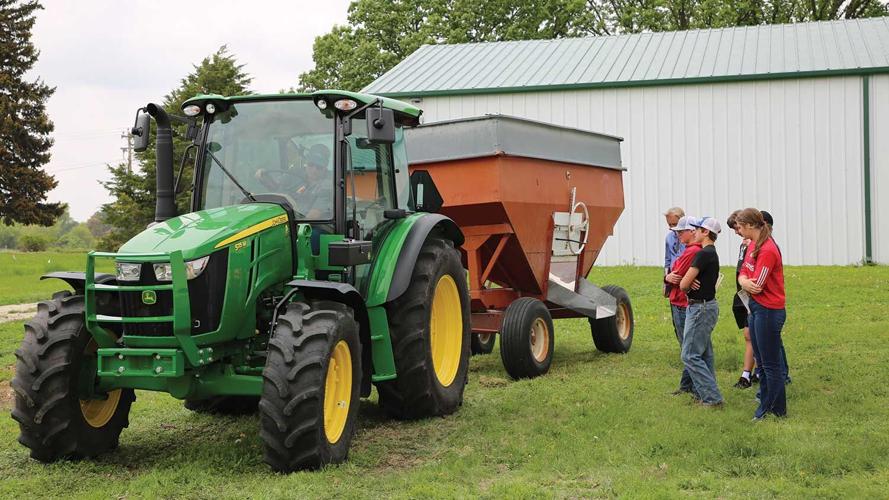
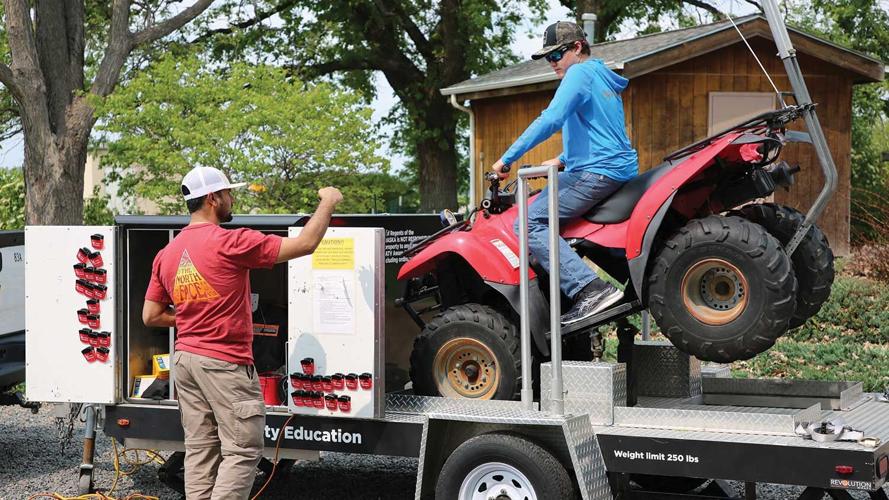
Duysen says the center and others have worked on youth farm safety, including widespread safety training efforts, encouraging kids to be aware of their surroundings and potential safety risks, and helping farm families determine age- and development-appropriate tasks for their kids.

Safety clinics help farm families determine age- and
development-appropriate tasks for their kids.
She says these efforts also include making farm safety a priority — something farm families talk about. They should take the time to check equipment and the environment where work will be taking place, identifying potential risk areas, before starting. Duysen says even a few seconds of thought about potential dangers and checking things can have a big payoff.
“What we always want to stress with (farm kids) is the importance of mindfulness,” Duysen says. “When you walk out the door in the morning, we want you to take a look around. Take 30 seconds to think about the hazards you’re going to encounter. It’s important to make these habits. Walk around vehicles and check them. When you do that every day, it becomes part of your culture.
“In agriculture, we like to talk about culture. I think we also need to be proud of our safety culture.”
Amy Rademaker is an ag safety expert with the Carle Center for Rural Health and Farm Safety in Illinois, and she has coordinated many youth ag safety days. She says working with kids is a good way to instill farm safety awareness and to spread the word.
“We feel there’s a better chance to change behavior in the youth space, and they go home and talk with their parents about it,” she says.
Rademaker also works with adult farmers, as well as EMTs and firefighters to help train for farm rescues.
She says she has seen improvements in youth farm fatality rates since she started her career in ag safety, but she says the whole industry has to be vigilant to keep making progress.
“We can’t become complacent,” she says.
Rademaker says she is always working to make sure the farm safety training is up to date with changing farm technology and practices.
“We constantly have to evolve,” she says.
Long-term health
Renee Anthony is director of the Great Plains Center for Agricultural Health, headquartered in Iowa City, another one of the 12 U.S. ag safety and health centers. She says farm safety efforts include working with equipment manufacturers to make machinery as easy as possible to get in and out, and to ride as smoothly as possible to avoid long-term health issues.
She says her center is working to collect data about things like when to replace tractor seats and air quality in buildings, so farmers can make more informed decisions.
“We want them to be able to make data-based decisions,” Anthony says.
She says it is encouraging to see farmers, especially younger farmers, seeming willing to talk and think about farm safety and health.
“I enjoy when a farmer says, ‘I have this concern,’ and we have solutions for it,” Anthony says.
National Farm Safety and Health Week is the longest- running Presidential theme week, with President Franklin D. Roosevelt signing the first proclamation in 1944, Neenan says.
Overall, Duysen says she is happy to be able to work with farm families and help them stay safe while doing what they love.
“It’s the most satisfying thing in the world, and I love working with these farmers,” Duysen says.