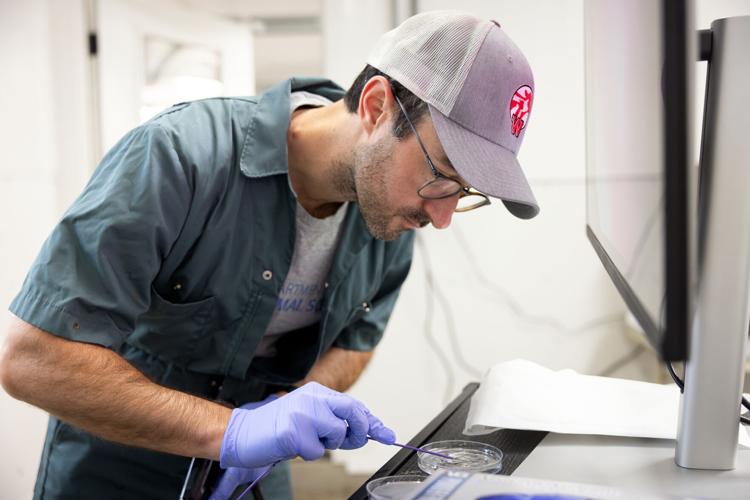
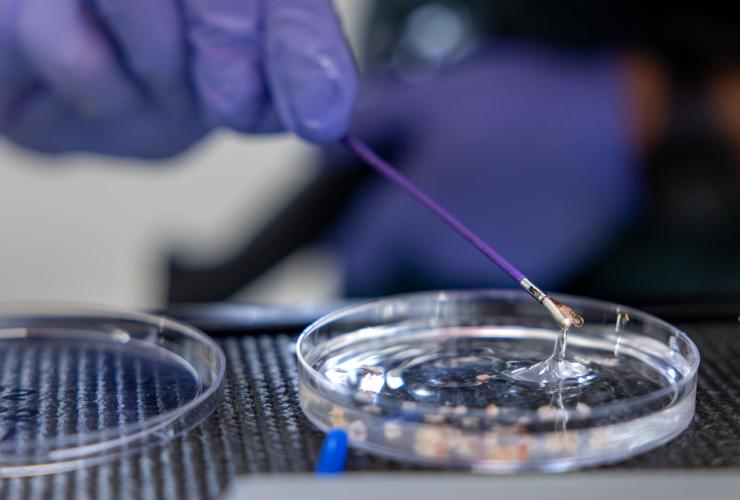
Lautaro Rostoll-Cangiano, assistant professor of animal and dairy sciences places colon tissue samples from a “beef-on-dairy” calf into a petri dish for a bovine immunology study at the UW-Arlington Agricultural Research Station beef unit in Arlington, Wis.
Michael P. King/UW
Lautaro Rostoll-Cangiano, assistant professor of animal and dairy sciences places colon tissue samples from a “beef-on-dairy” calf into a petri dish for a bovine immunology study.
Michael P. King/UW
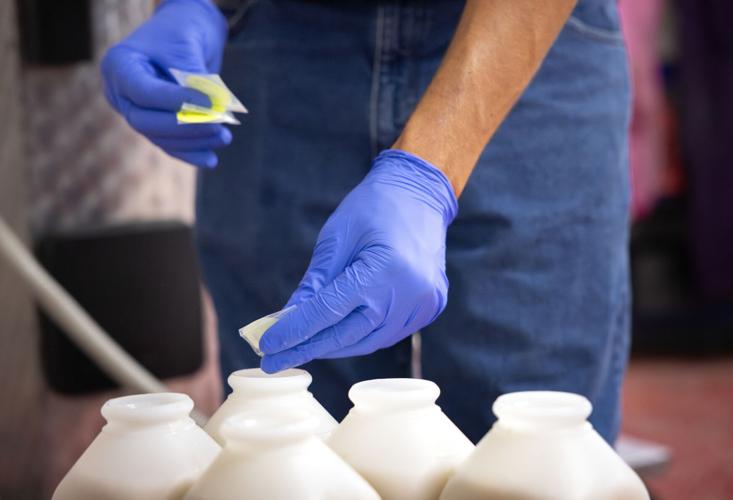
Caleb Karls, beef and sheep research farms supervisor, adds packets of powder to bottles of milk replacer for an early-morning feeding of “beef-on-dairy” calves at the UW-Arlington Agricultural Research Station. Some packets have placebo, and others have an experimental supplement as part of a nutritional and immunology study.
Michael P. King/UW
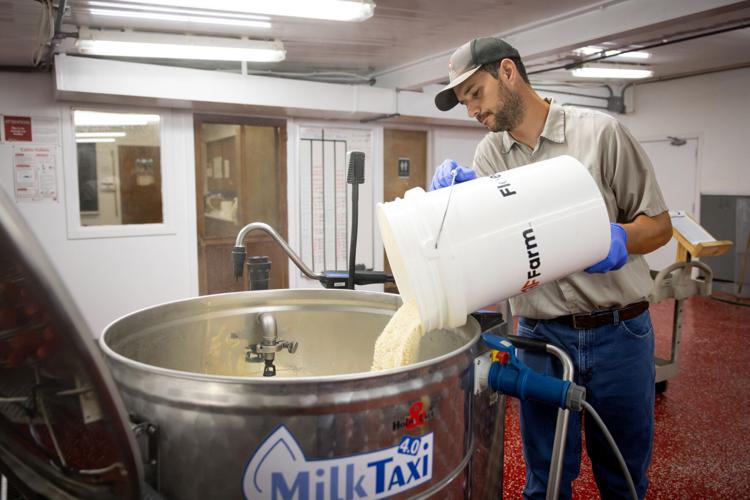
Caleb Karls, beef and sheep research farms supervisor, mixes milk replacer for an early-morning feeding of “beef-on-dairy” calves.
Michael P. King/UW
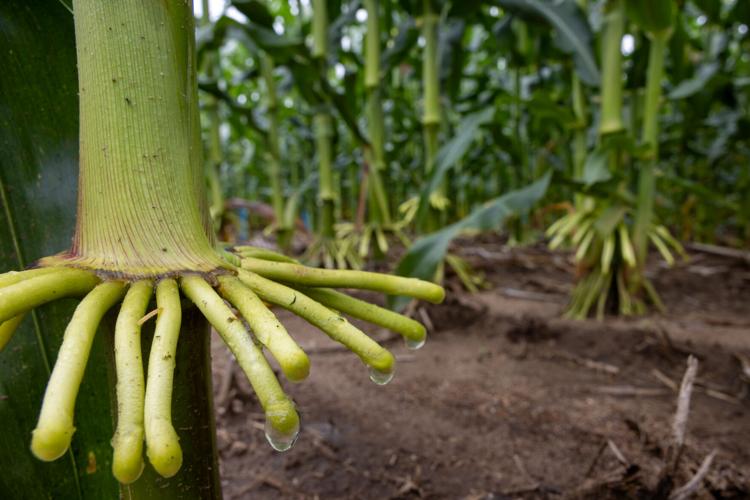
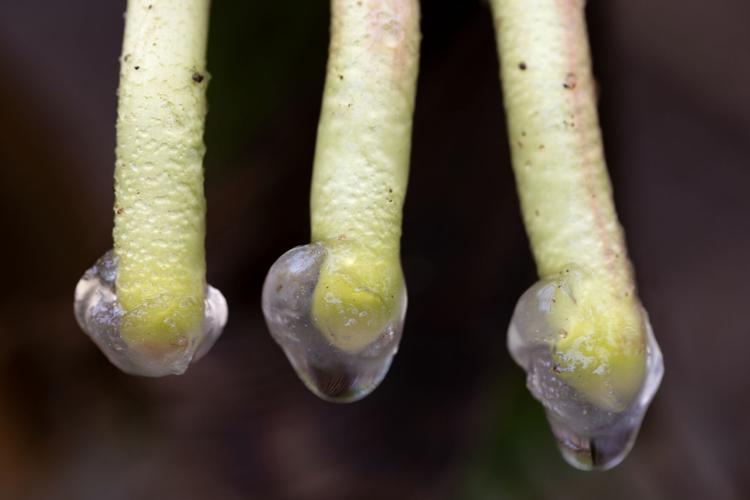
Mucilage is seen on the aerial roots of corn plants in a research field at the UW-Hancock Agricultural Research Station near Hancock, Wis. More than 150 corn hybrid varieties were inoculated with three beneficial bacteria. The study aims to evaluate the bacteria and plants’ ability to use atmospheric nitrogen, which could reduce the need for fertilizer applications.
Michael P. King/UW
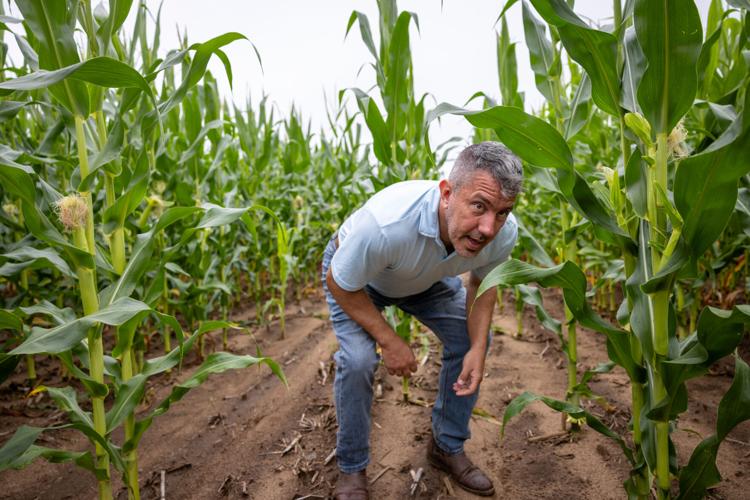
Rubens Diogo, a postdoctoral researcher in the Jean-Michel Ané Lab, crouches to inspect corn plants in a research field at the UW-Hancock Agricultural Research Station.
Michael P. King/UW
Mucilage is seen on the aerial roots of corn plants in a research field at the UW-Hancock Agricultural Research Station.
Michael P. King/UW
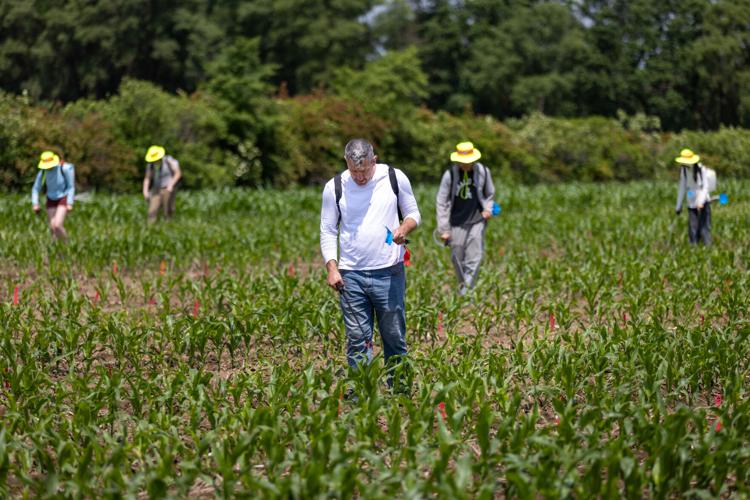
Rubens Diogo, center, a postdoctoral researcher in the Jean-Michel Ané Lab, along with graduate and undergraduate students, inoculate corn plants with a combination of beneficial bacteria in a field trial at the UW-Hancock Agricultural Research Station
Michael P. King/UW
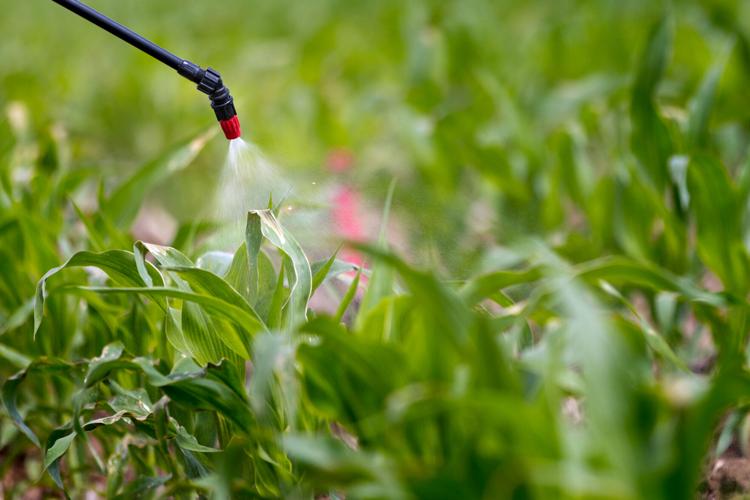
Eve Lazarski, an undergraduate student studying biology at the University of Wisconsin, sprays corn plants with a combination of beneficial bacteria in a field trial at the UW-Hancock Agricultural Research Station in Hancock, Wis.
Michael P. King/UW
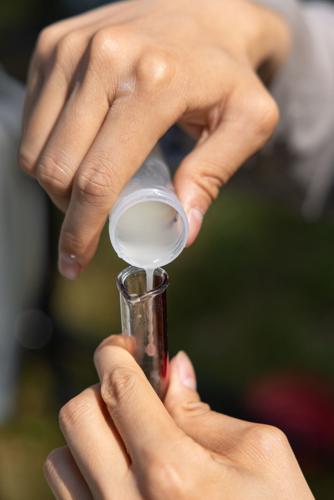
Graduate student Mingda Wu measures out a precise amount of a beneficial bacterium for mixing in a backpack sprayer at the UW-Hancock Agricultural Research Station.
Michael P. King/UW
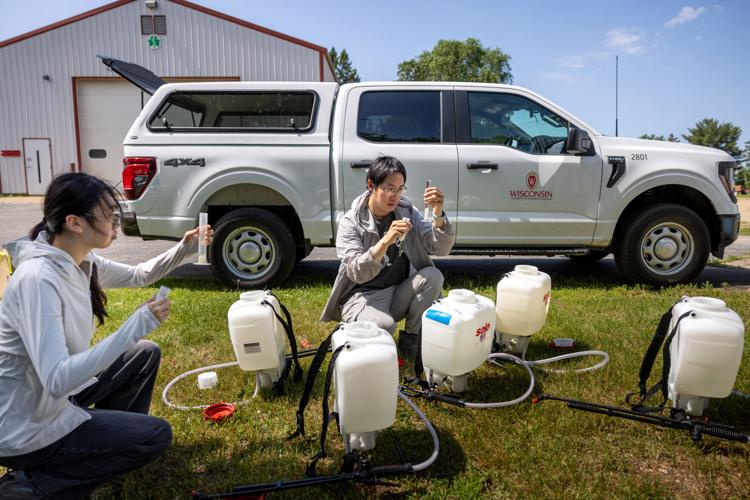
Undergraduate student Ruiying Wang, left, and graduate student Mingda Wu measure out precise amounts of beneficial bacteria for mixing into backpack sprayers at the UW-Hancock Agricultural Research Station.
Michael P. King/UW
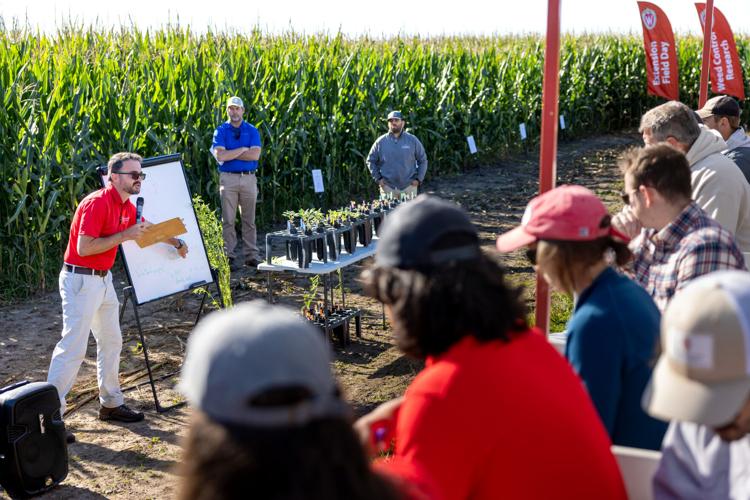
Rodrigo Werle, UW associate professor of plant and agroecosystem sciences and UW-Division of Extension scientist, talks about herbicide resistance in weeds such as waterhemp at an Agronomy and Soils Field Day at the UW-Arlington Agricultural Research Station.
Michael P. King/UW
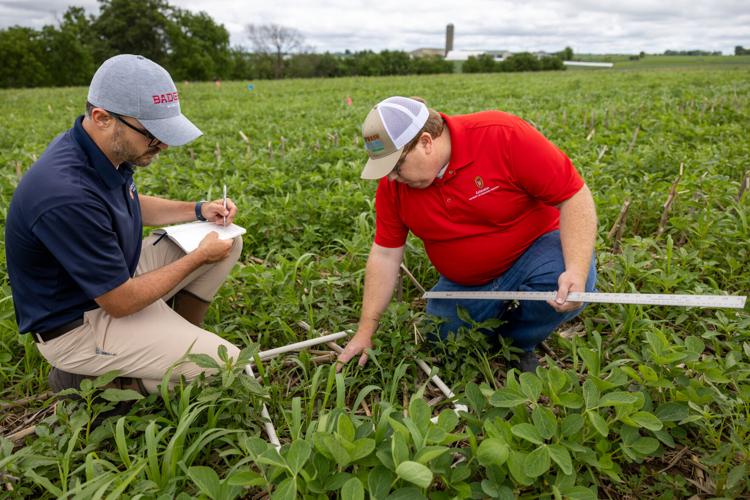
Rodrigo Werle, professor of plant and agroecosystem sciences, left, and Dan Smith, southwest regional outreach specialist for the UW-Nutrient and Pest Management Program, scout a research field for weed populations before an herbicide application at the UW-Lancaster Agricultural Research Station.
Rodrigo Werle wonders if anybody is ever happy to see him. He is, after all, a weed scientist specializing in the most unwelcome guests that pop up in Wisconsin farm fields.
As the third week in July began, a heat dome moved into the Upper Midwest. Much of Wisconsin had already become abnormally dry early in July w…
Lautaro Rostoll-Cangiano, assistant professor of animal and dairy sciences places colon tissue samples from a “beef-on-dairy” calf into a petri dish for a bovine immunology study at the UW-Arlington Agricultural Research Station beef unit in Arlington, Wis.
Lautaro Rostoll-Cangiano, assistant professor of animal and dairy sciences places colon tissue samples from a “beef-on-dairy” calf into a petri dish for a bovine immunology study.
Caleb Karls, beef and sheep research farms supervisor, adds packets of powder to bottles of milk replacer for an early-morning feeding of “beef-on-dairy” calves at the UW-Arlington Agricultural Research Station. Some packets have placebo, and others have an experimental supplement as part of a nutritional and immunology study.
Mucilage is seen on the aerial roots of corn plants in a research field at the UW-Hancock Agricultural Research Station near Hancock, Wis. More than 150 corn hybrid varieties were inoculated with three beneficial bacteria. The study aims to evaluate the bacteria and plants’ ability to use atmospheric nitrogen, which could reduce the need for fertilizer applications.
Rubens Diogo, a postdoctoral researcher in the Jean-Michel Ané Lab, crouches to inspect corn plants in a research field at the UW-Hancock Agricultural Research Station.
Rubens Diogo, center, a postdoctoral researcher in the Jean-Michel Ané Lab, along with graduate and undergraduate students, inoculate corn plants with a combination of beneficial bacteria in a field trial at the UW-Hancock Agricultural Research Station
Eve Lazarski, an undergraduate student studying biology at the University of Wisconsin, sprays corn plants with a combination of beneficial bacteria in a field trial at the UW-Hancock Agricultural Research Station in Hancock, Wis.
Graduate student Mingda Wu measures out a precise amount of a beneficial bacterium for mixing in a backpack sprayer at the UW-Hancock Agricultural Research Station.
Undergraduate student Ruiying Wang, left, and graduate student Mingda Wu measure out precise amounts of beneficial bacteria for mixing into backpack sprayers at the UW-Hancock Agricultural Research Station.
Rodrigo Werle, UW associate professor of plant and agroecosystem sciences and UW-Division of Extension scientist, talks about herbicide resistance in weeds such as waterhemp at an Agronomy and Soils Field Day at the UW-Arlington Agricultural Research Station.
Rodrigo Werle, professor of plant and agroecosystem sciences, left, and Dan Smith, southwest regional outreach specialist for the UW-Nutrient and Pest Management Program, scout a research field for weed populations before an herbicide application at the UW-Lancaster Agricultural Research Station.