Community vanishes but memories live on
Oshkosh Daily Northwestern
May 2, 1957
Note: Mrs. Cara Williams Smith, who lives at 197 S. State St., Berlin, was born in Delhi. Her parents, Mr. and Mrs. James Fitzpatrick, were early settlers there. She has written this history.
(Luke) La Borde built a home on his land and took as his bride a beautiful Indian maiden. They built a trading post and carried on the tract of wilderness and engaged in fur trading with the Indians. The next couple to move to Delhi was Joseph Duchine and his shy Indian bride. Duchine bought some land directly across the road from La Borde. The Henry Potts family was next to arrive, Mr. Potts buying a large tract of land bordering the river and on it built a large house and barn.
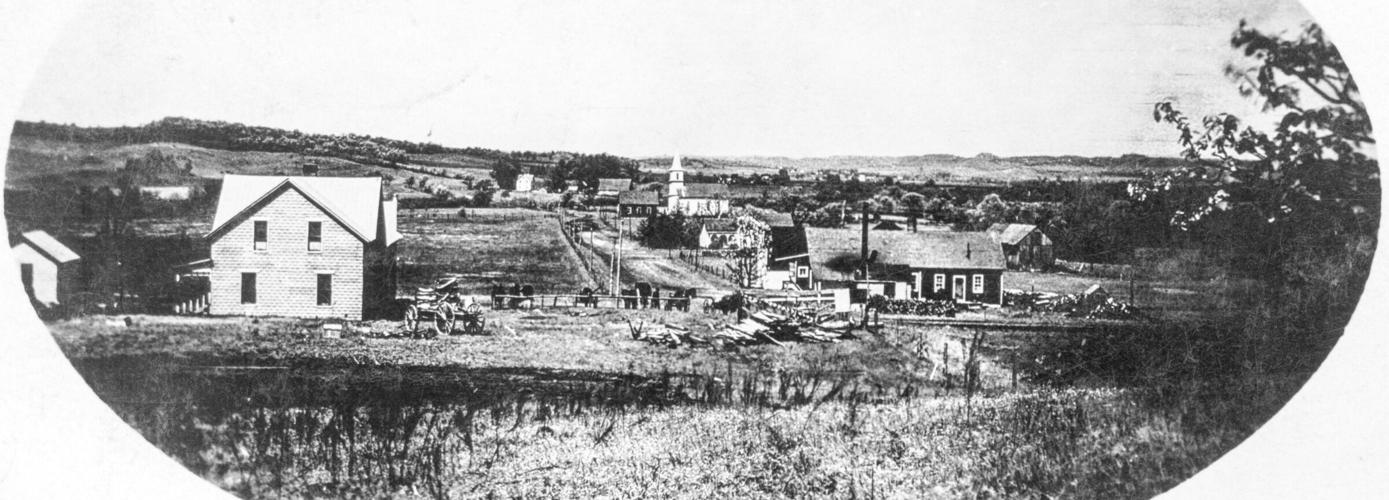
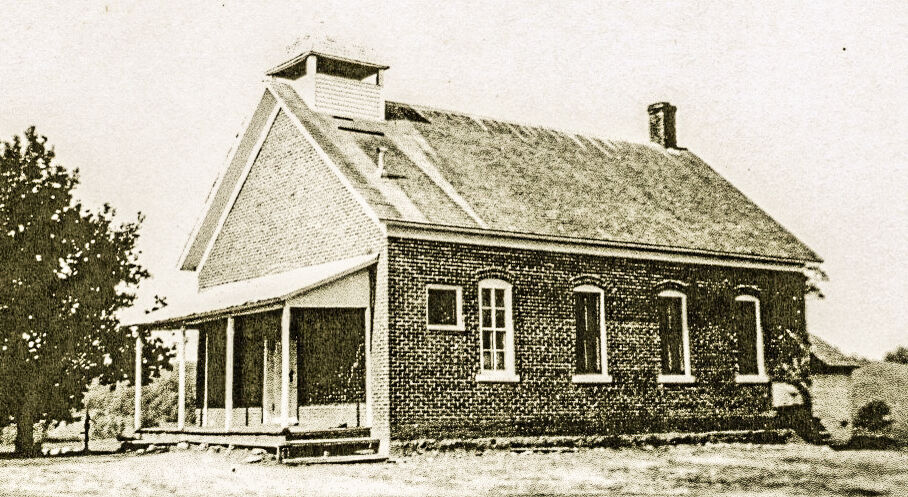
The trek of settlers now became much more rapid and La Borde, Potts and a few others decided to go into the hop raising business. Many acres were planted in hops and both La Borde and Potts built hop houses. In a short time, the settlement of Delhi boasted about 70 residents and 24 homes. In addition to the two hop houses, there was a hotel, built by Sam Elliott, a school, and the trading post.
In later years, a cheese factory was built on the Potts farm and a doctor arrived. He was Dr. Joseph Fitzpatrick, who made some of his medicine from roots and herbs. Dr. Fitzpatrick had some competition, though, as there was an Indian doctor in the community who also administered to the ailing. …
The hop business provided employment to many people, especially during the harvest when laborers would come for great distances to work in the fields. Many of the migrant workers stayed at the hotel or at the larger homes in the settlement.
While the emphasis was on work, residents of the community didn't neglect their social life. At least once a week a dance was held on the lower floor of the hop house and, according to Mrs. Smith, “There wasn’t a dull moment in Delhi.”
Additional employment was provided in the community by a woolen or carding mill in which many young girls and women worked. In the winter, many men who were not otherwise employed found work in logging camps.
In the struggling new community almost every family had at least one cow and a horse. Then too, the family larder was kept well supplied with fish which were caught with ease in both the Fox River and nearby Waukau Creek. …
One of the biggest events of the year in the village was the Fourth of July celebration which was held on the Potts farm. There was always a community picnic and, on occasion, a traveling carnival would set up shop for the Independence Day celebration.
Color was added to the scene by the passing of steamboats on the river and the creaking of the stage on the Oshkosh-Berlin run. The stage at one time was drawn by a team of mules driven by Lester Barnes of Omro, Mrs. Smith recalls. …
In later years other Indians (besides the Menominee) settled on the banks of the river between Eureka and Delhi. They were very peaceful and ground out a livelihood by making baskets, beads and moccasins. The Fitzpatricks often visited the Indians and, in summer, her father often hired several Indians for a few days to help with the grain harvest. The Indians were hired for only a half-day at a time, however, as the other half-day was spent hunting the abundant deer, bear, fox and raccoon in the heavy stands of timber.
The Indians depended on wild game and fish for most of their food, supplementing their meals with corn bread, milk, and on rare occasions, pork. They spoke their own language; a few of them could speak French quite well and some stumbled along on broken English. The chief could speak English fairly well, Mrs. Smith remembers.
Although the Indians apparently did not have a central “burying ground,” old-timers remember that there were quite a few Indian mounds in the Delhi area, but none are easily discernible at the present time. There were however at least two cemeteries in the area. The largest on the Joseph Duchine farm was well-kept, surround by a fence, and contained a number of marble grave markers … The smaller cemetery, located on the La Borde farm, still remains but has been neglected for many years.