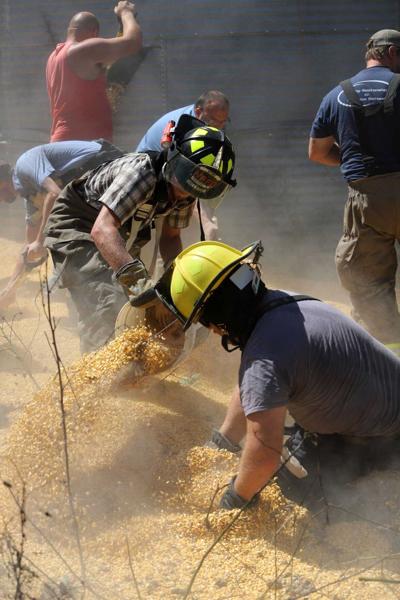





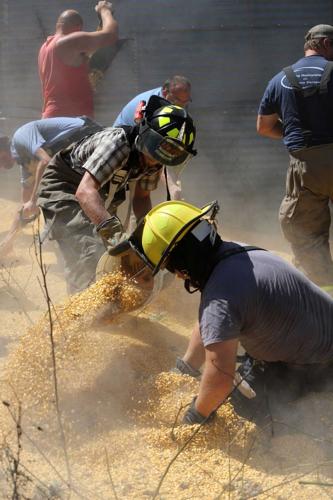
As harvest season quickly approaches, farmers are reminded to practice safety around grain bins and grain handling equipment.
There were nine reported grain entrapments in Iowa in 2022, more than any other state, according to an annual report by Purdue University.
Agricultural confined-space related cases of injuries and fatalities saw a dramatic rise in 2022, including grain entrapment cases, which rose nearly 45%.
People are also reading…
Nearly all of these cases involved grain flow issues due to grain spoilage, which means that improved grain management could help prevent cases in the future, according to Kristina TeBockhorst, an agricultural engineer with Iowa State University Extension and Outreach.
“Now is the time to take inventory of your bins and ensure they are in good condition for the new crop,” said TeBockhorst. “These to-do lists aren’t fun, but they will help minimize grain spoilage from insect and mold activity and moisture entry.”
Before cleaning out old grain, be sure you have on your NIOSH-approved respirator that is certified for grain dusts, and that it fits your face to fully seal and protect you.
She advises farmers to “start with a clean bin, exterior bin perimeter, and handling equipment” by removing potential food sources for pests, including residual grain, broken kernels, fines, foreign material, dusts and molds.
- Sweep the bin walls and floor, making sure to clean the tops of doors, inside hollow pipes or ladders, and inside of augers.
- Trim down vegetation, remove grain material and debris, and consider using a rodenticide around the bin’s outer perimeter.
- Clean out dust and debris from harvesting and handling equipment, like combines, trucks, wagons, augers, and in grain legs and elevators.
- While the bin is empty, check mechanical parts and conduct needed maintenance, seal gaps or cracks along the bin, and check the roof for potential spots that could leak, especially around the vents or access doors.
- If fines or Indian meal moth silks are starting to plug up the space below the floor, it is time to remove the floor to vacuum or power wash.
- If the aeration floor can’t be removed, fumigation is the best option to eliminate carryover insects.
- Check that ladders are in good condition and consider upgrading them with cages or replacing with staircases.
- Assemble your safety equipment for your grain storage facility, like respirators, life harnesses, and lock-out tag-out kits for unloading equipment.
- Ensure that all bin entry points have clear warning labels so that all are aware of the hazards. Also be sure that kids can’t enter bins and that they know of the hazards when they live or spend time around stored grain.
Kristina TeBockhorst is an agricultural engineering specialist at Iowa State University Extension and Outreach. Reach her at 319-337-2145 or ktebock@iastate.edu.