





Earth’s carbon cycle works on a global scale. But it can be affected by the tiniest of organisms -- soil microbes. Those microbes decompose organic matter like plant litter and dead organisms, and create simple carbon compounds. The simple carbon compounds can then be used by other organisms, or turned into gases -- like carbon dioxide -- and released into the atmosphere.
Understand key steps in carbon cycle
1 of 2

Researcher Alyssa Kim shows fluorescent substrate solution under UV light. The method is called zymography, which is used to map the enzyme distribution. The “substrate” is the chemical that can be decomposed by the target enzyme. When it is decomposed, it shows fluorescence -- only under UV light.
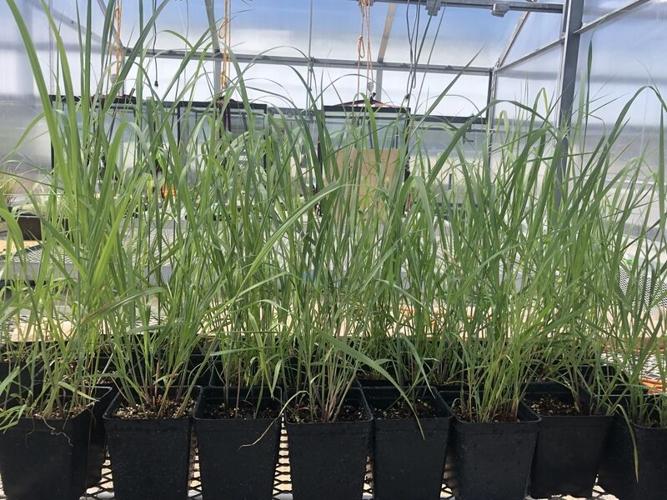
Switchgrass grows at Michigan State University’s greenhouse facility. The leaves of the plants were used for the experiment. Soil moisture levels were higher near corn litter, and decomposing corn litter released more carbon dioxide quicker than switchgrass litter.

Images of X-ray and Neutron computed tomography are shown. Green disks (leaves, also indicated by red arrows) were identified using machine le…

An example of the soil sample packed with the leaf residues is shown. Red-dotted box on the left is the region of interest (where zymogram was…