





Time to play: "What's This?"
- Updated
Old tools, machinery, gadgets of all kinds - they've been discovered in barns, cattleyards, and forgotten hidey holes on your farms. We want to know what they are and how they were used, and we need your help!
- By Jager Robinson Tri-State Neighbor
- Updated
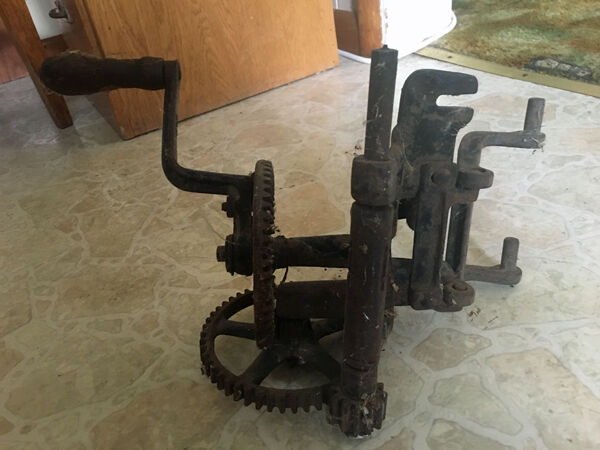
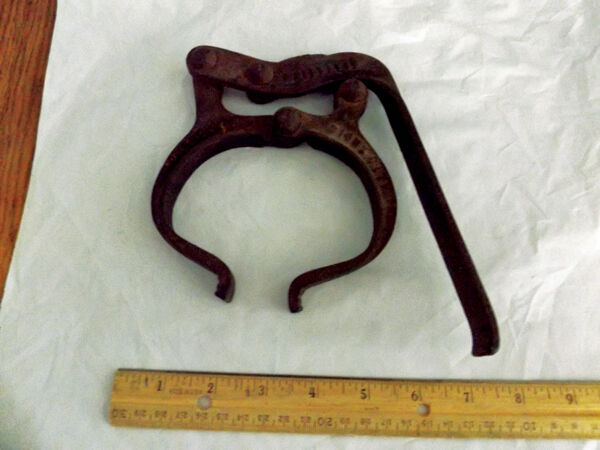
Elda Cunningham out of Wansa, Nebraska was the only one to guess this week, and her guess appears to be correct.
She wrote that the device lifts jars out of the canner when someone is processing meats, fruits and vegetables.
- By Jager Robinson Tri-State Neighbor
- Updated
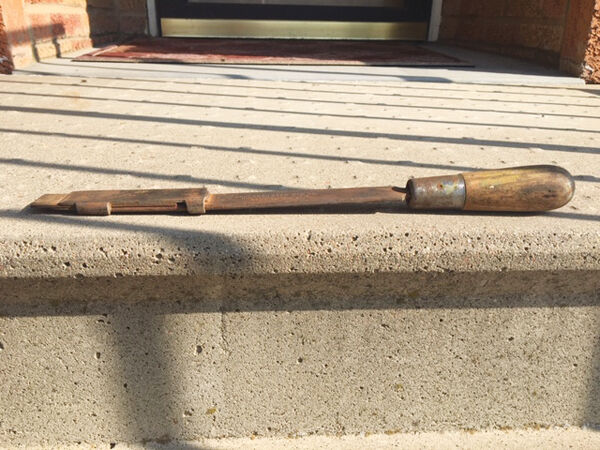
Bob Rikli of Murdock may have an answer to his question as Chris Epping out of Funk correctly identified the tool as a handscraper.
The Anderson Brothers were a well-known manufacturing company in the early 1900s and developed this tool to scrape bearings and other surfaces without scratching them.
- By Jager Robinson, Tri-State Neighbor
- Updated
Mary Dahl out of Superior, Nebraska has identified the “blade” as a simply saucepan drainer.
She said she got hers in the mid-1960s and used it daily before it broke.
- By Jager Robinson, Tri-State Neighbor reporter
- Updated
Our next mystery item was found at a estate sale by Steve Stuekrath.
The “blade” is curved with slits in the side. Stuekrath doesn’t know it’s use and is asking the wise Midwest Messenger readers to help him identify the mystery item.

- Updated
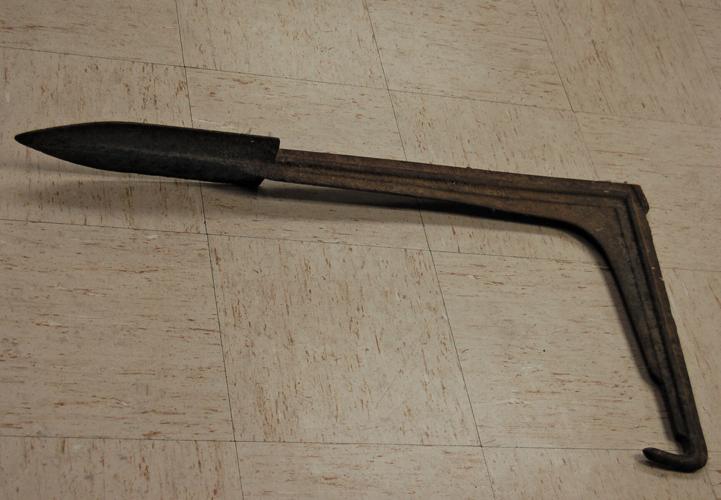
Due to some confusion, the image was only available for guesses for a short while but Janice Rasmussen was the first to guess and the first to be correct that the Janice Smith set is a vintage vacuum coffee maker set.
While not a traditional way to make coffee, vacuum coffee sets have existed for quite a while and can be bought today. The set Smith had is missing the heating pad.
- By Jager Robinson, Tri-State Neighbor Reporter
- Updated
Only two guesses were made over the last two weeks and both were correct.
The spade was a support for wire fencing. The gentleman who submitted the photo called the tool a “dead man.”
- By Jager Robinson, Tri-State Neighbor
- Updated
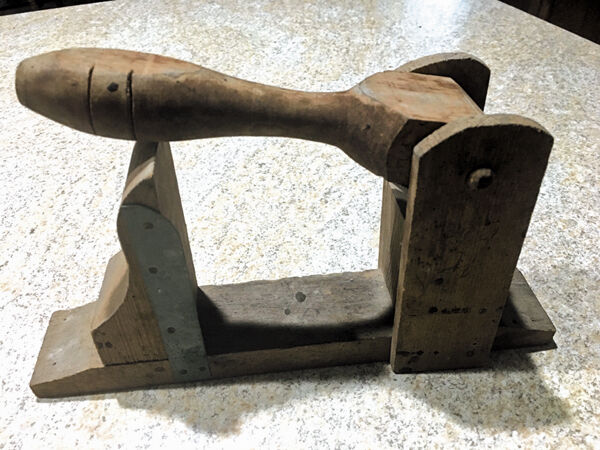
A few months back, when it was still safe to travel, an unknown man dropped this item off at the Messenger office.
While he knew what the item was, the rather large spade is roughly 38 inches from tip to corner and another 30 inches in the other direction.
- By Jager Robinson, Tri-State Neighbor
- Updated
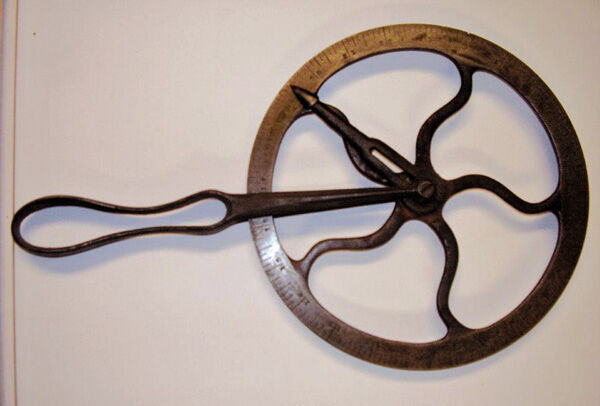
Harold Daake’s mystery item appears to be something as simple as a nut cracker according to a few What’s This enthusiasts.
Larry Martin of Valparaiso was the first to guess that the device was a nut cracker, but two anonymous messages also claimed as such.
- By Jager Robinson Tri-State Neighbor
- Updated
For the first time in a while, we don’t have a mystery on our hands, rather a good ol’ guessing game.
This tool from Paul Volk of Battle Creek, Nebraska was purchased at the Petersburg Lumber Yard. While Volk knows what it is, he is putting up for considering for the What’s This enthusiast to give it their best shot.
- By Jager Robinson Tri-State Neighbor
- Updated
The last item of the Nygren saga appears to be a well-rounded jack-of-all-trades tool.
Gary Mau of Fairbury believes the wooden tool was a pig slapper to cause no real harm to the pigs other than creating a big slapping noise if you needed them to move.
- By Jager Robinson Tri-State Neighbor
Our last item from George and Judy Nygren of Ashland, Nebraska is a large wooden paddle.
According to the Nygrens, this paddle is 11 inches long and made of heavy wood. George said the handle is screwed in and the piece is roughly 2 and a half inches wide.
- By Jager Robinson Tri-State Neighbor
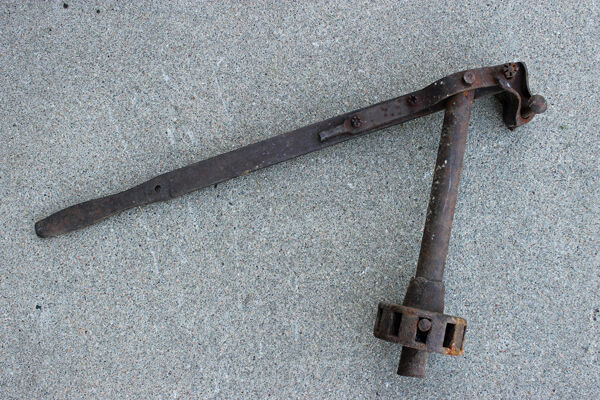
The third item of the Nygren saga was puzzling as multiple people guessed different things.
Nicole Hosette of the South Dakota Historical Society guessed that the item is a windmill shut off handle for a water pump. Marlin Perks out of Stockville agreed, saying it could be a lever to control the break on a windmill.
- By Jager Robinson, Tri-State Neighbor
- Updated
Our next What’s This? item from George and Judy Nygren of Ashland, Nebraska is a large pipe.
According to the Nygrens, this pipe has six pieces of steel and six bolts. The level is 28 inches long while the pipe itself is only 16 inches long.
- By Jager Robinson, Tri-State Neighbor
The second item from the George and Judy Nygren saga was guessed upon by only one reader over the last few weeks.
Jim Merrit out of Norfolk guessed that the item pictured is a leather cutter.
- By Jager Robinson, Tri-State Neighbor
- Updated
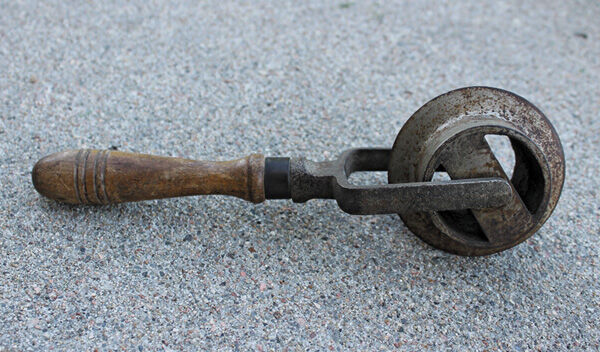
Our next What’s This item is another that comes from George and Judy Nygren of Ashland, Nebraska.
The small roller is approximately 9 inches long with a 2 and 3/4 inch diameter wheel. The handle is wood and has no discernible markings on it.
- By Jager Robinson, Tri-State Neighbor
- Updated
The first of the Nygren items was identified by more than one reader.
Dietrich Schweers of Ponca was the first to correctly guess its use.
- By Jager Robinson, Tri-State Neighbor
- Updated
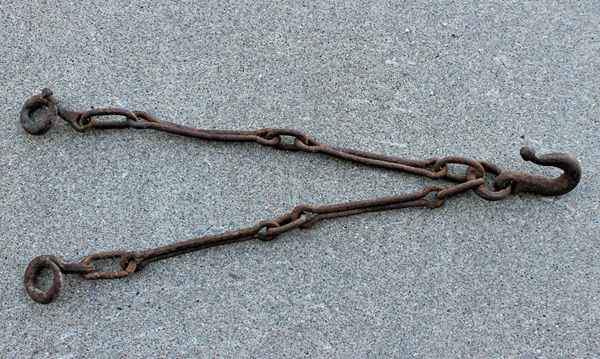
George and Judy Nygren of Ashland, Nebraska have four items that need identifying over the next eight weeks.
The first, which is 30 inches long and has two spiral hooks with nine chain links is one of a few mysteries the Nygrens have.
- By Jager Robinson, Tri-State Neighbor
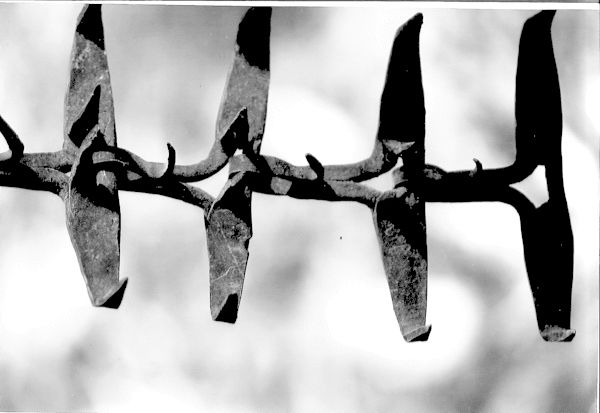
After a few weeks of guessing, only two responses were submitted from the readers.
Larry Martin from Valparaiso suggested that the mystery device could be an elevator chair from a single-row corn picker, while Justin Ramsay guessed that the device may be an early form of barbed wire.
- By Jager Robinson, Tri-State Neighbor
- Updated
Dave Fullner of Wisner, Nebraska has a new challenge for What’s This enthusiasts.
While Dave has no personal clue as to what this device is, he said he is almost positive is not a corn dryer, despite what people have tried to tell him.
- By Jager Robinson, Tri-State Neighbor
- Updated
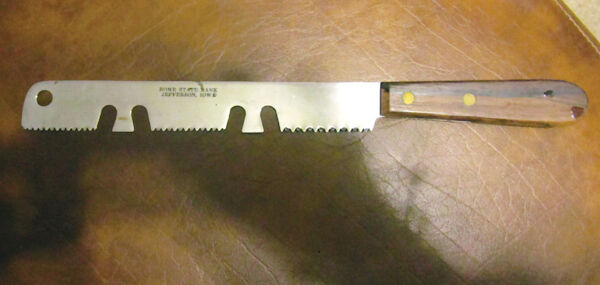
The knife submitted by Larry and Joyce Frazier is a frozen food knife.
Wanda Moores of Woodbine, Iowa was the first to correctly guess. Thanks to the half dozen that also correctly guessed.
- By Jager Robinson, Tri-State Neighbor
- Updated
Larry and Joyce Frazier from Jefferson, Iowa submitted this knife after asking all around town as to its purpose.
The knife, while it looks like a standard bread knife, has four large divots in it that have thrown off those who’ve seen the picture.
- By Jager Robinson, Tri-State Neighbor
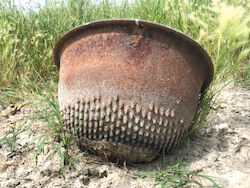
Several readers have helped identify the tool as a “kettle” of sorts for curing meat and making lard.
Jess Bandy out in Oshkosh, Nebraska was the first to guess that the pot could be used to scald pigs and scrape off hair.
- By Jager Robinson, Tri-State Neighbor
- Updated
Carolyn Kappel of Miller, Nebraska has submitted this bowl for readers to guess at its purpose.
She said that the bowl is at least 150 pounds of iron and was found a good half mile in the middle of hilly farmland.
- By Jager Robinson, Tri-State Neighbor
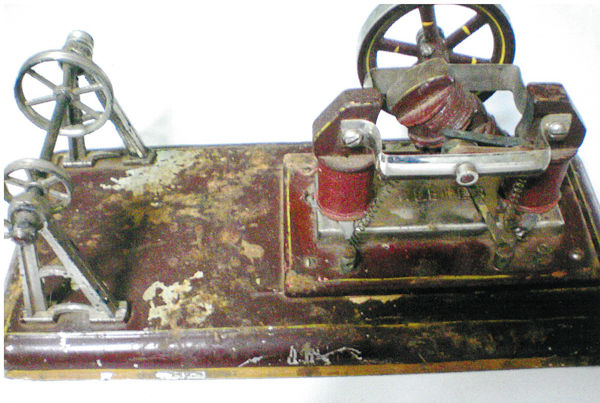
The toy that Marie sent in is an electric motor. Thanks to all that guessed correctly.
Rod Snow of Litchfield, Nebraska was the first to guess correctly, but Chris Epping of Funk described the motor as a toy that actually says Weeden on it, not Weeler.
- By Jager Robinson, Tri-State Neighbor
Almost a year ago, Marie Benedix sent this in to be identified by our keen Midwest Messenger readers.
In a message that has been lost in time, Benedix said that the device is 4 inches wide and 9 and a half inches long with the name Weeler on it.
- By Jager Robinson, Tri-State Neighbor
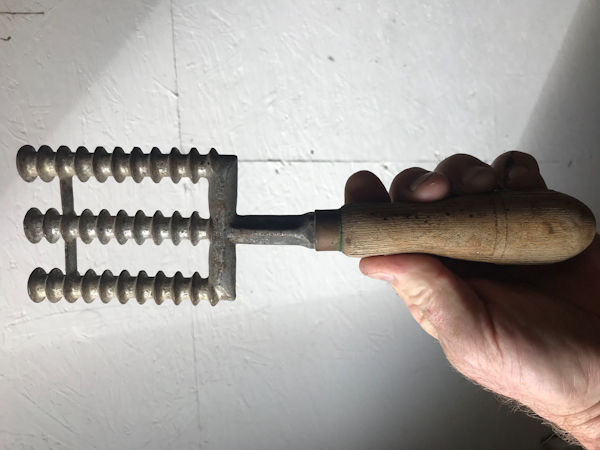
It would appear that our unidentified tool is a meat tenderizer.
Marlin Perks of Stockville, Nebraska and Kermit Smith of Eustis, Nebraska both correctly identified the tool for Jeff Housh.
- By Jager Robinson, Tri-State Neighbor
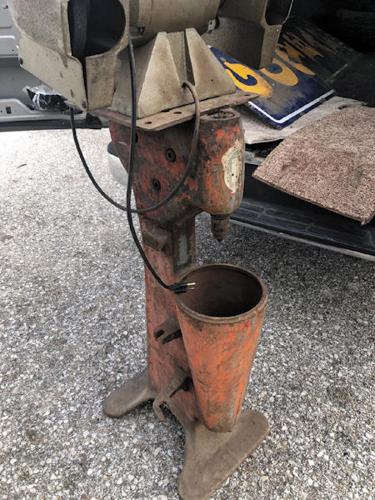
This isn’t a fork, although what it could be is anyone’s guess.
Jeff Housh submitted this tool for our keen Midwest Messenger readers to guess.
- By Jager Robinson, Tri-State Neighbor
After two weeks, a two-person consensus was formed on the Brumbaugh’s tool.
Chris Epping of Funk, Nebraska was the first to guess that the tool is a Frankenstein of sorts and is actually two separate tools.
- By Jager Robinson, Tri-State Neighbor
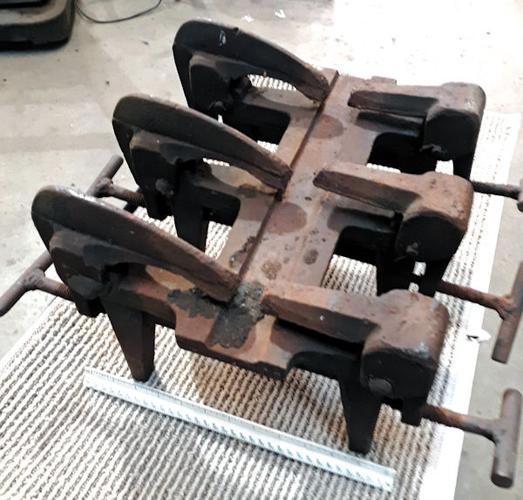
Our next tool is a rather large one found in Omaha, Nebraska. Curt Brumbaugh’s son brought the tool to his attention.
This is a true mystery as the Brumbaughs from Red Cloud, Nebraska have no idea what the tool may be.
- By Jager Robinson, Tri-State Neighbor
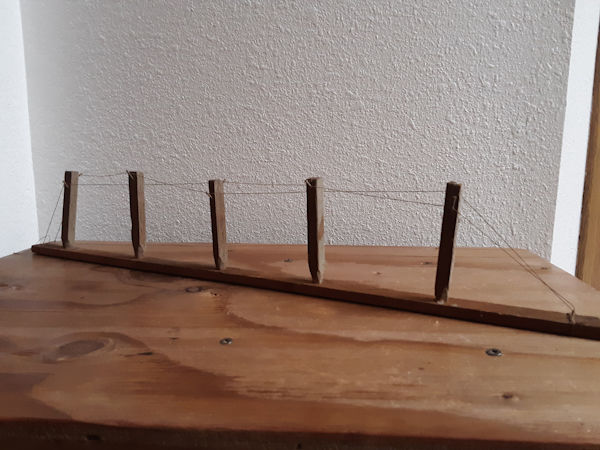
It seems that Wesley and Kenneth’s mystery was their own, as no guesses were made over the last two weeks.
The device pictured is a model to set up telephone poles. Kenneth was part of a local cooperative of neighbors that had to set up their own poles to get electricity.
- By Jager Robinson, Tri-State Neighbor
A mix-up from our usual themes, Wesley Dirks out of Chappell, Nebraska has a neat mystery for readers to solve.
This device was in his dad, Kenneth’s, shop. While they both know what it is, the Dirks submitted this to see if any other rural readers know what this was used for and why they had to use something like this back in the earlier days of rural American life.
- By Jager Robinson, Tri-State Neighbor
There is a three part message in this issue:
1) The March 13 What’s This is has been identified as a grip to replace sickle sections a few at a time. Thanks to Jim Watson and Vaughn Beed for their quick guesses within 5 minutes of each other!
- By Jager Robinson, Tri-State Neighbor
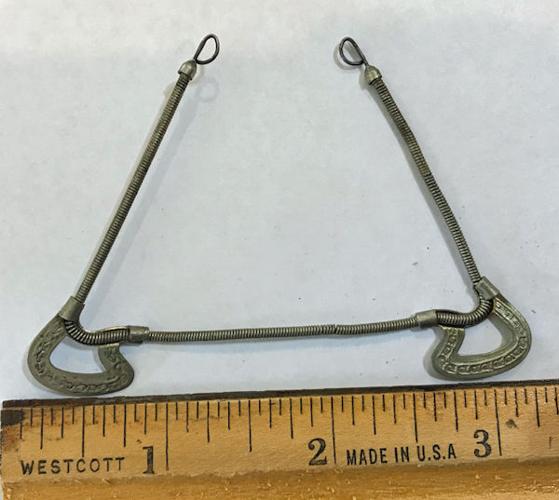
Returning to large pieces of equipment, Sid Suedmeier has submitted this for consideration.
He said: “I think this is blacksmithing related, but am not sure.” in his email to the Messenger.
- By Jager Robinson, Tri-State Neighbor
It’s always sad to see an image come and go without any guesses as to what it could be.
Unfortunately for George Albin, no Messenger readers submitted a guess other than Gael Jaeger, who wondered if the tool was a horse bit or surveyors tool.
- By Jager Robinson, Tri-State Neighbor
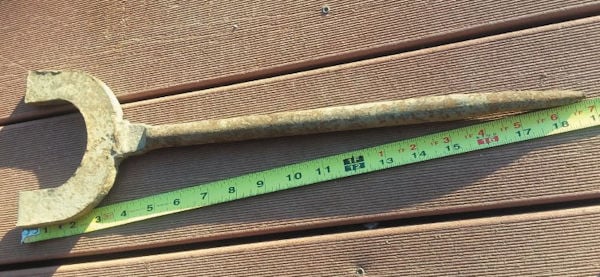
Shrinking down in size, this next tool is brought to us from George Albin in Hastings, Nebraska.
The took is small at just 3 inches wide and Albin said he has no idea what this tool is or what it’s used for — so there is a real mystery on our hands.
- By Jager Robinson, Tri-State Neighbor
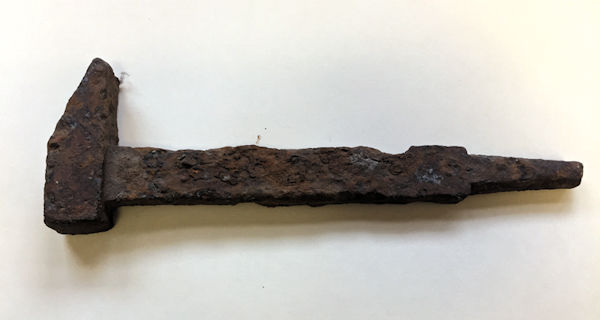
It’s good to see a true mystery ran by the "What’s This" desk. The tool Leland Schlake submitted stumped many, prompting only a handful of responses, each one different.
John Glaser of Omaha, Nebraska, was the first to guess, assuming the device is a wagon hammer. It also goes by its other name, a wagon wheel wrench.
- By Jager Robinson, Tri-State Neighbor
Leland Schlake of Cortland, Nebraska has brought Messenger readers this tool for their consideration.
- By Jager Robinson, Tri-State Neighbor
The mystery of the half wrench has been solved by nearly all those who submitted guesses.
The tool was half of a monkey wrench.
- By Jager Robinson, Tri-State Neighbor
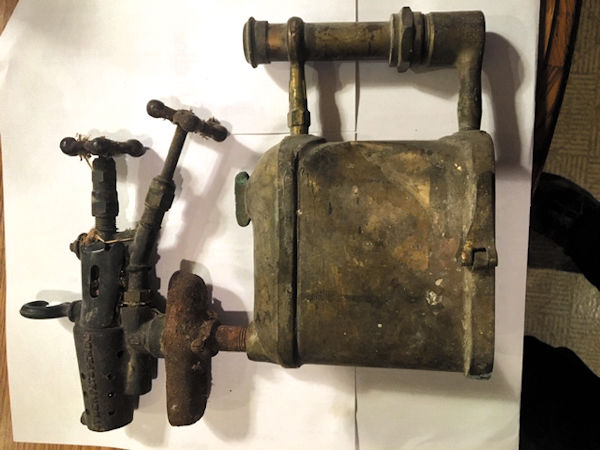
Eugene Glock of Rising City, Nebraska has submitted this tool for reader’s consideration.
He said he has no idea what it may be but knows it’s a hammer.
- By Jager Robinson, Tri-State Neighbor
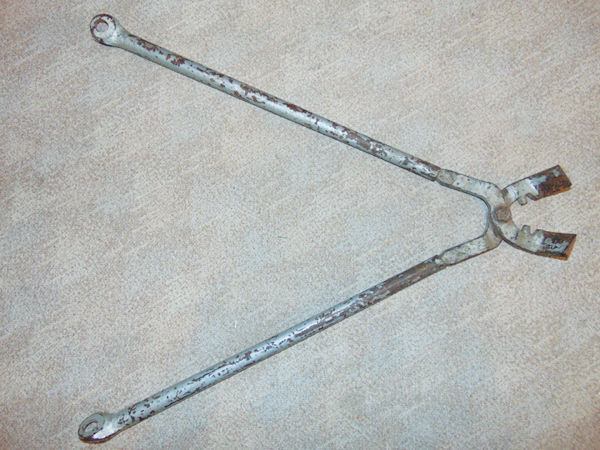
Two mysteries have been solved this issue as the item was correctly identified as a blow torch but Bob also has restored his last name — thank you to Bob Rikli of Murdock, Nebraska.
Russ Crawford of Exira, Iowa was the first to correctly guess the device and above is Denny McKay’s instructions on how the device was used in its heyday.
- By Jager Robinson, Tri-State Neighbor
This next tool isn’t a tool at all as much as an entire machine.
A reader named Bob submitted this — and unfortunately his last name was cut off in submission.
- By Jager Robinson, Tri-State Neighbor
- Updated
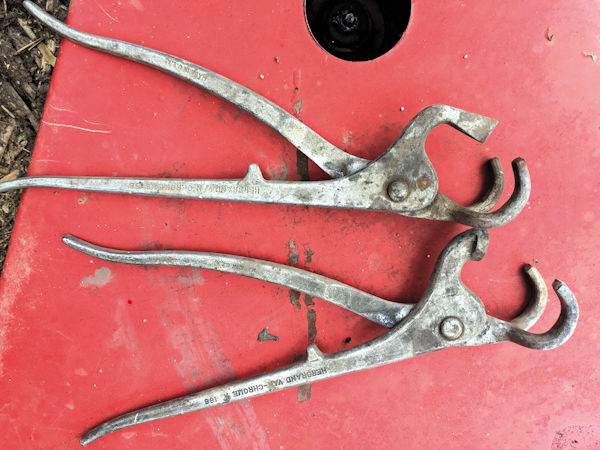
After an issue that stumped our readers, Messenger fans have come through for Gary Ladenburger.
The tool was, in fact, a hoof trimmer.
- Jager Robinson, Tri-State Neighbor
This newest What’s This tool was submitted by Gary Ladenburger of North Bend, Nebraska.
Ladenburger farms in Morse Bluff, and said he’s seen this item as long as he can remember just sitting in his barn. To his knowledge, it’s never been used.
- Jager Robinson, Tri-State Neighbor
With an extended time to guess, unfortunately no readers submitted their responses as to what the tools in the Dec. 6 issue were.
With the holidays, personal vacations, family time and kids returning home from college, I’m sure we were all just a bit too busy.
- Jager Robinson, Tri-State Neighbor
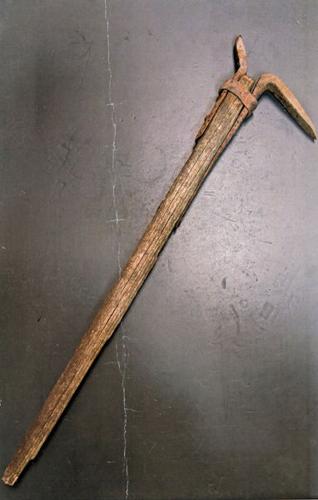
This tool may be something that many of our readers will be able to identify.
Submitted on behalf of Fritz Loseke’s 90th birthday in May, this tool has been on his operation for dozens of years and he’s never been able to correctly identify it.
- Jager Robinson, Tri-State Neighbor
Even with the broken handle, our keen readers figured it out. This was, in fact, an ice harvesting tool.
While we got some suggestions guessing that it was used in logging, about five of you guessed correctly that this tool should have a 14-foot-handle and be used for ice harvesting.
- By Jager Robinson, Tri-State Neighbor
This next device is roughly a foot long and has a rusted metal spike at the end.
Ron Blaser of Columbus, Nebraska submitted this but followed up later correctly identifying the use.
- By Jager Robinson, Tri-State Neighbor
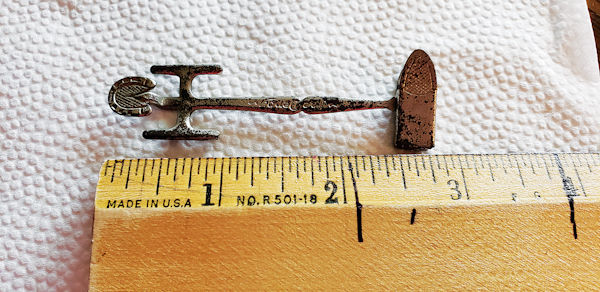
The mystery of the horse shoe/clip has been solved by reader Steve Renz of Superior, Nebraska.
The 61-year-old reader from Nebraska correctly identified the small device as Derby Cuff Clip.
- By Jager Robinson, Tri-State Neighbor
This next device is considerably smaller and lighter than the previous issue, but it’s a mystery nonetheless.
Larry and Julene Karloff out of Yutan, Nebraska said that this little device has been given the nickname “The Derby” but they have no
- By Jager Robinson, Tri-State Neighbor
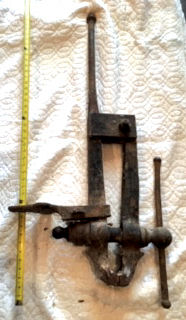
Well, obviously we made it too easy for our readers last issue.
Yes, this device posted was a vice. And yes, the picture was posted upside down as many of you pointed out.
- By Jager Robinson, Tri-State Neighbor
- Updated
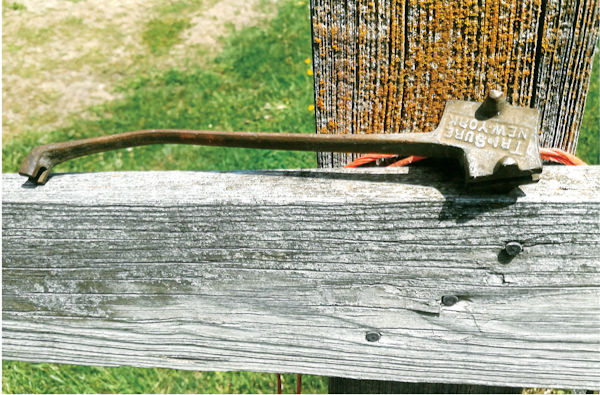
Rennea Jensen-Brown submitted this device for our readers. She said her husbands family has been living on the operation for 153 years and still has no idea what this device is.
It is 2 and a half feet long and “very heavy” according to Jensen-Brown.
- By Jager Robinson, Tri-State Neighbor
- Updated
Our keen readers did it again – this device is an oil drum wrench.
Tracey Hefner out of Archer, Nebraska, Alvin Depe out of Colby, Kansas, and Gary Krings out of Greenwood, Nebraska all guessed correctly.
- By Jager Robinson, Tri-State Neighbor
- Updated
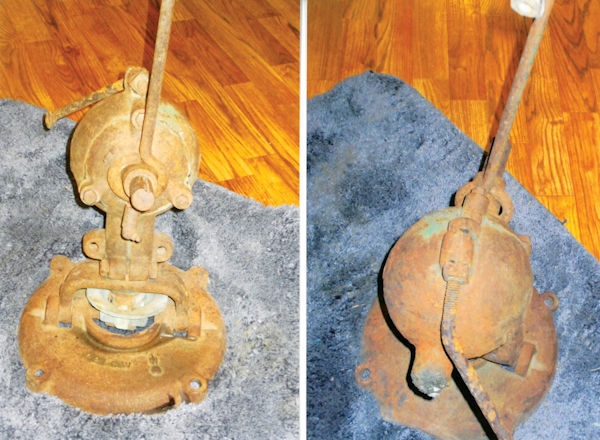
This one has a hint of this reporters past as Ben Cowling out of Roca, Neb. submitted this device with the words Tri-Sure New York printed on one side.
This device is still used today in some cases and Crowling does know what it is for those who are are stumped.
- By Jager Robinson, Tri-State Neighbor
- Updated
The last two weeks came and went and our fearless readers unfortunately did not come up with a solution to Dean West’s problem.
After contacting several historical societies, the best guess is that the device is incomplete and missing a few pieces to correctly identify it.
- By Jager Robinson, Tri-State Neighbor
- Updated
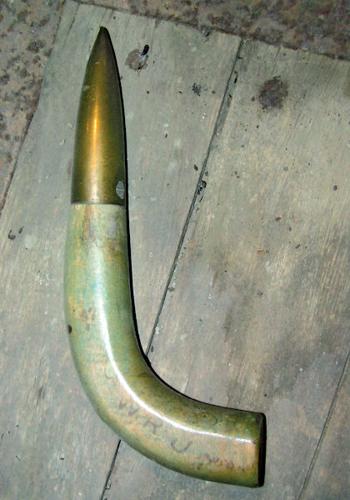
Our next device has gotten question marks written all over it.
Submitted by Dean West of Mapleton, Kansas, this device appears to have an eagle on the globe but aside from that, nothing else is known.
- By Jager Robinson, Tri-State Neighbor
- Updated
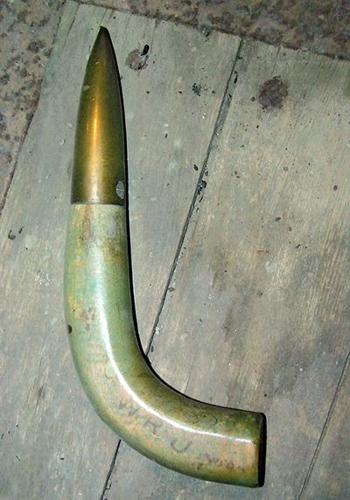
The Sept. 13 image didn’t stump any of our keen readers, as the device is in fact called a Dibble.
The little hand-held device was used to plant seeds for starter plants and vegetables.
- By Jager Robinson, Tri-State Neighbor
- Updated
A device with a funny name and a unique purpose highlights this round’s “What’s This.”
Sent to us from Marlin Perks of Stockville, Nebraska, the device is 10 and a half inches long and apparently is no longer in use at most farms which should make it a unique challenge for our always inquisitive readers.
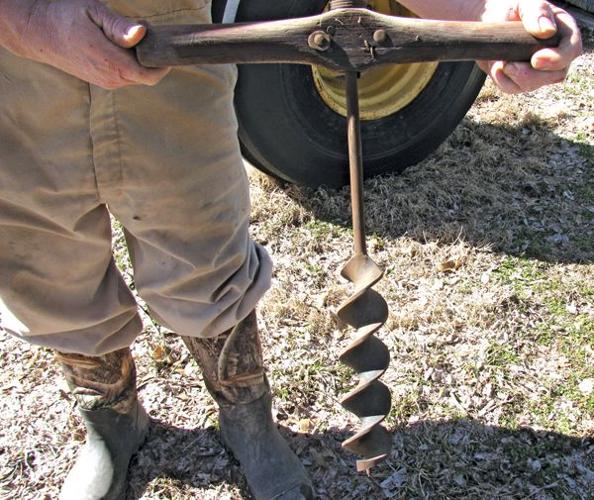
- By Jager Robinson, Tri-State Neighbor
- Updated
This past issue’s What’s This has drawn a great deal of back and forth. Yes, the device is an auger. But, the readers were divided on whether or not the auger was used to drill holes for blasting logs apart, or for some other purpose.
Based on Glen Schweppe’s description of the device, Ronald Blaser of Columbus, Nebraska correctly guessed that the auger was used to drill holes in corner and brace posts so that wire could be placed in an opposite direction to hold the brace in place.
- By Jager Robinson, Tri-State Neighbor
- Updated
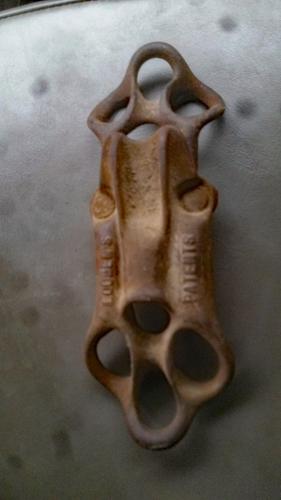
We are mixing it up this time around and giving you a device that every farmer should know very well.
This time, however, I’d like to know what exactly this marvelous digging tool was used for instead of just simply digging holes.
- By Jager Robinson, Tri-State Neighbor
- Updated
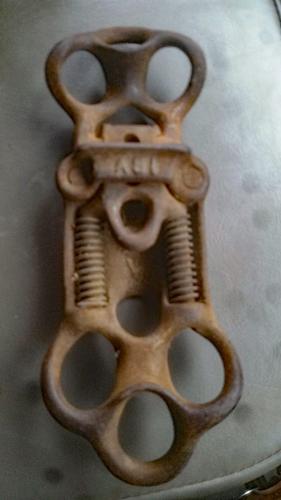
In a nice twist from the norm for “What’s This,” Roger Vech’s two piece rope pulling device has been correctly identified by three keen Lee Agri-Media readers.
Vech, a Verdigre, Neb. native, submitted the two part device wanting to know what it was used for but had a feeling ropes were used.
- By Jager Robinson, Tri-State Neighbor
- Updated
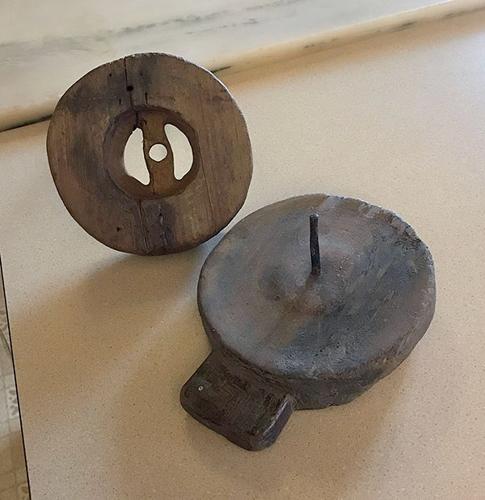
In an interesting twist for What’s This, this next device actually isn’t one whole piece at all.
Roger Vech from Verdigre, Neb., submitted this photo which came from his son, who found it at an old building site.
- By Jager Robinson, Tri-State Neighbor
- Updated
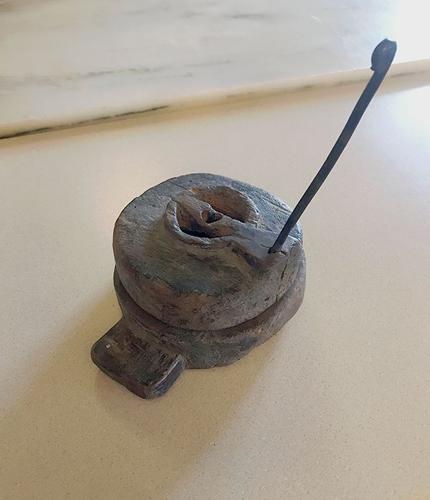
This image was a long shot from the beginning and unfortunately no one could quite place what the device was used for.
Ray Maciejewski of Vesper, Wis. admitted as such when he said the device came from a landfill 50 years ago.
- By Jager Robinson, Tri-State Neighbor
- Updated
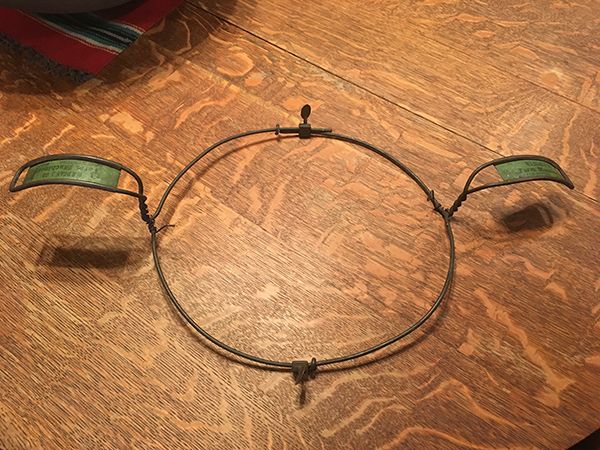
This next photo is truly a mystery as submitter Ray Maciejewski of Vesper, Wis., also has no idea what the device is.
Maciejewski said that he found the device in the town of Richfield over 50 years ago. For added effect, he also mentioned that it came from Richfield’s landfill, so clearly its use even 50 years ago had worn out.
- By Jager Robinson, Tri-State Neighbor
- Updated
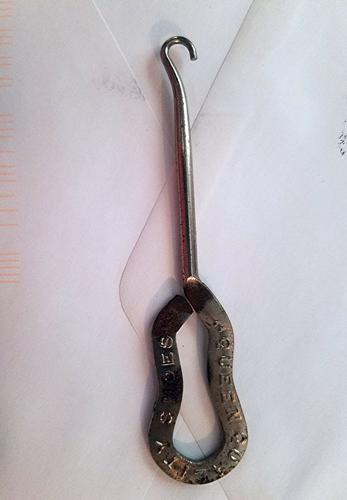
Perhaps this one stumped you all more than you’d care to admit.
This metal circle with two green handles was a milk pail holder, according to Gloria Palmer who submitted the photo.
- Updated
Another mystery is at hand here at the newspaper office.
This time, it comes from Gloria Palmer all the way up in Madison, Wis. Gloria found this contraption at a farm in Menomonie, Wis., and has a vague idea of what the device may be, it is up to the Midwest Messenger readers to figure out how this metal circle with two handles was used.
- Updated
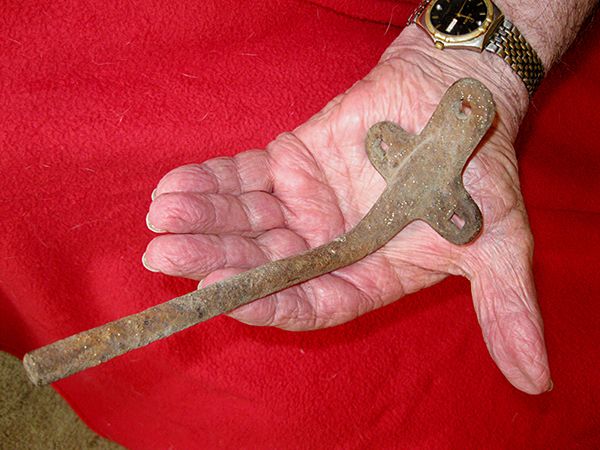
Gary Brown didn’t have to wait too long for a response as a staggering 12 readers wrote in via email and written mail to say this device is a buttonhook.
An old fashion buttonhook, according to 87-year-old Violet Puole from Murdock, Neb., was simply used to pull pearl shaped buttons throw the opening on old shoes.
- Updated
Gary Brown from Oxford, Neb. contributed this contraption for “What’s This?”
At it’s widest point, the hook is just 1 inch wide and overall, it sits at about 4.5 inches long.
- By Jager Robinson, Tri-State Neighbor Reporter
- Updated
Thanks to two keen readers who submitted their answers via the mail, we have a better guess as to what Stan Shavlik’s iron rod really is.
Both Dennis McKay of Spalding, Neb., and Ronald Blaser of Columbus, Neb. guessed correctly that the piece held in Stan’s hand is, in fact, the step to get into an old-time buggy.
- Updated
Stan Shavlik has had this mystery piece for a long time on his farm east of Linwood, Neb.
You can see from how it sets in the 89-year-old retired farmer’s hand that it might be 10 to 12 inches in length. It bends from the horizontal rod up at about a 90 degree angle.
- By Jager Robinson, Tri-State Neighbor Reporter
- Updated
The most recent What’s This picture seemed to fool our readers again as no submissions were sent in guessing what the pronged metal contraption was used for.
Gloria Palmer from Madison, Wis., who sent in the image, said it is a cow tail holder.
- Updated
Gloria Palmer from Madison, Wis., contributed this issue’s “What’s This?”
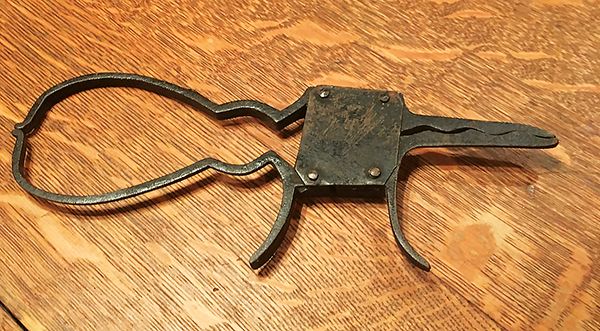
Found at the farm in Menomonie, Wis., the metal object is 11 inches long and 4.5 inches wide. Squeeze the two handles at the bottom and both ends open, and likewise release the handles and the ends close.
- Updated
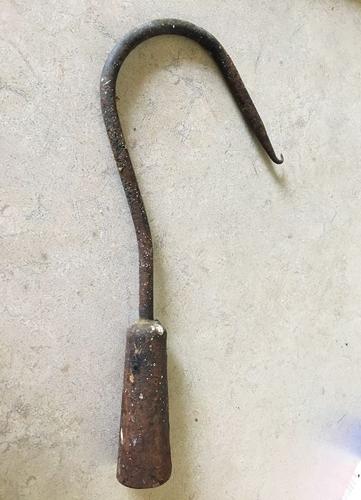
The most recent “What’s This?” clue pictured a hook with a tiny hook on its end. It was submitted by Bev Smedra of Ord, Neb., who said the item was found on the farm but no one knows what it is.
“We thought of a bale hook, but it is more rounded curve than a bale hook, plus the little hook on the end,” she said. “The hole for the handle is much smaller than a bale hook handle or even a garden hoe handle. More the size of a broom handle diameter.”
- Updated
Bev Smedra of Ord, Neb., said this edition’s clue was found on the farm but no one knows what it is.
There’s a little hook on the end of the larger hook, which would be odd for a bale hook. And the big hook may not be open enough to work well on a small bale. It looks like it’s designed for a round handle to slide on the end but it is smaller than a spade handle.
- By Terry Anderson, Midwest Messenger News Editor
- Updated
The Steamboat Bertrand was en route from St. Louis to the newly discovered goldfields in Montana when it struck a submerged log on April 1, 1865, and sank 30 feet into the muddy Missouri River north of Omaha.
The wreckage was found in 1968 on DeSoto National Wildlife Refuge and excavated the following year. What was recovered has been on permanent exhibition at DeSoto. Not far from DeSoto, Jim Goodman farms and uncovered four oblong, heavy objects with a track hoe under about three feet of mud in an old river bed on the Missouri River bottoms.
- Updated
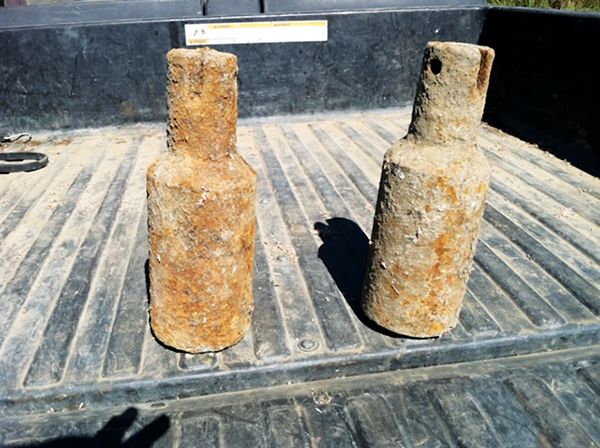
Jim Goodman farms northwest of Crescent, Iowa, and wonders what he found.
Four of these objects were uncovered by a track hoe under about three feet of mud in an old river bed on the Missouri River bottoms. Each is 12 inches tall and has a 5-inch diameter. They are made of cast iron and each weigh about 20 pounds. The bottle shaped objects have a groove on the top with a half-inch hole perpendicular to the slot.
- Updated
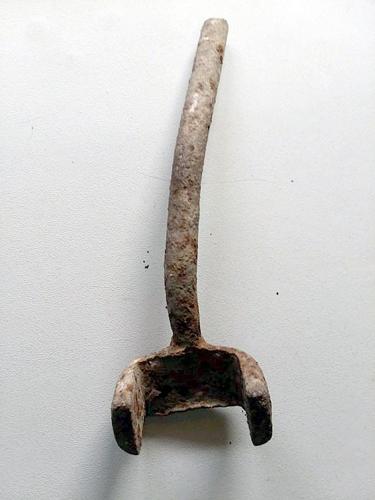
Cook stove lid lifter
Allan Gustin, a North Dakota rancher, has an old tool that his daughter bought for him but he doesn’t know much about it at all.
- By Terry Anderson, Midwest Messenger News Editor
- Updated
Most of the time, when we get a submission for “What’s This?” there’s a good description of what the item is. Once in a while, there’s nothing. Those are times we hope our readers have a good handle on whatever is shown.
The most recent item featured in “What’s This?” didn’t give us a lot to go on. Leland Schlake of Cortland, Neb., sent a photo of a tool that he found on his farm, buried in dirt. About all he remembered was his dad using it to tightened the lugs on the wheels of box wagons.
- Updated
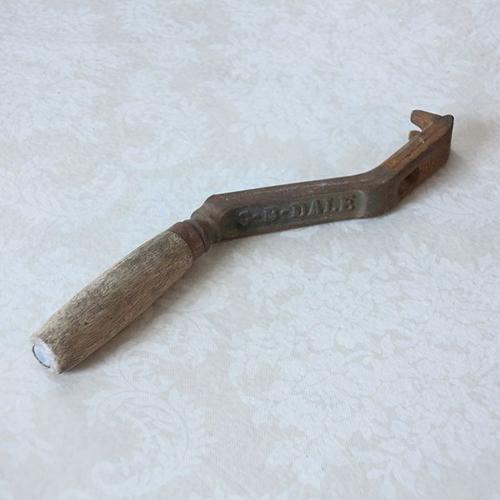
Allan Gustin is a Morton County rancher, located just west of Bismarck, N.D. He sent in a picture of an antique tool that his daughter bought for him.
“It’s 12 inches long and is embossed with the name C-B-DALE,” he said. “She bought it in New York State, so it may be for an implement that is not agricultural, or not used in the upper Great Plains.”
- Updated
This edition’s mystery item was sent in by Leland Schlake of Cortland, Neb. It’s a tool that he found on his farm, buried in the dirt. He said he remembered his dad using it many years ago.
So, he asks, “What’s This?”
- Updated
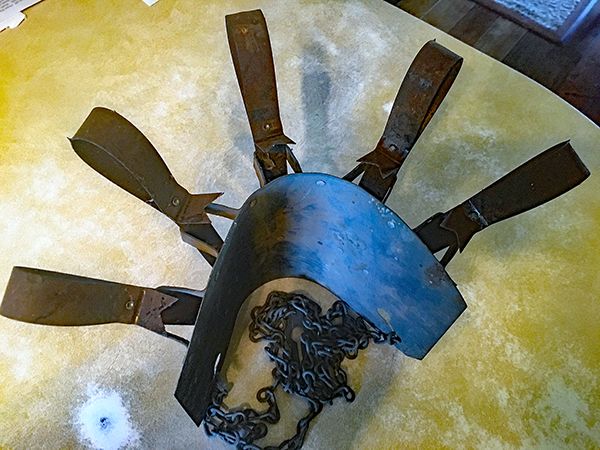
Jerry Morgenstern of Hoisington, Kan., sent the photo for the more recent “What’s This?”
“It is a calf weaner found in an abandoned farmstead,” he wrote with his submission. “Had to research it on the internet to identify it.”
- By Terry Anderson, Midwest Messenger News Editor
- Updated
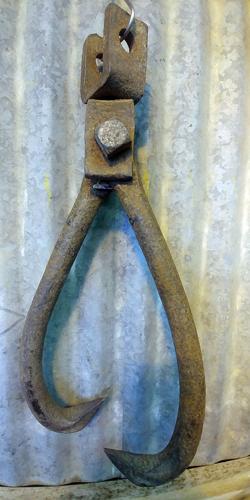
When the most recent “What’s This?” item arrived, I immediately thought ice tongs, but Dick Ewald of Manitowoc, Wis., who sent in the photo, said not so fast. Tongs, yes. And most people can imagine them used to pull big blocks of ice from a body of water during the winter, or taking a block of ice from the ice house to use during the summer.
But Dick says these tongs were designed for transporting logs. Back when the modern Midwest was settled and developed, new residents cut down trees for several reasons: to open up space so they could farm the land, create space for a home to be built, to use the trees as lumber for the house or possibly to cut up so they could keep the house warm.
- Updated
Jerry Morgenstern of Hoisington, Kan., sent this photo for “What’s This?” It looks a bit medieval, but he assures that it’s a piece that could be used in the Midwest – maybe not anymore, but certainly in the past.
So, What’s This?
- By Terry Anderson, Midwest Messenger News Editor
- Updated
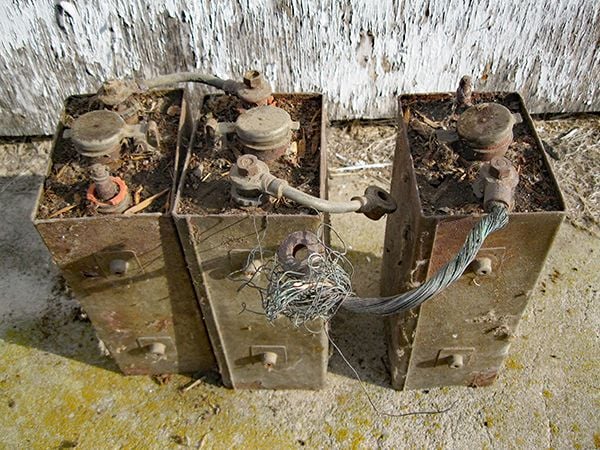
The consensus was clear: the most recent “What’s This?” clue was a major player in early rural America. While homes in town had such luxuries as electric lights, rural homes were left in the dark, literally, until the Rural Electrification Administration strung wire across the countryside.
Enter the Delco battery system, as shown in the photos sent to us by Stanley Shavlik of rural Linwood, Neb. The Delco electrified Midwest farms and ranches, lit the homes and powered appliances, radios and other things that required a bit of ingenuity and know-how.
- Updated
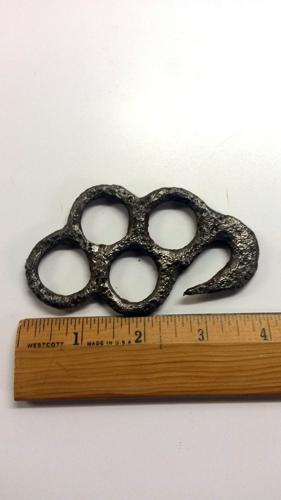
Dick Ewald of Manitowoc, Wis., sent in this What’s This? clue. It probably doesn’t get much use anymore, with advances in equipment and technology, but it came in handy decades ago around the farm.
What do you think it is? Send your responses to terry.anderson@lee.net or to Terry Anderson, News Editor, Midwest Messenger, Box 239, Tekamah NE 68061.
- Updated
We received a variety of ideas and thoughts on the most recent “What’s This?” photo. Most were tied into rope and how rope is used. The interesting thing is most seemed reasonable.
Thanks to all who responded about the rope tool. Here they are.
- Updated
Stan Shavlik, from rural Linwood, Neb., has been looking around his northern Saunders County farm and came across these three boxes with caps and cables. And there were some square glass jars. Notice the “water line” marking.
Yes, somehow, these have a connection and were pretty important parts of farm life comfort in the early 20th century. Do you know what they are? How were they used? And what did they do?
- Updated
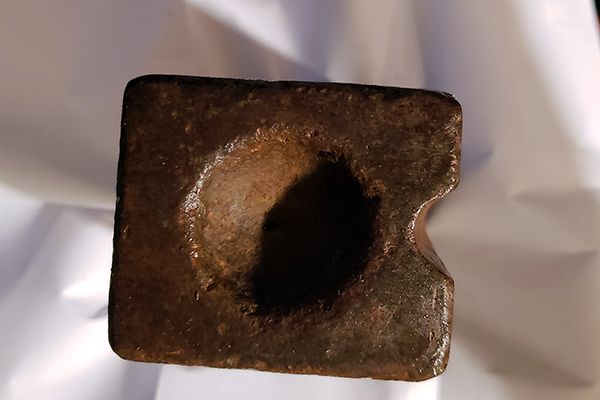
Blasting wedge ...?
The last “What’s This?” clue must have stumped most of our readers. We didn’t get many responses, but two were headed in the same direction. What do you think?
- By Terry Anderson, Midwest Messenger News Editor
- Updated
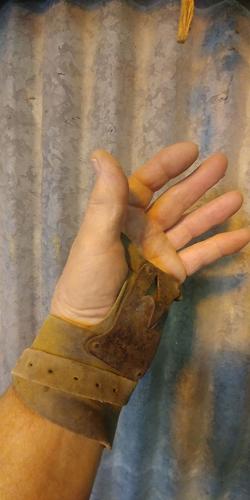
Paul D. Longfellow of Lenox, Iowa, says he found this piece of metal in a farm field, but has no idea what it is or what it was used for.
Some might think it’s an adaption of brass knuckles that more likely would be found in a dark alley in the city. The photo shows that this piece of metal, likely steel instead of brass, is about 4 inches long and a couple inches across.
- By Terry Anderson, Midwest Messenger News Editor
- Updated
There was little doubt “What’s This?” was in our most recent clue. It was a corn hook, though some responders explained its use a bit different and there also were some variations on the name. But the results were the same: hand-harvesting ear corn, walking in the fields and tossing the ears of corn into a horse-powered wagon, a continuous-motion operation, extremely antiquated by today’s monster machines.
Back then, it was the best there could be. The champion (and yes, it could be quite competitive with the neighbor or brother) kept moving as fast as the horses, with a regularly timed sound of an ear knocking the bang boards on the far side of the wagon. Some would have called it an artistry in motion. The best clearly had a system, and the corn hook played a major role in the operation.
- Updated
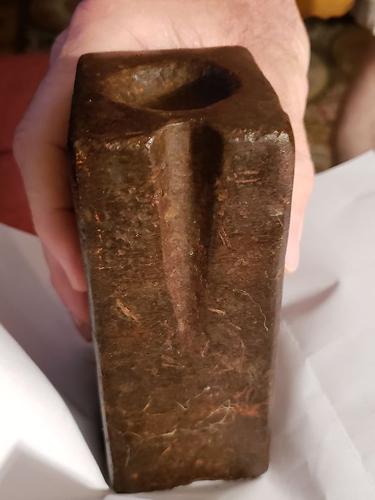
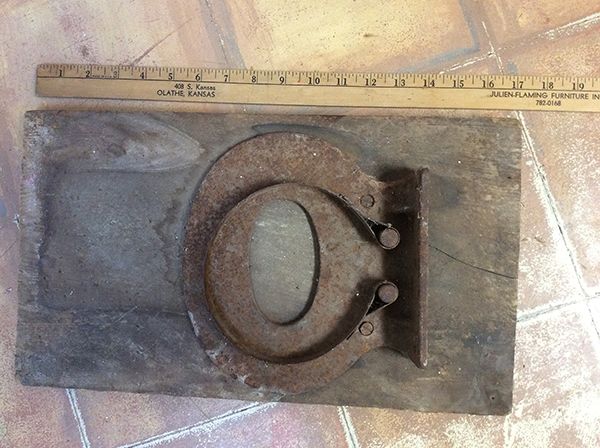
Shane and Connie Smith of Sidney, Iowa, shared photos of a heavy iron item found on their farm in southwest Iowa.
“We have found miscellaneous items throughout the years as they said it was a relay station for stage coaches,” Shane said. “Would love to find out what it is.”
- By Terry Anderson, Midwest Messenger News Editor
- Updated
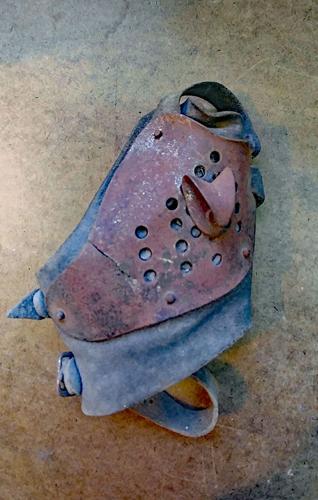
When Gerard Weber of Princeton, Kan., sent in the photo of his “What’s This?” mystery item, it was a mystery to him, too.
There was metal, wood, screws, an oval hole, what looked like a thin piece of tin. But no idea what it was. The thought that it wasn’t likely formed by the need or imagination of a single farmer prompted hope that it was more common than it could have been.
- By Terry Anderson, Midwest Messenger News Editor
- Updated
This edition’s mystery may not be that much of a question.
“Much of these old things were hung in the granary on the wall from an old nail,” related Dick Ewald, from Manitowoc, Wis.
- Updated
The “What’s This?” item pictured two weeks ago came from Stan Shavlik, from Linwood, Neb. He called it a “flail” and that’s what some of our readers called it, too.
Dennis Schlichting of Rosalie, Neb., said the item “is not some medieval battle equipment, but a very early threshing machine. In parts of the country, small grains were cut and hauled into barns where, when dried or slack time, it was spread out on the floor, termed the threshing floor.
- Updated
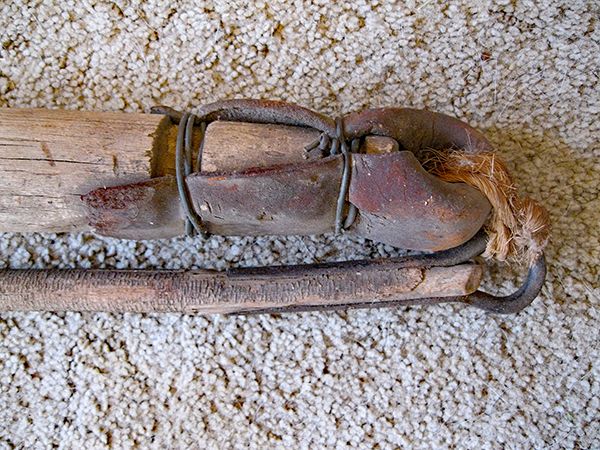
Gerard Weber of Princeton, Kan., has been mulling over the mystery of this object for many a year.
This photo shows a round metal object with the flat bottom screwed into a piece of wood, possibly a 1x10 or 2x10, 17 inches long. The piece of metal has an oval hole that shows some of the wood grain. The base on one side is bent at a 90 degree angle and could be about a quarter inch thick. The circle inside the base is maybe an inch deep and possibly made of a thin piece of tin, and secured after wrapping around two posts.
- Updated
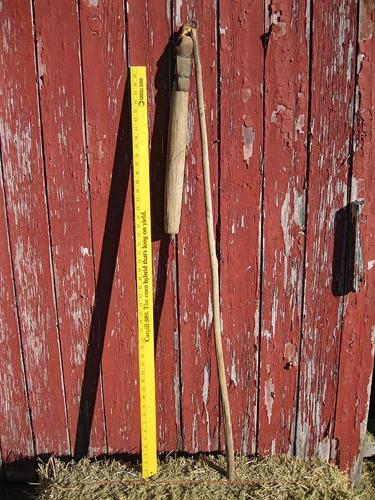
Stan Shavlik, who has been farming near Linwood, Neb., for many decades, submitted this homemade but essential piece of farm equipment … essential at least during his early years on the farm. Automation greatly decreased its need.
The name of the item was penciled in on one side of its business end and “1889” was written elsewhere. Compared to a 48-inch ruler, the longer piece is more than 50 inches long. The two pieces are attached with some old leather and a bit of twine, which likely means it was repaired at some time in its history.
- Updated
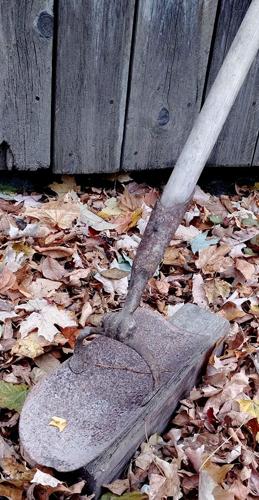
Some called it a tile shovel, tile spade or a crumber, but the last “What’s This?” item had a big purpose on the farm.
“This tile shovel has been around the farm since I was old enough to remember,” said Dick Ewald of Manitowoc, Wis., who submitted the item. “I retired from dairy farming in ‘98 and maintained much of the land to rent out, keeping many old farm tools.
- Updated
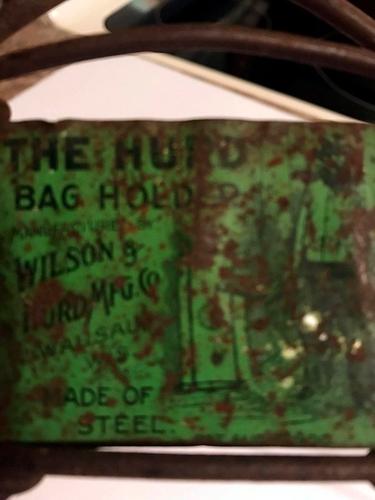
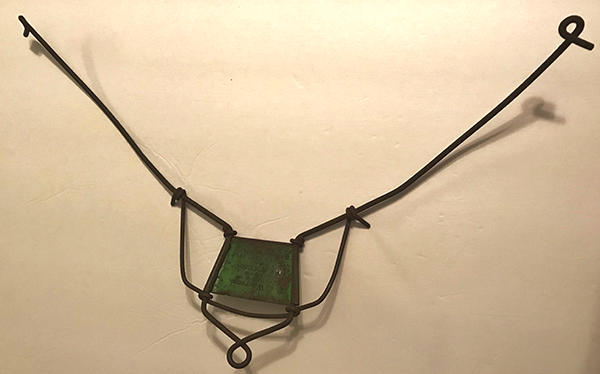
The “What’s This?” picture in the Nov. 23 Midwest Messenger is a sack holder used to hold grain sacks as they were being filled.
“My Great Uncle Frank Maves of Amherst, Wisconsin, received a patent for his invention of a sack holder that looks just like this one,” said Jon Maves, also of Amherst. “We still own two of his original sack holders.”
- Updated
It’s likely that nearly every farm has, or had, the item introduced in this “What’s This?” entry. But depending on where you were, it could have had more uses some places than other places.
The person who submitted the photo said the item was around the farm since he was old enough to remember and that was quite a few years back because he retired from dairy farming in 1998.
- By Terry Anderson, Midwest Messenger News Editor
- Updated
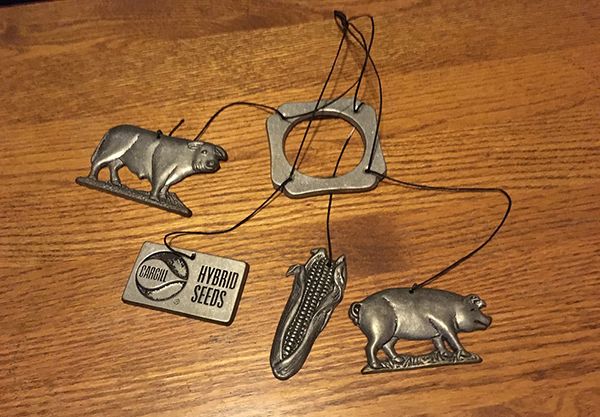
The wind chimes that were featured in our most recent “What’s This?” clue asked what was on the reverse side of one of the chime pieces. We let you know it was a certain seed company, but with all the mergers and consolidations over the years, it might not be around these days.
It is, however, still in business. In fact, the business has spread to other areas of agriculture.
- By Terry Anderson, Midwest Messenger News Editor
- Updated
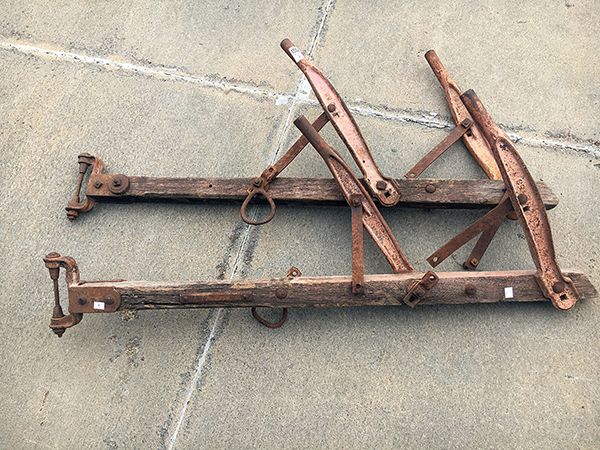
Mel Froemming, a Lee Agri-Media reader from Gresham, Wis., sent this photo to see if he could stump other readers.
He said it was found in his granary and somewhere on it reveals “Pat. August 1900”.
- By Terry Anderson, Midwest Messenger News Editor
- Updated
Just when you think the latest “What’s This?” object might remain a mystery, our readers come through.
George Albin of Hastings, Neb., sent the photo without knowing what the object was. “I’ve asked a lot of people. No one knows,” he said.
- By Terry Anderson, Midwest Messenger News Editor
- Updated
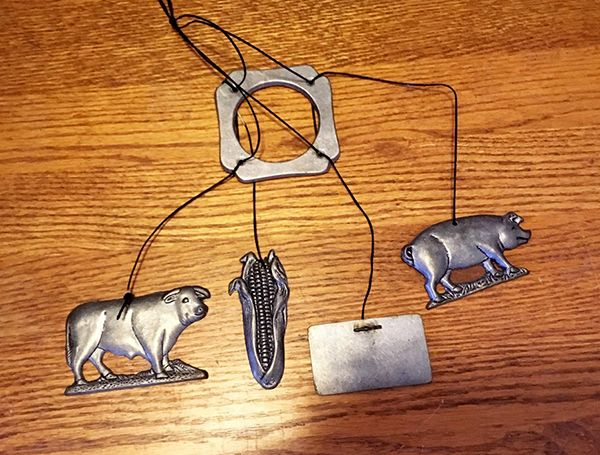
In a closed west central Minnesota restaurant, Andrea Johnson, editor of Farm & Ranch Guide, Minnesota Farm Guide and The Prairie Star, found this 1980s wind chime advertising a certain company. The intent was to show how growing this brand of corn would fatten up cattle and hogs.
Do you know what the seed company name is? Despite all the consolidations and mergers since then, the company is still around.
- By Terry Anderson, Midwest Messenger News Editor
- Updated
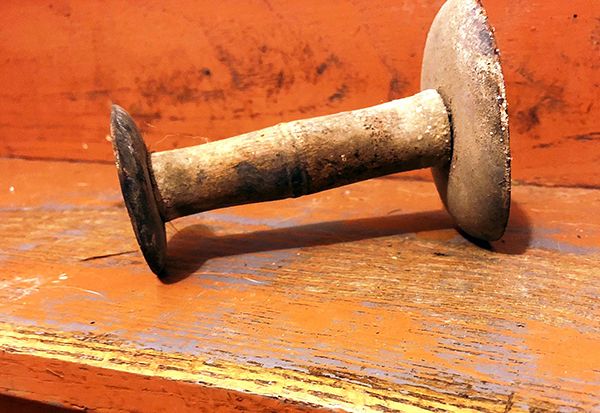
This edition’s item is a complete mystery, though we’re confident our readers will help us discover what it is and what it was used for.
George Albin of Hastings, Neb., sent us the photo and said he has no idea what it is. “I’ve asked a lot of people. No one knows,” he said.
- By Terry Anderson, Midwest Messenger News Editor
- Updated
“No doubt you’ll receive an avalanche of responses to the ‘What’s This?’ photo this week.’
That may be the understatement of the week. It seems Midwesterners know their hog equipment. Janet Soukup emailed me for her father, Stan Shavlik of rural Linwood, Neb., who “called me immediately with his response: A Hog Scraper!”
- By Terry Anderson, Midwest Messenger News Editor
- Updated
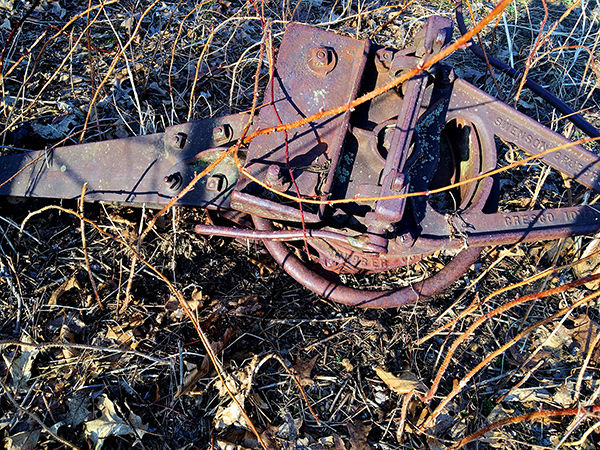
So, what could this be?
The strange device pictured was found in Wisconsin but doesn’t have anything to do with cheeseheads. In fact, it could have been used almost anywhere. If you know what it is, or have a good guess, send an email with name and address to terry.anderson@lee.net.
- By Terry Anderson, Midwest Messenger News Editor
- Updated
Even though the size and efficiency of farm equipment has changed, working the fields remains a springtime ritual. Once you’ve worked a field a few times, you remember its contour, where the water-run strips are and any obstacles like big rocks.
It’s a far cry from the days when homesteaders needed to create fields by removing rocks, trees and stumps to create tillable land. Acres of ridgetop fields were created by clearing the land – without the benefit of a tractor. Using horses and a grubber, the stumps were pulled out and away.
- By Terry Anderson, Midwest Messenger News Editor
- Updated
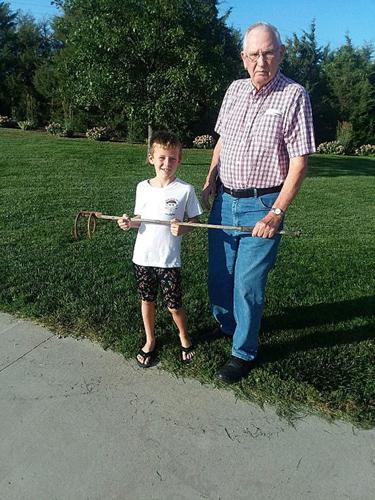
There’s a bit of rust on this edition’s “What’s This?” item. It hasn’t moved for a while, as shown by what has grown around and through it.
It looks old, but not that large, somewhat surprising if it came from many years ago when farm pieces came big and clumsy. And there seems to be a lot of surfaces and pieces attached to another.
- By Terry Anderson, Midwest Messenger News Editor
- Updated
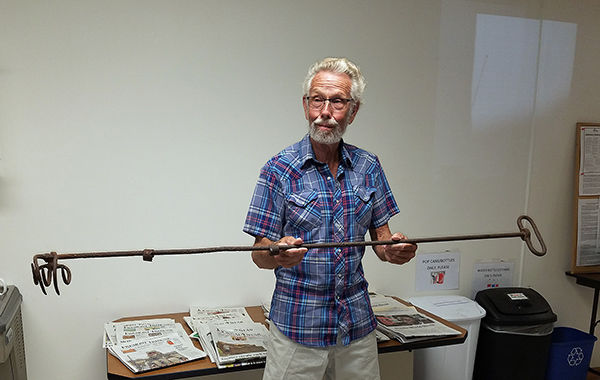
Until a couple weeks ago, the only reference I can recall to “clinker” was from the movie “A Christmas Story,” when the Old Man goes to the basement to see what’s wrong with the furnace and proclaims, “It’s a clinker!”
I figured he was using the slang expression for things that continually break down. But it also may have been a clue to what we pictured two weeks ago in our “What’s This?” question.
- By Terry Anderson, Midwest Messenger News Editor
- Updated
In the early years of what was then Midwest Producer, we had a popular feature called “What’s This?” We published old or odd items found on the farms throughout our coverage area. Some of the senders had no clue what the item was. Others knew, but wanted to see if others did.
If not found on the farm, it may be something in a display at one of the many history museums around Nebraska, Kansas and surrounding areas. As the Nebraska editions of Midwest Messenger become weekly publications, we’d like to revive this feature.
More like this...
- By Jager Robinson Tri-State Neighbor
Elda Cunningham out of Wansa, Nebraska was the only one to guess this week, and her guess appears to be correct.
She wrote that the device lifts jars out of the canner when someone is processing meats, fruits and vegetables.
- By Jager Robinson Tri-State Neighbor
Bob Rikli of Murdock may have an answer to his question as Chris Epping out of Funk correctly identified the tool as a handscraper.
The Anderson Brothers were a well-known manufacturing company in the early 1900s and developed this tool to scrape bearings and other surfaces without scratching them.
- By Jager Robinson, Tri-State Neighbor
Mary Dahl out of Superior, Nebraska has identified the “blade” as a simply saucepan drainer.
She said she got hers in the mid-1960s and used it daily before it broke.
- By Jager Robinson, Tri-State Neighbor reporter
Our next mystery item was found at a estate sale by Steve Stuekrath.
The “blade” is curved with slits in the side. Stuekrath doesn’t know it’s use and is asking the wise Midwest Messenger readers to help him identify the mystery item.
Due to some confusion, the image was only available for guesses for a short while but Janice Rasmussen was the first to guess and the first to be correct that the Janice Smith set is a vintage vacuum coffee maker set.
While not a traditional way to make coffee, vacuum coffee sets have existed for quite a while and can be bought today. The set Smith had is missing the heating pad.
- By Jager Robinson, Tri-State Neighbor Reporter
Only two guesses were made over the last two weeks and both were correct.
The spade was a support for wire fencing. The gentleman who submitted the photo called the tool a “dead man.”
- By Jager Robinson, Tri-State Neighbor
A few months back, when it was still safe to travel, an unknown man dropped this item off at the Messenger office.
While he knew what the item was, the rather large spade is roughly 38 inches from tip to corner and another 30 inches in the other direction.
- By Jager Robinson, Tri-State Neighbor
Harold Daake’s mystery item appears to be something as simple as a nut cracker according to a few What’s This enthusiasts.
Larry Martin of Valparaiso was the first to guess that the device was a nut cracker, but two anonymous messages also claimed as such.
- By Jager Robinson Tri-State Neighbor
For the first time in a while, we don’t have a mystery on our hands, rather a good ol’ guessing game.
This tool from Paul Volk of Battle Creek, Nebraska was purchased at the Petersburg Lumber Yard. While Volk knows what it is, he is putting up for considering for the What’s This enthusiast to give it their best shot.
- By Jager Robinson Tri-State Neighbor
The last item of the Nygren saga appears to be a well-rounded jack-of-all-trades tool.
Gary Mau of Fairbury believes the wooden tool was a pig slapper to cause no real harm to the pigs other than creating a big slapping noise if you needed them to move.
- By Jager Robinson Tri-State Neighbor
Our last item from George and Judy Nygren of Ashland, Nebraska is a large wooden paddle.
According to the Nygrens, this paddle is 11 inches long and made of heavy wood. George said the handle is screwed in and the piece is roughly 2 and a half inches wide.
- By Jager Robinson Tri-State Neighbor
The third item of the Nygren saga was puzzling as multiple people guessed different things.
Nicole Hosette of the South Dakota Historical Society guessed that the item is a windmill shut off handle for a water pump. Marlin Perks out of Stockville agreed, saying it could be a lever to control the break on a windmill.
- By Jager Robinson, Tri-State Neighbor
Our next What’s This? item from George and Judy Nygren of Ashland, Nebraska is a large pipe.
According to the Nygrens, this pipe has six pieces of steel and six bolts. The level is 28 inches long while the pipe itself is only 16 inches long.
- By Jager Robinson, Tri-State Neighbor
The second item from the George and Judy Nygren saga was guessed upon by only one reader over the last few weeks.
Jim Merrit out of Norfolk guessed that the item pictured is a leather cutter.
- By Jager Robinson, Tri-State Neighbor
Our next What’s This item is another that comes from George and Judy Nygren of Ashland, Nebraska.
The small roller is approximately 9 inches long with a 2 and 3/4 inch diameter wheel. The handle is wood and has no discernible markings on it.
- By Jager Robinson, Tri-State Neighbor
The first of the Nygren items was identified by more than one reader.
Dietrich Schweers of Ponca was the first to correctly guess its use.
- By Jager Robinson, Tri-State Neighbor
George and Judy Nygren of Ashland, Nebraska have four items that need identifying over the next eight weeks.
The first, which is 30 inches long and has two spiral hooks with nine chain links is one of a few mysteries the Nygrens have.
- By Jager Robinson, Tri-State Neighbor
After a few weeks of guessing, only two responses were submitted from the readers.
Larry Martin from Valparaiso suggested that the mystery device could be an elevator chair from a single-row corn picker, while Justin Ramsay guessed that the device may be an early form of barbed wire.
- By Jager Robinson, Tri-State Neighbor
Dave Fullner of Wisner, Nebraska has a new challenge for What’s This enthusiasts.
While Dave has no personal clue as to what this device is, he said he is almost positive is not a corn dryer, despite what people have tried to tell him.
- By Jager Robinson, Tri-State Neighbor
The knife submitted by Larry and Joyce Frazier is a frozen food knife.
Wanda Moores of Woodbine, Iowa was the first to correctly guess. Thanks to the half dozen that also correctly guessed.
- By Jager Robinson, Tri-State Neighbor
Larry and Joyce Frazier from Jefferson, Iowa submitted this knife after asking all around town as to its purpose.
The knife, while it looks like a standard bread knife, has four large divots in it that have thrown off those who’ve seen the picture.
- By Jager Robinson, Tri-State Neighbor
Several readers have helped identify the tool as a “kettle” of sorts for curing meat and making lard.
Jess Bandy out in Oshkosh, Nebraska was the first to guess that the pot could be used to scald pigs and scrape off hair.
- By Jager Robinson, Tri-State Neighbor
Carolyn Kappel of Miller, Nebraska has submitted this bowl for readers to guess at its purpose.
She said that the bowl is at least 150 pounds of iron and was found a good half mile in the middle of hilly farmland.
- By Jager Robinson, Tri-State Neighbor
The toy that Marie sent in is an electric motor. Thanks to all that guessed correctly.
Rod Snow of Litchfield, Nebraska was the first to guess correctly, but Chris Epping of Funk described the motor as a toy that actually says Weeden on it, not Weeler.
- By Jager Robinson, Tri-State Neighbor
Almost a year ago, Marie Benedix sent this in to be identified by our keen Midwest Messenger readers.
In a message that has been lost in time, Benedix said that the device is 4 inches wide and 9 and a half inches long with the name Weeler on it.
- By Jager Robinson, Tri-State Neighbor
It would appear that our unidentified tool is a meat tenderizer.
Marlin Perks of Stockville, Nebraska and Kermit Smith of Eustis, Nebraska both correctly identified the tool for Jeff Housh.
- By Jager Robinson, Tri-State Neighbor
This isn’t a fork, although what it could be is anyone’s guess.
Jeff Housh submitted this tool for our keen Midwest Messenger readers to guess.
- By Jager Robinson, Tri-State Neighbor
After two weeks, a two-person consensus was formed on the Brumbaugh’s tool.
Chris Epping of Funk, Nebraska was the first to guess that the tool is a Frankenstein of sorts and is actually two separate tools.
- By Jager Robinson, Tri-State Neighbor
Our next tool is a rather large one found in Omaha, Nebraska. Curt Brumbaugh’s son brought the tool to his attention.
This is a true mystery as the Brumbaughs from Red Cloud, Nebraska have no idea what the tool may be.
- By Jager Robinson, Tri-State Neighbor
It seems that Wesley and Kenneth’s mystery was their own, as no guesses were made over the last two weeks.
The device pictured is a model to set up telephone poles. Kenneth was part of a local cooperative of neighbors that had to set up their own poles to get electricity.
- By Jager Robinson, Tri-State Neighbor
A mix-up from our usual themes, Wesley Dirks out of Chappell, Nebraska has a neat mystery for readers to solve.
This device was in his dad, Kenneth’s, shop. While they both know what it is, the Dirks submitted this to see if any other rural readers know what this was used for and why they had to use something like this back in the earlier days of rural American life.
- By Jager Robinson, Tri-State Neighbor
There is a three part message in this issue:
1) The March 13 What’s This is has been identified as a grip to replace sickle sections a few at a time. Thanks to Jim Watson and Vaughn Beed for their quick guesses within 5 minutes of each other!
- By Jager Robinson, Tri-State Neighbor
Returning to large pieces of equipment, Sid Suedmeier has submitted this for consideration.
He said: “I think this is blacksmithing related, but am not sure.” in his email to the Messenger.
- By Jager Robinson, Tri-State Neighbor
It’s always sad to see an image come and go without any guesses as to what it could be.
Unfortunately for George Albin, no Messenger readers submitted a guess other than Gael Jaeger, who wondered if the tool was a horse bit or surveyors tool.
- By Jager Robinson, Tri-State Neighbor
Shrinking down in size, this next tool is brought to us from George Albin in Hastings, Nebraska.
The took is small at just 3 inches wide and Albin said he has no idea what this tool is or what it’s used for — so there is a real mystery on our hands.
- By Jager Robinson, Tri-State Neighbor
It’s good to see a true mystery ran by the "What’s This" desk. The tool Leland Schlake submitted stumped many, prompting only a handful of responses, each one different.
John Glaser of Omaha, Nebraska, was the first to guess, assuming the device is a wagon hammer. It also goes by its other name, a wagon wheel wrench.
- By Jager Robinson, Tri-State Neighbor
Leland Schlake of Cortland, Nebraska has brought Messenger readers this tool for their consideration.
- By Jager Robinson, Tri-State Neighbor
The mystery of the half wrench has been solved by nearly all those who submitted guesses.
The tool was half of a monkey wrench.
- By Jager Robinson, Tri-State Neighbor
Eugene Glock of Rising City, Nebraska has submitted this tool for reader’s consideration.
He said he has no idea what it may be but knows it’s a hammer.
- By Jager Robinson, Tri-State Neighbor
Two mysteries have been solved this issue as the item was correctly identified as a blow torch but Bob also has restored his last name — thank you to Bob Rikli of Murdock, Nebraska.
Russ Crawford of Exira, Iowa was the first to correctly guess the device and above is Denny McKay’s instructions on how the device was used in its heyday.
- By Jager Robinson, Tri-State Neighbor
This next tool isn’t a tool at all as much as an entire machine.
A reader named Bob submitted this — and unfortunately his last name was cut off in submission.
- By Jager Robinson, Tri-State Neighbor
After an issue that stumped our readers, Messenger fans have come through for Gary Ladenburger.
The tool was, in fact, a hoof trimmer.
- Jager Robinson, Tri-State Neighbor
This newest What’s This tool was submitted by Gary Ladenburger of North Bend, Nebraska.
Ladenburger farms in Morse Bluff, and said he’s seen this item as long as he can remember just sitting in his barn. To his knowledge, it’s never been used.
- Jager Robinson, Tri-State Neighbor
With an extended time to guess, unfortunately no readers submitted their responses as to what the tools in the Dec. 6 issue were.
With the holidays, personal vacations, family time and kids returning home from college, I’m sure we were all just a bit too busy.
- Jager Robinson, Tri-State Neighbor
This tool may be something that many of our readers will be able to identify.
Submitted on behalf of Fritz Loseke’s 90th birthday in May, this tool has been on his operation for dozens of years and he’s never been able to correctly identify it.
- Jager Robinson, Tri-State Neighbor
Even with the broken handle, our keen readers figured it out. This was, in fact, an ice harvesting tool.
While we got some suggestions guessing that it was used in logging, about five of you guessed correctly that this tool should have a 14-foot-handle and be used for ice harvesting.
- By Jager Robinson, Tri-State Neighbor
This next device is roughly a foot long and has a rusted metal spike at the end.
Ron Blaser of Columbus, Nebraska submitted this but followed up later correctly identifying the use.
- By Jager Robinson, Tri-State Neighbor
The mystery of the horse shoe/clip has been solved by reader Steve Renz of Superior, Nebraska.
The 61-year-old reader from Nebraska correctly identified the small device as Derby Cuff Clip.
- By Jager Robinson, Tri-State Neighbor
This next device is considerably smaller and lighter than the previous issue, but it’s a mystery nonetheless.
Larry and Julene Karloff out of Yutan, Nebraska said that this little device has been given the nickname “The Derby” but they have no
- By Jager Robinson, Tri-State Neighbor
Well, obviously we made it too easy for our readers last issue.
Yes, this device posted was a vice. And yes, the picture was posted upside down as many of you pointed out.
- By Jager Robinson, Tri-State Neighbor
Rennea Jensen-Brown submitted this device for our readers. She said her husbands family has been living on the operation for 153 years and still has no idea what this device is.
It is 2 and a half feet long and “very heavy” according to Jensen-Brown.
- By Jager Robinson, Tri-State Neighbor
Our keen readers did it again – this device is an oil drum wrench.
Tracey Hefner out of Archer, Nebraska, Alvin Depe out of Colby, Kansas, and Gary Krings out of Greenwood, Nebraska all guessed correctly.
- By Jager Robinson, Tri-State Neighbor
This one has a hint of this reporters past as Ben Cowling out of Roca, Neb. submitted this device with the words Tri-Sure New York printed on one side.
This device is still used today in some cases and Crowling does know what it is for those who are are stumped.
- By Jager Robinson, Tri-State Neighbor
The last two weeks came and went and our fearless readers unfortunately did not come up with a solution to Dean West’s problem.
After contacting several historical societies, the best guess is that the device is incomplete and missing a few pieces to correctly identify it.
- By Jager Robinson, Tri-State Neighbor
Our next device has gotten question marks written all over it.
Submitted by Dean West of Mapleton, Kansas, this device appears to have an eagle on the globe but aside from that, nothing else is known.
- By Jager Robinson, Tri-State Neighbor
The Sept. 13 image didn’t stump any of our keen readers, as the device is in fact called a Dibble.
The little hand-held device was used to plant seeds for starter plants and vegetables.
- By Jager Robinson, Tri-State Neighbor
A device with a funny name and a unique purpose highlights this round’s “What’s This.”
Sent to us from Marlin Perks of Stockville, Nebraska, the device is 10 and a half inches long and apparently is no longer in use at most farms which should make it a unique challenge for our always inquisitive readers.
- By Jager Robinson, Tri-State Neighbor
This past issue’s What’s This has drawn a great deal of back and forth. Yes, the device is an auger. But, the readers were divided on whether or not the auger was used to drill holes for blasting logs apart, or for some other purpose.
Based on Glen Schweppe’s description of the device, Ronald Blaser of Columbus, Nebraska correctly guessed that the auger was used to drill holes in corner and brace posts so that wire could be placed in an opposite direction to hold the brace in place.
- By Jager Robinson, Tri-State Neighbor
We are mixing it up this time around and giving you a device that every farmer should know very well.
This time, however, I’d like to know what exactly this marvelous digging tool was used for instead of just simply digging holes.
- By Jager Robinson, Tri-State Neighbor
In a nice twist from the norm for “What’s This,” Roger Vech’s two piece rope pulling device has been correctly identified by three keen Lee Agri-Media readers.
Vech, a Verdigre, Neb. native, submitted the two part device wanting to know what it was used for but had a feeling ropes were used.
- By Jager Robinson, Tri-State Neighbor
In an interesting twist for What’s This, this next device actually isn’t one whole piece at all.
Roger Vech from Verdigre, Neb., submitted this photo which came from his son, who found it at an old building site.
- By Jager Robinson, Tri-State Neighbor
This image was a long shot from the beginning and unfortunately no one could quite place what the device was used for.
Ray Maciejewski of Vesper, Wis. admitted as such when he said the device came from a landfill 50 years ago.
- By Jager Robinson, Tri-State Neighbor
This next photo is truly a mystery as submitter Ray Maciejewski of Vesper, Wis., also has no idea what the device is.
Maciejewski said that he found the device in the town of Richfield over 50 years ago. For added effect, he also mentioned that it came from Richfield’s landfill, so clearly its use even 50 years ago had worn out.
- By Jager Robinson, Tri-State Neighbor
Perhaps this one stumped you all more than you’d care to admit.
This metal circle with two green handles was a milk pail holder, according to Gloria Palmer who submitted the photo.
Another mystery is at hand here at the newspaper office.
This time, it comes from Gloria Palmer all the way up in Madison, Wis. Gloria found this contraption at a farm in Menomonie, Wis., and has a vague idea of what the device may be, it is up to the Midwest Messenger readers to figure out how this metal circle with two handles was used.
Gary Brown didn’t have to wait too long for a response as a staggering 12 readers wrote in via email and written mail to say this device is a buttonhook.
An old fashion buttonhook, according to 87-year-old Violet Puole from Murdock, Neb., was simply used to pull pearl shaped buttons throw the opening on old shoes.
Gary Brown from Oxford, Neb. contributed this contraption for “What’s This?”
At it’s widest point, the hook is just 1 inch wide and overall, it sits at about 4.5 inches long.
- By Jager Robinson, Tri-State Neighbor Reporter
Thanks to two keen readers who submitted their answers via the mail, we have a better guess as to what Stan Shavlik’s iron rod really is.
Both Dennis McKay of Spalding, Neb., and Ronald Blaser of Columbus, Neb. guessed correctly that the piece held in Stan’s hand is, in fact, the step to get into an old-time buggy.
Stan Shavlik has had this mystery piece for a long time on his farm east of Linwood, Neb.
You can see from how it sets in the 89-year-old retired farmer’s hand that it might be 10 to 12 inches in length. It bends from the horizontal rod up at about a 90 degree angle.
- By Jager Robinson, Tri-State Neighbor Reporter
The most recent What’s This picture seemed to fool our readers again as no submissions were sent in guessing what the pronged metal contraption was used for.
Gloria Palmer from Madison, Wis., who sent in the image, said it is a cow tail holder.
Gloria Palmer from Madison, Wis., contributed this issue’s “What’s This?”
Found at the farm in Menomonie, Wis., the metal object is 11 inches long and 4.5 inches wide. Squeeze the two handles at the bottom and both ends open, and likewise release the handles and the ends close.
The most recent “What’s This?” clue pictured a hook with a tiny hook on its end. It was submitted by Bev Smedra of Ord, Neb., who said the item was found on the farm but no one knows what it is.
“We thought of a bale hook, but it is more rounded curve than a bale hook, plus the little hook on the end,” she said. “The hole for the handle is much smaller than a bale hook handle or even a garden hoe handle. More the size of a broom handle diameter.”
Bev Smedra of Ord, Neb., said this edition’s clue was found on the farm but no one knows what it is.
There’s a little hook on the end of the larger hook, which would be odd for a bale hook. And the big hook may not be open enough to work well on a small bale. It looks like it’s designed for a round handle to slide on the end but it is smaller than a spade handle.
- By Terry Anderson, Midwest Messenger News Editor
The Steamboat Bertrand was en route from St. Louis to the newly discovered goldfields in Montana when it struck a submerged log on April 1, 1865, and sank 30 feet into the muddy Missouri River north of Omaha.
The wreckage was found in 1968 on DeSoto National Wildlife Refuge and excavated the following year. What was recovered has been on permanent exhibition at DeSoto. Not far from DeSoto, Jim Goodman farms and uncovered four oblong, heavy objects with a track hoe under about three feet of mud in an old river bed on the Missouri River bottoms.
Jim Goodman farms northwest of Crescent, Iowa, and wonders what he found.
Four of these objects were uncovered by a track hoe under about three feet of mud in an old river bed on the Missouri River bottoms. Each is 12 inches tall and has a 5-inch diameter. They are made of cast iron and each weigh about 20 pounds. The bottle shaped objects have a groove on the top with a half-inch hole perpendicular to the slot.
Cook stove lid lifter
Allan Gustin, a North Dakota rancher, has an old tool that his daughter bought for him but he doesn’t know much about it at all.
- By Terry Anderson, Midwest Messenger News Editor
Most of the time, when we get a submission for “What’s This?” there’s a good description of what the item is. Once in a while, there’s nothing. Those are times we hope our readers have a good handle on whatever is shown.
The most recent item featured in “What’s This?” didn’t give us a lot to go on. Leland Schlake of Cortland, Neb., sent a photo of a tool that he found on his farm, buried in dirt. About all he remembered was his dad using it to tightened the lugs on the wheels of box wagons.
Allan Gustin is a Morton County rancher, located just west of Bismarck, N.D. He sent in a picture of an antique tool that his daughter bought for him.
“It’s 12 inches long and is embossed with the name C-B-DALE,” he said. “She bought it in New York State, so it may be for an implement that is not agricultural, or not used in the upper Great Plains.”
This edition’s mystery item was sent in by Leland Schlake of Cortland, Neb. It’s a tool that he found on his farm, buried in the dirt. He said he remembered his dad using it many years ago.
So, he asks, “What’s This?”
Jerry Morgenstern of Hoisington, Kan., sent the photo for the more recent “What’s This?”
“It is a calf weaner found in an abandoned farmstead,” he wrote with his submission. “Had to research it on the internet to identify it.”
- By Terry Anderson, Midwest Messenger News Editor
When the most recent “What’s This?” item arrived, I immediately thought ice tongs, but Dick Ewald of Manitowoc, Wis., who sent in the photo, said not so fast. Tongs, yes. And most people can imagine them used to pull big blocks of ice from a body of water during the winter, or taking a block of ice from the ice house to use during the summer.
But Dick says these tongs were designed for transporting logs. Back when the modern Midwest was settled and developed, new residents cut down trees for several reasons: to open up space so they could farm the land, create space for a home to be built, to use the trees as lumber for the house or possibly to cut up so they could keep the house warm.
Jerry Morgenstern of Hoisington, Kan., sent this photo for “What’s This?” It looks a bit medieval, but he assures that it’s a piece that could be used in the Midwest – maybe not anymore, but certainly in the past.
So, What’s This?
- By Terry Anderson, Midwest Messenger News Editor
The consensus was clear: the most recent “What’s This?” clue was a major player in early rural America. While homes in town had such luxuries as electric lights, rural homes were left in the dark, literally, until the Rural Electrification Administration strung wire across the countryside.
Enter the Delco battery system, as shown in the photos sent to us by Stanley Shavlik of rural Linwood, Neb. The Delco electrified Midwest farms and ranches, lit the homes and powered appliances, radios and other things that required a bit of ingenuity and know-how.
Dick Ewald of Manitowoc, Wis., sent in this What’s This? clue. It probably doesn’t get much use anymore, with advances in equipment and technology, but it came in handy decades ago around the farm.
What do you think it is? Send your responses to terry.anderson@lee.net or to Terry Anderson, News Editor, Midwest Messenger, Box 239, Tekamah NE 68061.
We received a variety of ideas and thoughts on the most recent “What’s This?” photo. Most were tied into rope and how rope is used. The interesting thing is most seemed reasonable.
Thanks to all who responded about the rope tool. Here they are.
Stan Shavlik, from rural Linwood, Neb., has been looking around his northern Saunders County farm and came across these three boxes with caps and cables. And there were some square glass jars. Notice the “water line” marking.
Yes, somehow, these have a connection and were pretty important parts of farm life comfort in the early 20th century. Do you know what they are? How were they used? And what did they do?
Blasting wedge ...?
The last “What’s This?” clue must have stumped most of our readers. We didn’t get many responses, but two were headed in the same direction. What do you think?
- By Terry Anderson, Midwest Messenger News Editor
Paul D. Longfellow of Lenox, Iowa, says he found this piece of metal in a farm field, but has no idea what it is or what it was used for.
Some might think it’s an adaption of brass knuckles that more likely would be found in a dark alley in the city. The photo shows that this piece of metal, likely steel instead of brass, is about 4 inches long and a couple inches across.
- By Terry Anderson, Midwest Messenger News Editor
There was little doubt “What’s This?” was in our most recent clue. It was a corn hook, though some responders explained its use a bit different and there also were some variations on the name. But the results were the same: hand-harvesting ear corn, walking in the fields and tossing the ears of corn into a horse-powered wagon, a continuous-motion operation, extremely antiquated by today’s monster machines.
Back then, it was the best there could be. The champion (and yes, it could be quite competitive with the neighbor or brother) kept moving as fast as the horses, with a regularly timed sound of an ear knocking the bang boards on the far side of the wagon. Some would have called it an artistry in motion. The best clearly had a system, and the corn hook played a major role in the operation.
Shane and Connie Smith of Sidney, Iowa, shared photos of a heavy iron item found on their farm in southwest Iowa.
“We have found miscellaneous items throughout the years as they said it was a relay station for stage coaches,” Shane said. “Would love to find out what it is.”
- By Terry Anderson, Midwest Messenger News Editor
When Gerard Weber of Princeton, Kan., sent in the photo of his “What’s This?” mystery item, it was a mystery to him, too.
There was metal, wood, screws, an oval hole, what looked like a thin piece of tin. But no idea what it was. The thought that it wasn’t likely formed by the need or imagination of a single farmer prompted hope that it was more common than it could have been.
- By Terry Anderson, Midwest Messenger News Editor
This edition’s mystery may not be that much of a question.
“Much of these old things were hung in the granary on the wall from an old nail,” related Dick Ewald, from Manitowoc, Wis.
The “What’s This?” item pictured two weeks ago came from Stan Shavlik, from Linwood, Neb. He called it a “flail” and that’s what some of our readers called it, too.
Dennis Schlichting of Rosalie, Neb., said the item “is not some medieval battle equipment, but a very early threshing machine. In parts of the country, small grains were cut and hauled into barns where, when dried or slack time, it was spread out on the floor, termed the threshing floor.
Gerard Weber of Princeton, Kan., has been mulling over the mystery of this object for many a year.
This photo shows a round metal object with the flat bottom screwed into a piece of wood, possibly a 1x10 or 2x10, 17 inches long. The piece of metal has an oval hole that shows some of the wood grain. The base on one side is bent at a 90 degree angle and could be about a quarter inch thick. The circle inside the base is maybe an inch deep and possibly made of a thin piece of tin, and secured after wrapping around two posts.
Stan Shavlik, who has been farming near Linwood, Neb., for many decades, submitted this homemade but essential piece of farm equipment … essential at least during his early years on the farm. Automation greatly decreased its need.
The name of the item was penciled in on one side of its business end and “1889” was written elsewhere. Compared to a 48-inch ruler, the longer piece is more than 50 inches long. The two pieces are attached with some old leather and a bit of twine, which likely means it was repaired at some time in its history.
Some called it a tile shovel, tile spade or a crumber, but the last “What’s This?” item had a big purpose on the farm.
“This tile shovel has been around the farm since I was old enough to remember,” said Dick Ewald of Manitowoc, Wis., who submitted the item. “I retired from dairy farming in ‘98 and maintained much of the land to rent out, keeping many old farm tools.
The “What’s This?” picture in the Nov. 23 Midwest Messenger is a sack holder used to hold grain sacks as they were being filled.
“My Great Uncle Frank Maves of Amherst, Wisconsin, received a patent for his invention of a sack holder that looks just like this one,” said Jon Maves, also of Amherst. “We still own two of his original sack holders.”
It’s likely that nearly every farm has, or had, the item introduced in this “What’s This?” entry. But depending on where you were, it could have had more uses some places than other places.
The person who submitted the photo said the item was around the farm since he was old enough to remember and that was quite a few years back because he retired from dairy farming in 1998.
- By Terry Anderson, Midwest Messenger News Editor
The wind chimes that were featured in our most recent “What’s This?” clue asked what was on the reverse side of one of the chime pieces. We let you know it was a certain seed company, but with all the mergers and consolidations over the years, it might not be around these days.
It is, however, still in business. In fact, the business has spread to other areas of agriculture.
- By Terry Anderson, Midwest Messenger News Editor
Mel Froemming, a Lee Agri-Media reader from Gresham, Wis., sent this photo to see if he could stump other readers.
He said it was found in his granary and somewhere on it reveals “Pat. August 1900”.
- By Terry Anderson, Midwest Messenger News Editor
Just when you think the latest “What’s This?” object might remain a mystery, our readers come through.
George Albin of Hastings, Neb., sent the photo without knowing what the object was. “I’ve asked a lot of people. No one knows,” he said.
- By Terry Anderson, Midwest Messenger News Editor
In a closed west central Minnesota restaurant, Andrea Johnson, editor of Farm & Ranch Guide, Minnesota Farm Guide and The Prairie Star, found this 1980s wind chime advertising a certain company. The intent was to show how growing this brand of corn would fatten up cattle and hogs.
Do you know what the seed company name is? Despite all the consolidations and mergers since then, the company is still around.
- By Terry Anderson, Midwest Messenger News Editor
This edition’s item is a complete mystery, though we’re confident our readers will help us discover what it is and what it was used for.
George Albin of Hastings, Neb., sent us the photo and said he has no idea what it is. “I’ve asked a lot of people. No one knows,” he said.
- By Terry Anderson, Midwest Messenger News Editor
“No doubt you’ll receive an avalanche of responses to the ‘What’s This?’ photo this week.’
That may be the understatement of the week. It seems Midwesterners know their hog equipment. Janet Soukup emailed me for her father, Stan Shavlik of rural Linwood, Neb., who “called me immediately with his response: A Hog Scraper!”
- By Terry Anderson, Midwest Messenger News Editor
So, what could this be?
The strange device pictured was found in Wisconsin but doesn’t have anything to do with cheeseheads. In fact, it could have been used almost anywhere. If you know what it is, or have a good guess, send an email with name and address to terry.anderson@lee.net.
- By Terry Anderson, Midwest Messenger News Editor
Even though the size and efficiency of farm equipment has changed, working the fields remains a springtime ritual. Once you’ve worked a field a few times, you remember its contour, where the water-run strips are and any obstacles like big rocks.
It’s a far cry from the days when homesteaders needed to create fields by removing rocks, trees and stumps to create tillable land. Acres of ridgetop fields were created by clearing the land – without the benefit of a tractor. Using horses and a grubber, the stumps were pulled out and away.
- By Terry Anderson, Midwest Messenger News Editor
There’s a bit of rust on this edition’s “What’s This?” item. It hasn’t moved for a while, as shown by what has grown around and through it.
It looks old, but not that large, somewhat surprising if it came from many years ago when farm pieces came big and clumsy. And there seems to be a lot of surfaces and pieces attached to another.
- By Terry Anderson, Midwest Messenger News Editor
Until a couple weeks ago, the only reference I can recall to “clinker” was from the movie “A Christmas Story,” when the Old Man goes to the basement to see what’s wrong with the furnace and proclaims, “It’s a clinker!”
I figured he was using the slang expression for things that continually break down. But it also may have been a clue to what we pictured two weeks ago in our “What’s This?” question.
- By Terry Anderson, Midwest Messenger News Editor
In the early years of what was then Midwest Producer, we had a popular feature called “What’s This?” We published old or odd items found on the farms throughout our coverage area. Some of the senders had no clue what the item was. Others knew, but wanted to see if others did.
If not found on the farm, it may be something in a display at one of the many history museums around Nebraska, Kansas and surrounding areas. As the Nebraska editions of Midwest Messenger become weekly publications, we’d like to revive this feature.
More like this...


Print Ads