





Ben Hansen’s American bison herd, situated on a large farm just south of Orfordville, is quite astonishing. It’s the not the typical dairy farm most folks would expect to see while tooling along a back country road in southern Wisconsin; most of the time the animals can’t be seen from the road. But when passersby do see them and look just a little closer, they can see a herd of 80 animals.
Hansen Bison Farm keeps it natural
1 of 9
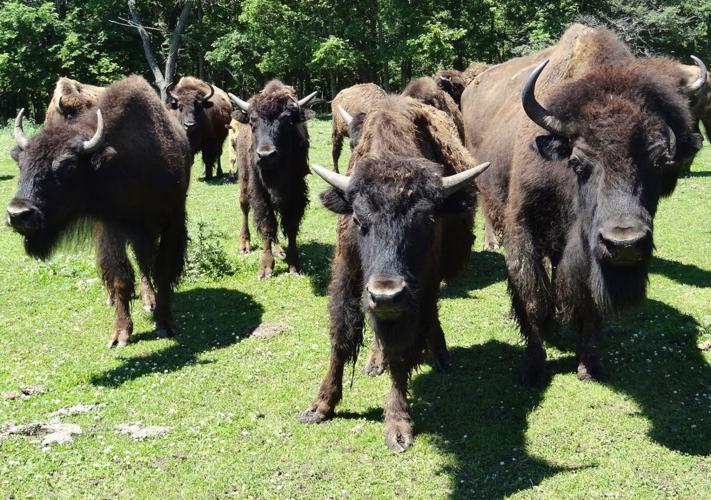
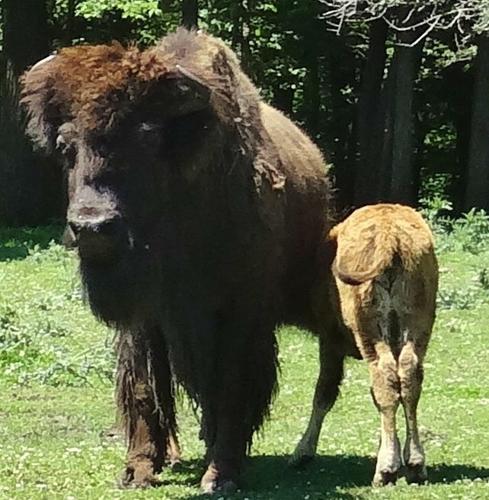
These bison still have plenty of winter hair they need to shed. Cows typically finish shedding a few weeks after calving; their hair falls off in clumps. Though owner Ben Hansen does not harvest the hair, other bison farmers do. The American bison also have double spines. The lower one is straight and can’t be seen well underneath the animal’s hump. The second spine creates the hump that is visible just behind the animal’s head. Muscle mass is between the two spines. The double spines are what make it possible for the bison to plow through snow in the winter like bulldozers, because 80 percent of their weight is from their rib cages forward.
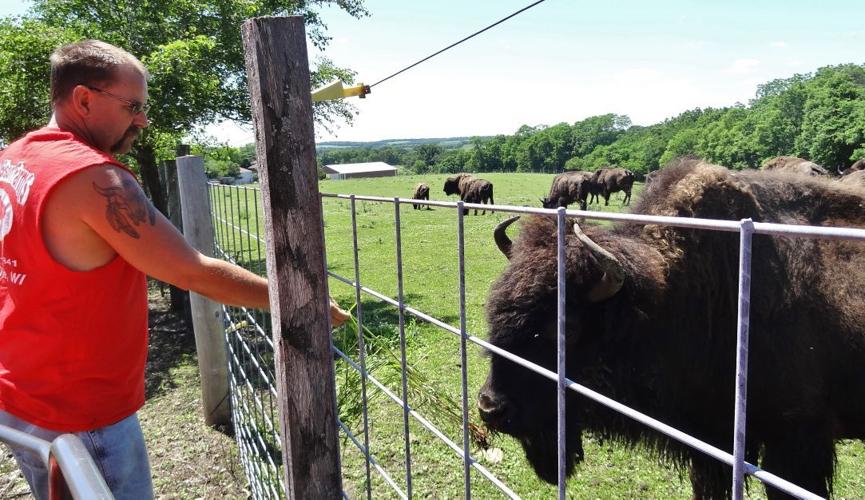
Ben Hansen, owner of Hansen Bison Farms near Orfordville, feeds a bison cow grass – from the other side of the fence. Bison can be dangerous animals. The fencing on his farm consists of 800 panels and 1,200 fence posts, like those shown here. Hansen says the biggest challenge of raising bison is the hands-off approach that’s necessary. “We can’t go out there with canes and a half dozen people to separate them,” Hansen says. “If we find one that’s not happy with us, it’ll take us out. They’ll stand their ground and we’re the ones who have to move.”
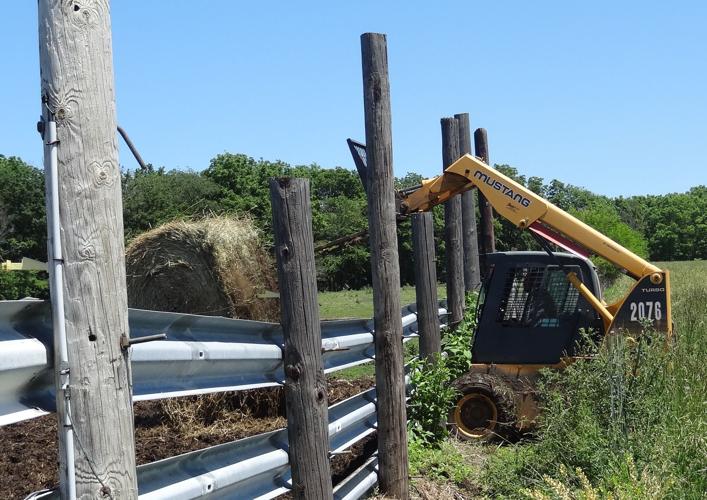
Ben Hansen puts a round bale in the pasture for his American bison. He keeps his herd natural by keeping them on pasture rather than grain, and feeding round bales. Though he makes 1,100 round bales on his farm annually, the bison go through only 600. Hansen also feeds fodder bales whenever he can because the bison prefer them over hay.
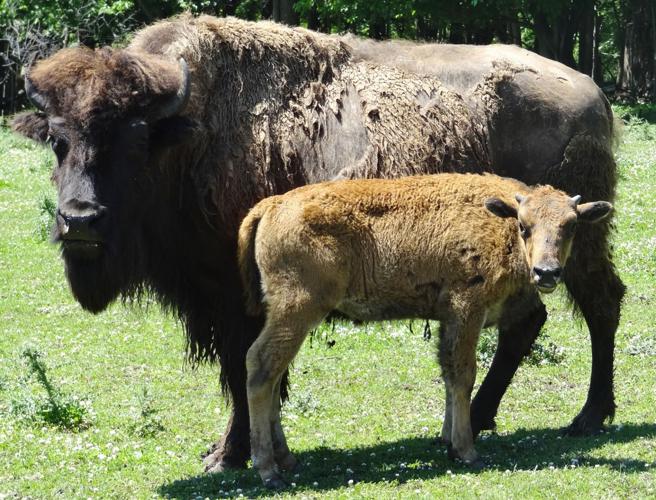
This calf has good-sized horns already. Farm owner Ben Hansen does not de-horn any of the bison because the horns are used as protection. If some animals have horns and others don’t, those that don’t could be gored to death.
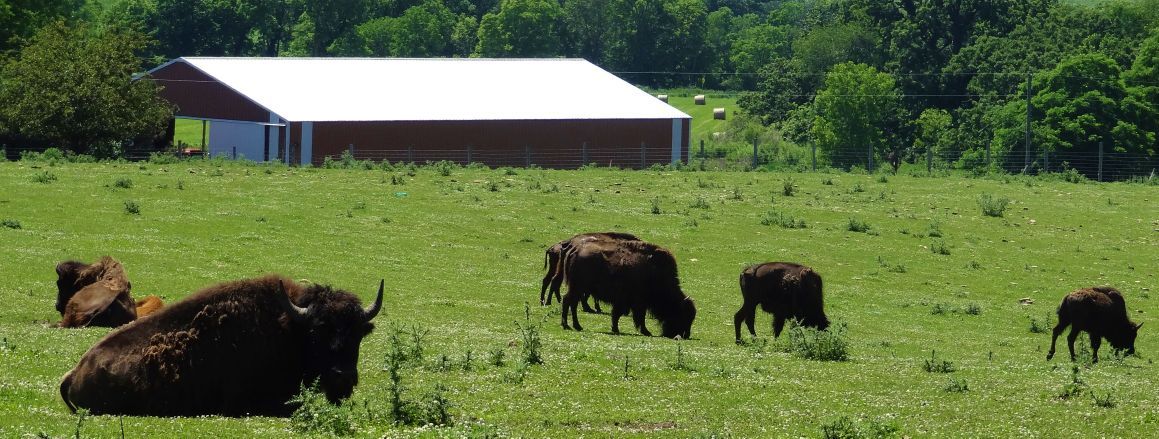
The American bison at Hansen Bison Farms enjoy their pasture. They graze the entire pasture down each year, plus go through plenty of hay and fodder bales. In winter they actually eat less because they lie down in the snow throughout the pasture and “almost hibernate,” says Ben Hansen, the farm’s owner.
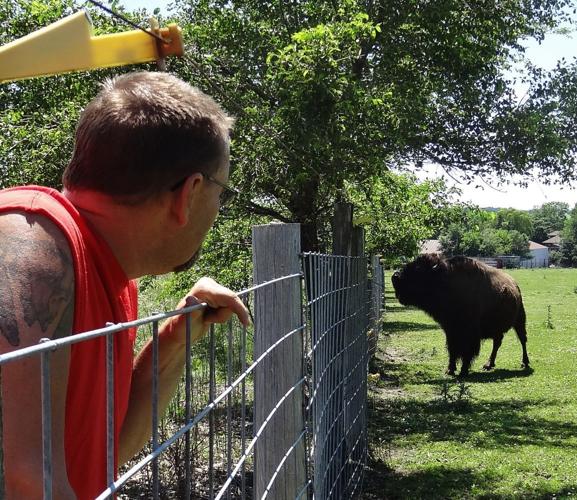
Ben Hansen, owner of Hansen Bison Farms, watches a cow eat mulberries from a tree. When the bison graze or walk through the pasture, they make snorting noises that sound like pigs. They are double-jointed with tiny back legs; most of their weight and force is in the front of their bodies.
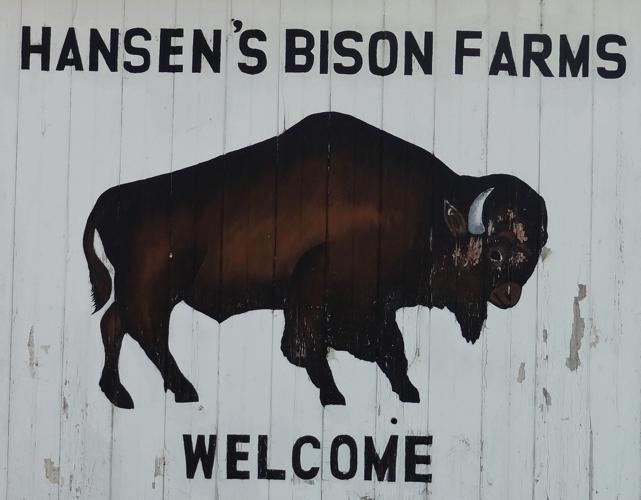
Ben Hansen and his parents moved to his current bison farm in 1965 and milked cows there for many years. His dad had an interest in Indian artifacts and antiques, and always had a dream to raise bison on his farm. In 2001, they began their bison herd with seven animals. It quickly evolved into the 80-head herd currently on the farm.
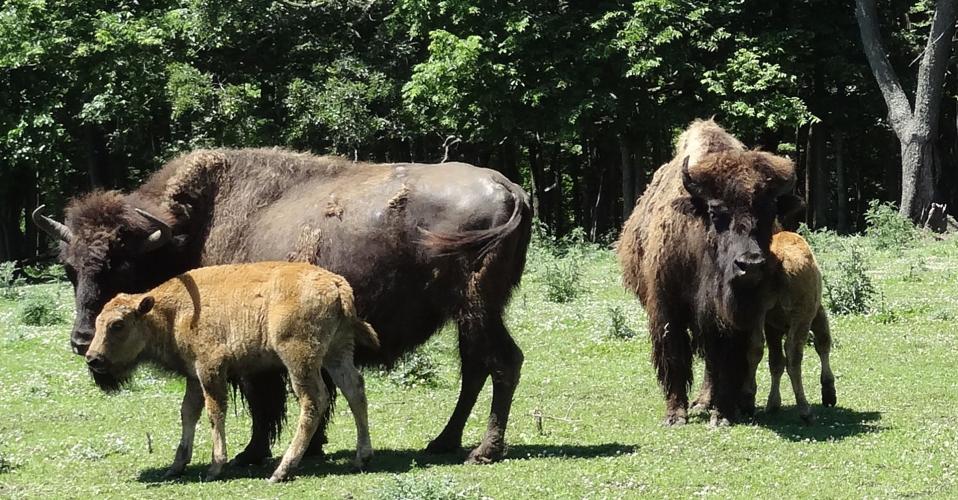
Bison cows feed and care for their calves for a long time. The cows are who actually wean the calves, not the farmers. Sometimes the yearlings sneak up behind the cows to nurse without the cows being aware. When the calves are weaned, they generally lose quite a bit of weight because they no longer have mother’s milk.
Ben Hansen holds a farmer’s-market license to sell his bison meat. He also sells directly from his farm, as well as at three area restaurants and two small, local grocery stores. He is considering selling meat at the Orfordville Farmers Market and is in the process of working out a freezer system.
Most Popular

On cold spring mornings in the Nebraska Sandhills, calving season can test even the most experienced ranchers.

Why do you do what you do?

Texas sheep and goat producers are seeing strong prices this spring as seasonal supply patterns tighten markets while demand remains steady, s…

Since the end of World War II, the number of sheep in the United States has declined from an all-time-largest number of 51 million in 1941 to …

MINDORO, Wis. – An old saying is that if something looks like a turkey and gobbles like a turkey, it’s a turkey. But instead it could be Jeff …