





When scientists look at the Earth’s available water for ecosystem services, they don’t just look at precipitation. They must also account for water moving from the ground to the atmosphere, a process known as evapotranspiration. Evapotranspiration includes evaporation from soil and open water pools such as lakes, rivers and ponds, as well as transpiration from plant leaves. The difference between precipitation and evapotranspiration indicates the water balance available for societal needs, including agricultural and industrial production. However measuring evapotranspiration is challenging. A new study from the University of Illinois Urbana-Champaign presents a computer model that uses artificial intelligence for evapotranspiration prediction based on remote-sensing estimates.
Model developed to reduce uncertainty
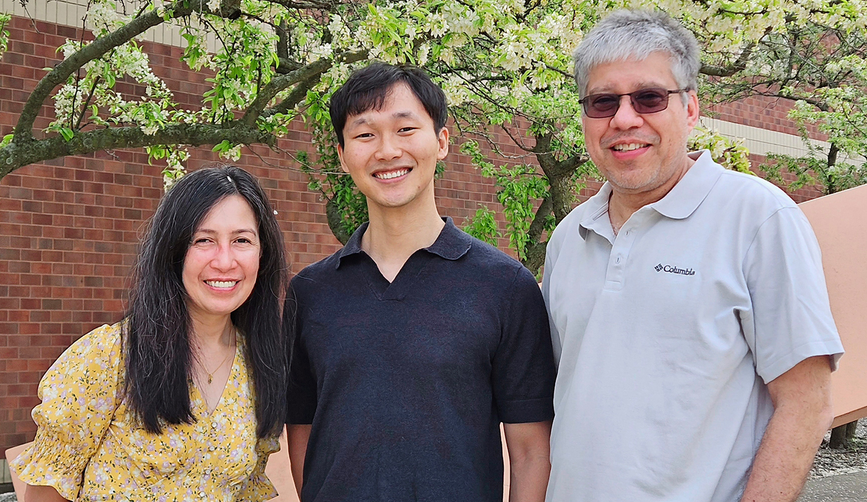
From left, Illinois researchers Maria Chu, Jeongho Han and Jorge Guzman develop a machine learning model to predict evapotranspiration that accounts for land cover dynamics.
Most Popular

An autonomous experimentation platform at the Great Lakes Bioenergy Research Center is poised to accelerate discoveries that will harness the …


