


“It would be very challenging if this were year one.”
“It would be very challenging if this were year one.”

A wet year in 2025 led to increased white mold pressure in crops throughout the region, especially in soybeans and dry beans, and BASF is launching Zorina fungicide as a protective fungicide to control white mold.

Windlift tethered drones could be the next generation of ag drones, able to fly over crop fields and rangeland, monitoring crops, weeds and cows, with the ability to stay in the air for a long time.

For the first time in more than a quarter century, Montana State University varieties were grown on half the spring wheat acres in the state in 2025.

First detected in Montana in 2023, Palmer amaranth continues to be a weed management priority in Montana, especially for seed producers. At this time, there are no established stands of the weed, which is resistant to most herbicides, and Montana intends to keep it that way.

BAKER, Mont. – Fourth-generation farmer Derrick Enos was the Montana state winner in the National Corn Growers Association’s (NCGA) corn yield contest for 2025 in the no-till non-irrigated class (dryland) with 110.7432 bushels per acre with Pioneer hybrid corn seed P8639AM.

Kochia is spreading across the Northern Plains and into eastern North Dakota as one of the most aggressive broadleaf weeds in both cropland and non-crop areas, such as railroad ditches and roadsides, according to Terry Schlieve, territory manager for Nufarm in the Northern Plains.

A globally oversupplied pulse market and high yields locally have caused depressed prices, which have affected pulse growers in the Northern Plains and other states, and it will likely take a year or more to recover, according to Kurt Haarmann, president and CEO of Columbia Grain Internation…

It will cost more to fertilize the soil next year and cost slightly more to plant major crops, according to Bryon Parman, North Dakota State University ag finance specialist.

As combines power down across the Midwest, farmers are left with more than grain in the bin. They also have a season’s worth of numbers sitting on their monitors, and that data can be the key to making next year’s decisions a little clearer.

Between the high costs of seed, fertilizer and herbicide and the meager prices their crops are bringing in, farmers are feeling the pinch this year.

Montana wheat farmer Franck Groeneweg has been able to do something few in dryland farming would consider possible. His over 11,000-acre farm, Living Sky Grains, has been able to eliminate chemical phosphorus and potassium applications since 2022, reduce the use of nitrogen fertilizer by 75 …
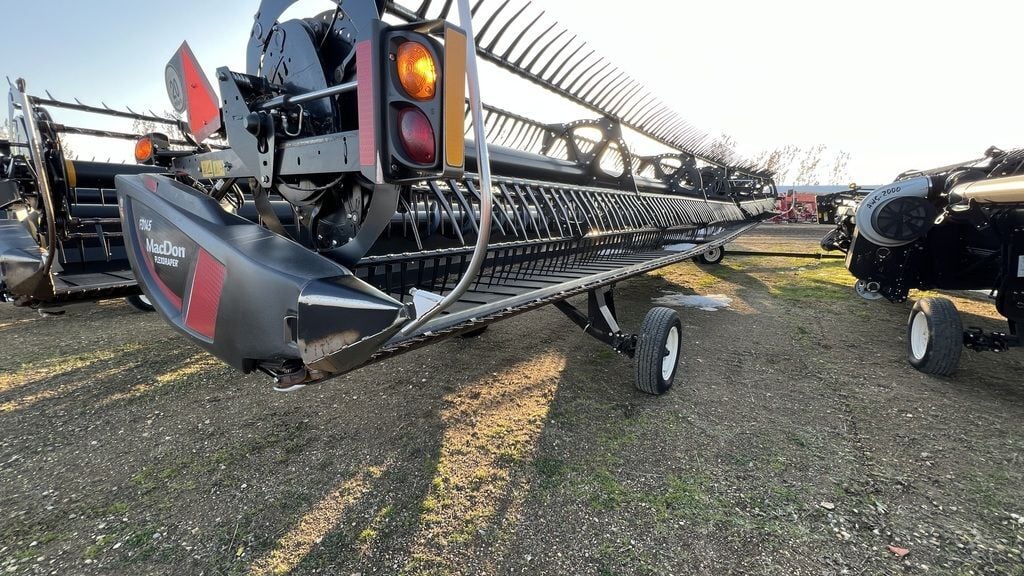
A new U.S. tariff on steel, which took effect in August, has created significant problems for Northern Plains farmers purchasing used farm equipment and parts from Canada right in the middle of winter wheat seeding and small grain harvest.

As artificial intelligence (AI) continues to develop in its abilities and applications, some university researchers see the application as the way that farming will become safer and more efficient in the future.

While producers in North Dakota are interested in spring canola varieties that have good shatter resistance and yield, some Montana growers are finishing planting their winter canola as they plan for spring varieties, as well.

A farmer can have a high-quality product, an excellent marketing plan, a social media presence and more, but still remain under financial stress due to just one thing, according to farm marketing expert Charlotte Smith.

Farmers and ranchers who may not have an heir willing to take on the operation but may have a tenant interested in continuing the operation have several choices, according to Jessica Groskopf with the University of Nebraska-Lincoln.

A new way of determining the phenotype of wheat is being tested by a master’s student at Montana State University (MSU), a project that could accelerate the process using technology.

Montana farmers produce some of the highest quality hard red spring wheat and hard red winter wheat in the country, but pests, such as the wheat stem sawfly, continue to damage wheat and cut into their bottom lines every year, especially in the Golden Triangle.

A new canola variety is being field tested in Montana with anticipated release of the new seed by BASF in 2027.

Grain loss can happen through the back of the combine, and it can add up quickly, affecting the farm’s bottom line, according to Bushel Plus CEO Marcel Kringe.

After multiple tornadoes, straight-line winds and derechos caused widespread grain bin and storage system damage in June throughout the eastern regions of Montana, the southern regions of North Dakota and western Minnesota. Now, many farmers are considering what they will do for grain storag…

Being a seed inspector, also known as an agricultural scientist, with the Montana Department of Agriculture (MDA) requires a certain set of skills, according to Ed Evanson, MDA Commodity Services Bureau Chief.

A hybrid winter rye seed option is looking to expand its popularity in states like Montana and North Dakota, noting the crop’s disease resistance and reduced input demands.

Montana WestBred winter wheat is looking “phenomenal” out in farm fields, especially fields from Bozeman all the way to Havre, according to Mark Lubbers, technical product manager at WestBred, who recently returned from looking at plots and fields throughout the state.
Recently Listed



Get up-to-the-minute news sent straight to your device.