





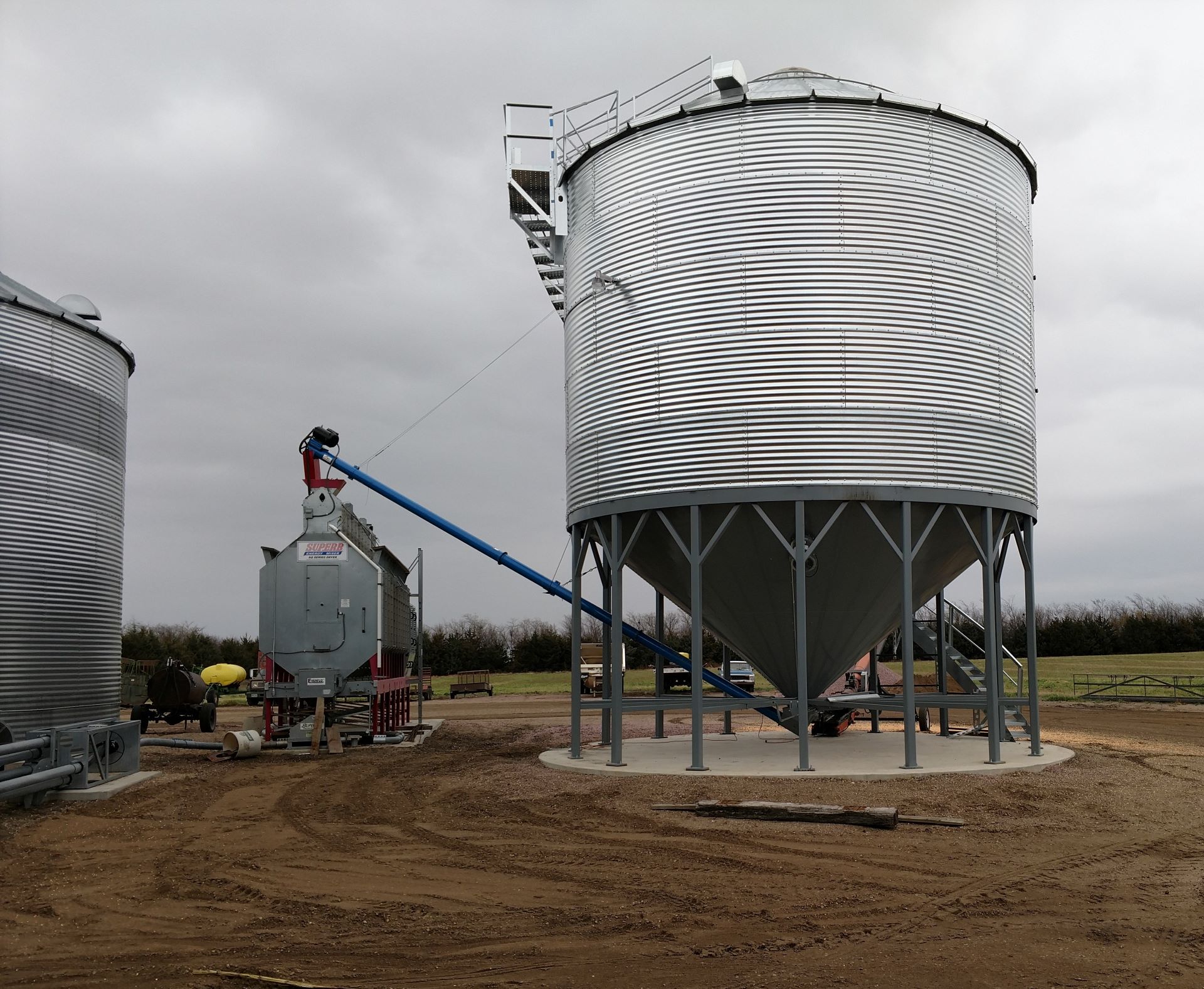
Every harvest season, farmers face the same challenge: getting grain out of storage efficiently without waste or damage. While flat bottom grain bins have served agriculture for decades, they come with hidden costs that add up quickly.
The math is simple but sobering. Labor hours spent manually sweeping grain from flat bottom bins, equipment wear from constant use, and the grain quality issues that come from prolonged exposure all chip away at profit margins. For operations managing multiple bins across hundreds of acres, these inefficiencies compound into significant annual losses.
The Real Cost of Flat Bottom Storage
Traditional flat bottom bin systems require farmers to manually remove the last 5-10% of stored grain. That means climbing into bins with shovels and sweep augers, spending hours in dusty conditions to recover product. The physical toll on workers matters, but so does the time stolen from other critical farm operations.
Grain quality suffers too. The longer product sits in a bin, the greater the risk of moisture problems, pest issues, and spoilage. Flat bottom designs create dead zones where grain remains trapped, increasing these risks substantially.
How Hopper Bottom Technology Changes Operations
Steel hopper conversions address these problems through straightforward engineering. By retrofitting existing flat bottom bins with professionally manufactured hopper cones, farmers gain complete gravity-flow discharge. No more manual sweeping. No more trapped grain. No more unnecessary labor costs.
The hopper bottom grain bins system channels all stored product to a central discharge point. Operators can empty bins quickly and completely from outside, reducing exposure to confined space hazards while improving workflow efficiency. For farms running lean operations, this time savings translates directly to better resource allocation.
Agricultural storage demands have evolved. Modern grain handling requires systems that protect product quality while minimizing labor inputs. Hopper bins deliver both, making them particularly valuable for operations focused on maintaining grade standards and reducing waste.
Midwest Engineering Standards Matter
Not all grain bin conversions deliver equal results. The Midwest grain bins market has seen its share of poorly engineered retrofits that create more problems than they solve. Structural integrity matters when dealing with thousands of bushels under load.
Quality steel hoppers must handle significant weight while maintaining proper flow characteristics. Poor welds, inadequate materials, or improper cone angles can lead to grain bridging, uneven discharge, or worse, structural failure. These aren't theoretical concerns—they're real risks that affect farm safety and productivity.
Professional grain bin retrofit services account for load calculations, proper support structures, and discharge system integration. The difference between a successful conversion and a problematic one often comes down to engineering expertise and manufacturing precision.
Making the Conversion Decision
Farmers considering flat bottom bin conversion typically evaluate several factors. Bin size and condition matter, as do current grain handling workflows and long-term storage needs. Operations with multiple bins often phase conversions strategically, starting with their highest-volume storage units.
The investment pays back through reduced labor costs, improved grain quality, and faster turnaround times during critical marketing windows. When grain prices move, farmers with efficient discharge systems can respond quickly, capitalizing on favorable market conditions without logistical delays.
Grain storage infrastructure represents a significant capital investment. Extending the useful life of existing bins through hopper conversions makes financial sense compared to complete replacement. Modern retrofit technology allows farmers to modernize their operations incrementally, matching improvements to cash flow and operational priorities.
Getting Started
HOPPERCONE specializes in steel hopper solutions designed for agricultural storage challenges. Their expertise in grain handling systems helps farmers evaluate options and implement conversions that match specific operational needs.
For farmers ready to reduce labor costs, improve grain quality, and modernize their storage operations, professional consultation provides clarity on technical requirements and implementation timelines.
Contact HOPPERCONE at 605-546-2368 or visit hoppercone.com to discuss grain bin conversion options. Their team can assess existing infrastructure and recommend solutions tailored to individual farm operations.