Sudden and tragic, gun violence is increasing in Madison and the surrounding area, bringing both heartbreak and a thirst for revenge. For four months, the Wisconsin State Journal has been speaking with perpetrators, victims, emergency responders, doctors and those who study the root causes of violence to understand why it’s happening and what it might take to stop it.
Sunday: Unaddressed trauma during childhood can have devastating impacts on future health and behavior, sometimes leading to violence. Meanwhile, more young people are carrying weapons.
Gun violence in Madison: Behind flashes of violence lie histories of unaddressed trauma
In a bloody 2016, in a span of 23 days, three young African-American men were slain — two on consecutive days — in related, retaliatory shootings in public places in Madison.
The next year, a group of men invaded a North Side apartment in broad daylight, shooting to death a 33-year old father in front of his 3-old son and the boy's terrified mother.
More youth are carrying weapons, disputes are personal
It was over in an instant.
At a party at a Far East Side motel on April 7, 2017, the young man watched as an uninvited clique forced its way into a bedroom, calling the teen’s name.
Tutankhamun “Coach” Assad helps youth like Tony Maldonodo, 11, left, Raheem Carter, 11, and Caleb Watkins, 13, stay engaged in positive activities in the Meadowood neighborhood on the Southwest Side.
Cortez Dobson, 18, who grew up on Madison's streets and was incarcerated for felony possession of a weapon, said he never viewed the life as anything other than ordinary. He is on parole and working toward a diploma at Operation Fresh Start.
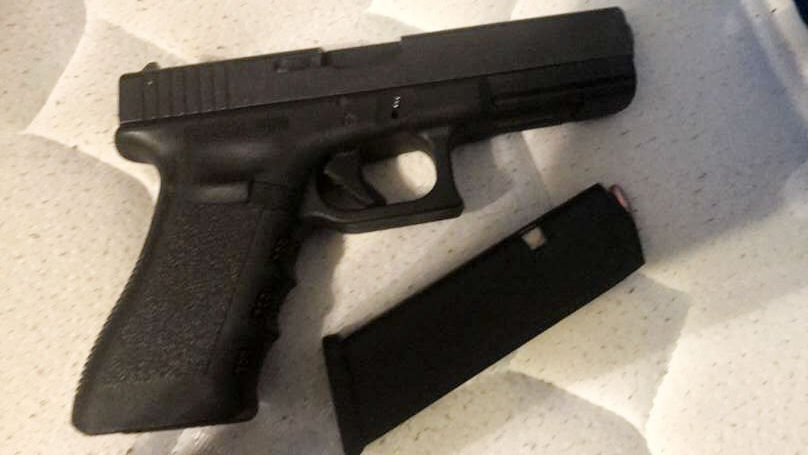
Madison Police captured this image from a then-15 year old last year who is a suspect in an armed robbery where shots were fired and someone was hit. A detective believes the posting was unrelated to the robbery, but rather to brag about being armed or having access to a weapon.
Left unaddressed, childhood trauma can weaken developing brain
It comes in ways blunt and insidious, sometimes before birth, through childhood and on: Poverty, hunger, unemployment. Housing insecurity and eviction. Abuse, neglect, household dysfunction. Exposure to violence, parental incarceration. Racism.
For the first time, Madison area taking coordinated approach to gun violence
At 3:34 p.m., May 17, they gathered for a meeting none of the participants wanted.
The previous evening, with children playing outside and people around, a man fired a bullet into the back of the head of Rayshawn Jackson, 24, outside an apartment building at 9 Waunona Woods Court on the South Side.
Madison Police Lt. Tim Patton of the Violent Crimes Unit solicits information from members of the Community Safety Intervention Team about how each responds to violence and how they might better coordinate their efforts.
Violence reduction initiative relies on police community outreach, extra enforcement
On a beautiful weekday evening this spring, Madison police officers Brian Dyer and Kraig Knutson stop their squad cars and get out to walk, engaging with children and residents in an area plagued by crime on the Southwest Side.
They mingle, tossing footballs with a group of kids, then set up a portable basketball hoop and block off part of Theresa Terrace near the tiny neighborhood center there. The children like it, and the vibe is good.
A suspect detained while Madison Police search a suspected stolen car at the intersection of North Third and East Dayton streets on June 7. The stop was part of a citywide violence reduction initiative in which police identify and arrest people involved in recent gun violence, try to disrupt gangs and drug-dealing, and arrest fugitives or those with warrants for violent offenses.
Defusing the violence: Peer support counselers bring credibility, calm in crises
Just hours after being shot at close range on Madison’s North Side, 29-year-old Eldridge L. Taylor clings to life as his mother, brother and girlfriend anxiously await word of his condition in a long hallway near the emergency room at UW Hospital.
Anthony Cooper Sr., Jerome Dillard and Aaron Hicks, members of the community-based Focused Interruption Coalition, who have been with the family at the hospital, draw near as a doctor approaches. Madison Police Lt. Tim Patton, who leads the department’s Violent Crimes Unit, is also nearby, while more officers are down the hall.
Madison Police Violent Crimes Unit Lt. Tim Patton, left, speaks with Focused Interruption Coalition director Anthony Cooper, Sr., in a hallway near the emergency room at UW Hospital after a victim of an attempted homicide was brought there on March 28. FIC was present to provide peer support and comfort to the victim's family.
Zandra Hagberg, right, with the Focused Interruption Coalition, talks with Jennifer Philumalee before her son's court appearance at the Dane County courthouse. FIC has been providing peer support to Philumalee's family since her daughter, Ciara, was the victim of a homicide in 2017.
Jerome Dillard, left, and Aaron Hicks, both with the Focused Interruption Coalition, counsel Cole Williams about his future before his appearance in Dane County Circuit Court on charges of illegal use of a weapon, disorderly conduct and possession of THC.
Cycle of retaliatory shootings escalated 2 years ago
In the early evening of April 18, 2016, an incendiary mix gathered at Penn Park on the South Side.
A group including men from Chicago was hanging out and gambling at a picnic table. But there were people from a rival group at the park, too. At one point, Martez Moore, 30, part of the rival group, jumped on the picnic table. Words were spoken. Guns came out.
Madison police investigate the scene of an early morning shooting that claimed the life of one man and injured another outside a 7-Eleven convenience store on the South Side on Aug. 2, 2017. It was the city's 10th homicide of 2017, tying the record of most homicides in the city set in 2008.
Madison Police Gang Unit Officer Shane Olson observes other officers search a suspected stolen car during a violence reduction initiative sweep last month. When gangs are involved, the expectation is they have and may use guns, he said.
Their currency is the lived experience of personal trauma, prison and the hard, tedious work it takes to get one's life back on track, combine…
A week in the life of a crisis peer support specialist
The hours are unpredictable, the pay low and you’re working from crisis to crisis. Welcome to the life of a crisis peer support specialist, a new city-supported position run through the nonprofit Focused Interruption Coalition.
While FIC had been providing peer support before the city contracted with its partner, the Nehemiah Center for Urban Leadership Development, starting last year, “much of it was volunteer and sometimes not at the level necessary due to time and job constraints,” said FIC assistant executive director Zandra Hagberg, who often handles dispatching duties and works with female clients. “Now, this is a job and we can focus more time to those who need us most.”
Cycles of incarceration hit African Americans, children especially hard
When people commit certain crimes or pose an extreme danger to others, most agree, they need to be locked up.
Incarceration can also concentrate the mind, forcing offenders to confront the alcohol and drug dependencies that often led to their crimes, allow them to address anger problems and further their education.
Inmates share a group cell at the Dane County Jail facility in the Public Safety Building. The housing is less restrictive and safer than older cells on the seventh and eight floor of the City-County Building.
Dane County Sheriff's Office Lt. Kurt Pierce in the jail's "sensory room" in the jail’s special needs pod. The room features a mural, rocking chair and music offering inmates a respite from other inmates.
Shape up or else: Multi-agency initiative aims to give offenders an offer they can't refuse
On Jan. 31, Leontae Porter became one of the latest 10.
On that day, Porter, 23, who completed a four-year prison term last fall for the armed robbery of a fast-food restaurant in Sun Prairie, and nine others seen as among Madison’s most prolific repeat violent offenders, were given a choice: Accept the help service providers were offering to get their lives back on track or expect swift and stern punishment if they reoffend.
A tiny haven of learning, peace in Dane County Jail
On the seventh floor of the aging Dane County Jail in the City-County Building, near the long halls lined with barred cells holding the highest-risk inmates, is a small, narrow room offering hope.
There, Madison school teachers Deb Anderson and Tina Geier operate Metro High, one of the school district’s four programs for youth incarcerated, or in detention or shelter who have not earned a high school diploma or turned 21.
Their journeys from the trauma of youth, through criminal pasts and prison, to personal transformation make them uniquely positioned to help o…
Madison area seeks creative, comprehensive solution to addressing gun violence
Amid a disturbing increase in shootings, many by teens and young adults, Madison-area leaders are calling for a broad-based approach to preventing the violence, even well before anyone picks up a gun.
Mayor Paul Soglin and Dane County Executive Joe Parisi are vowing additional funding in their 2019 budgets to build on recent initiatives such as expanding funding for peer support specialists, who help those causing or harmed by violence; continuing to collaborate with school, police, nonprofits, health care workers and the faith community; and adopting a public health approach to addressing violence.
In 2016, Mayor Paul Soglin announced the first round of city spending for crisis peer support specialists operated by the then-new Focused Interruption Coalition, including from left, Aaron Hicks, Caliph Maub’El, Michael Johnson, and Anthony Cooper, Sr. In his next budget, Soglin said he plans to "significantly" expand the partnership.
In taking a more comprehensive approach to stopping violence, city and county officials would do well to work with those living with it every day, said Tutankhamum "Coach" Assad, whose Mellowhood Foundation provides positive activities for kids in troubled neighborhoods.
Public health approach seeks to cure violence by healing trauma
Madison and Dane County are trying a new approach to combating violence, treating it as a public health emergency and relying on data, science and the voices of those most affected to cure it.
In coming months, Public Health Madison and Dane County will lead an effort to build a community violence prevention coalition and conduct broad outreach to forge a comprehensive plan to address violence similar to a sweeping “Blueprint for Peace” adopted in Milwaukee in 2017.
'Prevention is not a luxury': Other cities taking a broad-based approach to fighting gun violence
Madison is far from alone in its struggle to address escalating gun violence.
Bigger cities that have suffered jumps in gun violence now look far beyond law enforcement, employing hospital-based and public health initiatives in an attempt to slow cycles of violence.
Mental health worker Farji Shaheer visits with a gunshot victim at Hennepin County Medical Center in Minneapolis. The counselors are part of a hospital program to support victims of gun violence, one of several initiatives the city has taken to stem shootings.
A diagram outlining elements of Milwaukee's Blueprint for Peace at the city's Office of Violence Prevention. The city adopted its plan, a potential model for one in Madison, in 2017.
Reggie Moore, director of the Milwaukee Office of Violence Prevention, works closely with others trying to reduce the number of shootings and homicides in the state's biggest city.
Madison and Dane County are increasingly bringing in people whose past give them the credibility needed to deescalate tense situations and prevent retaliatory violence.