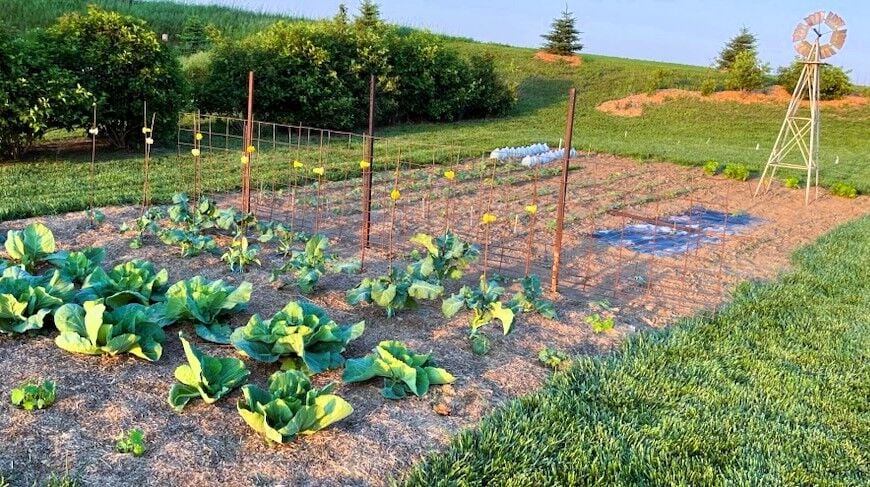
Three years ago, hundreds of gardeners across Nebraska rolled up their sleeves and dug deep into soil health. They volunteered to dedicate a 100-square-foot portion of their gardens to the Nebraska Urban Soil Health Initiative (NUSHI), a research trial offered in partnership through the University of Nebraska-Lincoln (UNL) and the USDA Natural Resources Conservation Service (NRCS).
Health of body, mind and spirit stems from the garden
At the onset of the growing season, I had questioned whether my NUSHI (Nebraska Urban Soil Health Initiative) plots were indeed a garden or a laboratory. After months of digging holes to transplant seedlings, hoeing rows of weeds and bending this way and that to pick produce, I realize now that it is more like a fitness center.
Physical training in the garden encompasses a variety of exercises and workout styles. Yoga is useful when picking vegetables. Poses like downward facing dog, half moon and cobra are my favorites to reach tomatoes growing in awkward places.
Most of the sweetcorn provided by UNL looked like this. A different hybrid of sweetcorn growing parallel to the NUSHI plot did quite well, so the seed is likely to blame.
What a difference a year can make. Last spring, you had to watch where you walked for fear of tripping in the deep cracks that scored the parched earth. This spring, we were donning our mud boots almost every day.
I will not complain about mud after several years of drought. Planting my garden was later than intended due to the cool, wet spring. I was disappointed by this setback because I had big aspirations to double-crop for the Nebraska Urban Soil Health Initiative (NUSHI) through the University of Nebraska-Lincoln, a two-year study involving gardeners across the state.
Rainfall over the last two years varied greatly in Colfax County, Neb. Precipitation was plentiful early in the growing season, but things dried up in late July.
In terms of gardening, I consider myself “green” yet.
Sure, growing up I helped my mom plant, weed and harvest her garden. I was also fortunate enough to spend ample time in the garden, flowerbeds, hayfields and crop fields with my four grandparents and my great-grandmother.
Spring rains and warm days have all gardeners chomping at the bit. I have been routinely checking the University of Nebraska-Lincoln (UNL) CropWatch Soil Temperature Update website, watching the daily average increase from barely 40 to just shy of 60 degrees for our area in Nebraska.
Freezing nights have kept soil temperatures from climbing too high. With a few weeks yet until the last frost date, the seedlings I had started in March are still basking cozily under grow lights inside the house. Cool-season crops such as peas, lettuce and carrots are in the ground but have not yet emerged.
I wish I could report a bumper crop of produce was harvested from my garden this year, especially being part of the NUSHI (Nebraska Urban Soil Health Initiative) study through UNL. The reality is that gardening was a struggle.
But next year will be better. I have a long list of notes of what to do differently, and what not to do.
Whenever I take a test, I tend to feel anxious until the results are back. So waiting since March for the soil test results from the Nebraska Urban Soil Health Initiative (NUSHI) felt like an eternity. Now magnify that anxious feeling—these soil samples were indicative of seven years of work to improve the soil in my garden.
To add to the suspense, only one sample for one group in the garden study, known as 2X for the number of soil health practices implemented, has been tested so far. The area I am really curious about—the 4X group—is still being tested.
kAmv@:?8 3J E96 a) E6DE C6DF=ED[ E9@F89[ :E =@@<D =:<6 x 92G6 2C62D @7 :>AC@G6>6?E]k^Am
While not all gardeners necessarily have a green thumb, they do tend to share a few common characteristics. Generally, gardeners like to watch their plants or flowers grow, and most are concerned about soil health. But each and every gardener loves to talk about their gardens.
Ten Nebraska Urban Soil Health Initiative (NUSHI) participants kindly shared their typical gardening habits and their trials this gardening season with the NUSHI study. The ten interviewed participants come from all over the state of Nebraska. Each grows something different, from flowers to vegetables, and from fruits to herbs.
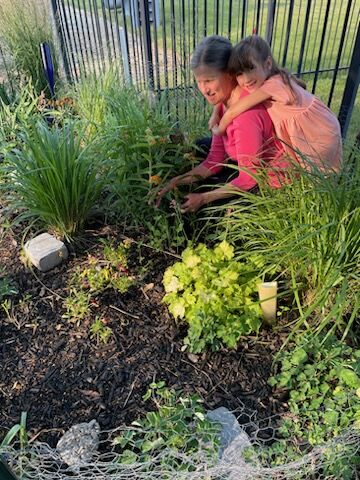
Kay Hegler has been pinching off the flowers and buds from the buckwheat cover crop to prevent it from going to seed. Her granddaughter Brielle is learning just as much as grandma with the NUSHI project!
You don’t realize how hard change is until you try to change. That was just one of my realizations as I embarked on the Nebraska Urban Soil Health Initiative (NUSHI). Here is an update on the citizen scientist project since March.
Because some of the participants could no longer fulfill the study, about a dozen people are doing two groups on two separate plots. I am excited to be part of both the 2X (using cover crops and no-till) and 4X (cover crops, no-till, compost and biochar) groups to compare how each plot does over the two-year period.
Getting scientific: Test results revealed from statewide soil health study
Three years ago, hundreds of gardeners across Nebraska rolled up their sleeves and dug deep into soil health. They volunteered to dedicate a 100-square-foot portion of their gardens to the Nebraska Urban Soil Health Initiative (NUSHI), a research trial offered in partnership through the University of Nebraska-Lincoln (UNL) and the USDA Natural Resources Conservation Service (NRCS).
The plots tended by “citizen scientists” represented nearly every soil type across the state, from the heavy loess near the Missouri River to the granular topography of the Sandhills to the calciferous topsoil of the Panhandle. Over the course of 24 months, the participants extracted 634 soil samples at three different intervals from their designated study plots.
Backyard and urban gardens are becoming increasingly popular in the campaign for localized food production.
Health of body, mind and spirit stems from the garden
At the onset of the growing season, I had questioned whether my NUSHI (Nebraska Urban Soil Health Initiative) plots were indeed a garden or a laboratory. After months of digging holes to transplant seedlings, hoeing rows of weeds and bending this way and that to pick produce, I realize now that it is more like a fitness center.
Physical training in the garden encompasses a variety of exercises and workout styles. Yoga is useful when picking vegetables. Poses like downward facing dog, half moon and cobra are my favorites to reach tomatoes growing in awkward places.
Most of the sweetcorn provided by UNL looked like this. A different hybrid of sweetcorn growing parallel to the NUSHI plot did quite well, so the seed is likely to blame.
What a difference a year can make. Last spring, you had to watch where you walked for fear of tripping in the deep cracks that scored the parched earth. This spring, we were donning our mud boots almost every day.
I will not complain about mud after several years of drought. Planting my garden was later than intended due to the cool, wet spring. I was disappointed by this setback because I had big aspirations to double-crop for the Nebraska Urban Soil Health Initiative (NUSHI) through the University of Nebraska-Lincoln, a two-year study involving gardeners across the state.
Rainfall over the last two years varied greatly in Colfax County, Neb. Precipitation was plentiful early in the growing season, but things dried up in late July.
In terms of gardening, I consider myself “green” yet.
Sure, growing up I helped my mom plant, weed and harvest her garden. I was also fortunate enough to spend ample time in the garden, flowerbeds, hayfields and crop fields with my four grandparents and my great-grandmother.
Spring rains and warm days have all gardeners chomping at the bit. I have been routinely checking the University of Nebraska-Lincoln (UNL) CropWatch Soil Temperature Update website, watching the daily average increase from barely 40 to just shy of 60 degrees for our area in Nebraska.
Freezing nights have kept soil temperatures from climbing too high. With a few weeks yet until the last frost date, the seedlings I had started in March are still basking cozily under grow lights inside the house. Cool-season crops such as peas, lettuce and carrots are in the ground but have not yet emerged.
I wish I could report a bumper crop of produce was harvested from my garden this year, especially being part of the NUSHI (Nebraska Urban Soil Health Initiative) study through UNL. The reality is that gardening was a struggle.
But next year will be better. I have a long list of notes of what to do differently, and what not to do.
Whenever I take a test, I tend to feel anxious until the results are back. So waiting since March for the soil test results from the Nebraska Urban Soil Health Initiative (NUSHI) felt like an eternity. Now magnify that anxious feeling—these soil samples were indicative of seven years of work to improve the soil in my garden.
To add to the suspense, only one sample for one group in the garden study, known as 2X for the number of soil health practices implemented, has been tested so far. The area I am really curious about—the 4X group—is still being tested.
kAmv@:?8 3J E96 a) E6DE C6DF=ED[ E9@F89[ :E =@@<D =:<6 x 92G6 2C62D @7 :>AC@G6>6?E]k^Am
While not all gardeners necessarily have a green thumb, they do tend to share a few common characteristics. Generally, gardeners like to watch their plants or flowers grow, and most are concerned about soil health. But each and every gardener loves to talk about their gardens.
Ten Nebraska Urban Soil Health Initiative (NUSHI) participants kindly shared their typical gardening habits and their trials this gardening season with the NUSHI study. The ten interviewed participants come from all over the state of Nebraska. Each grows something different, from flowers to vegetables, and from fruits to herbs.
Kay Hegler has been pinching off the flowers and buds from the buckwheat cover crop to prevent it from going to seed. Her granddaughter Brielle is learning just as much as grandma with the NUSHI project!
You don’t realize how hard change is until you try to change. That was just one of my realizations as I embarked on the Nebraska Urban Soil Health Initiative (NUSHI). Here is an update on the citizen scientist project since March.
Because some of the participants could no longer fulfill the study, about a dozen people are doing two groups on two separate plots. I am excited to be part of both the 2X (using cover crops and no-till) and 4X (cover crops, no-till, compost and biochar) groups to compare how each plot does over the two-year period.
Getting scientific: Test results revealed from statewide soil health study
Three years ago, hundreds of gardeners across Nebraska rolled up their sleeves and dug deep into soil health. They volunteered to dedicate a 100-square-foot portion of their gardens to the Nebraska Urban Soil Health Initiative (NUSHI), a research trial offered in partnership through the University of Nebraska-Lincoln (UNL) and the USDA Natural Resources Conservation Service (NRCS).
The plots tended by “citizen scientists” represented nearly every soil type across the state, from the heavy loess near the Missouri River to the granular topography of the Sandhills to the calciferous topsoil of the Panhandle. Over the course of 24 months, the participants extracted 634 soil samples at three different intervals from their designated study plots.
Backyard and urban gardens are becoming increasingly popular in the campaign for localized food production.
Health of body, mind and spirit stems from the garden
At the onset of the growing season, I had questioned whether my NUSHI (Nebraska Urban Soil Health Initiative) plots were indeed a garden or a laboratory. After months of digging holes to transplant seedlings, hoeing rows of weeds and bending this way and that to pick produce, I realize now that it is more like a fitness center.
Physical training in the garden encompasses a variety of exercises and workout styles. Yoga is useful when picking vegetables. Poses like downward facing dog, half moon and cobra are my favorites to reach tomatoes growing in awkward places.
Most of the sweetcorn provided by UNL looked like this. A different hybrid of sweetcorn growing parallel to the NUSHI plot did quite well, so the seed is likely to blame.
What a difference a year can make. Last spring, you had to watch where you walked for fear of tripping in the deep cracks that scored the parched earth. This spring, we were donning our mud boots almost every day.
I will not complain about mud after several years of drought. Planting my garden was later than intended due to the cool, wet spring. I was disappointed by this setback because I had big aspirations to double-crop for the Nebraska Urban Soil Health Initiative (NUSHI) through the University of Nebraska-Lincoln, a two-year study involving gardeners across the state.
Rainfall over the last two years varied greatly in Colfax County, Neb. Precipitation was plentiful early in the growing season, but things dried up in late July.
In terms of gardening, I consider myself “green” yet.
Sure, growing up I helped my mom plant, weed and harvest her garden. I was also fortunate enough to spend ample time in the garden, flowerbeds, hayfields and crop fields with my four grandparents and my great-grandmother.
Spring rains and warm days have all gardeners chomping at the bit. I have been routinely checking the University of Nebraska-Lincoln (UNL) CropWatch Soil Temperature Update website, watching the daily average increase from barely 40 to just shy of 60 degrees for our area in Nebraska.
Freezing nights have kept soil temperatures from climbing too high. With a few weeks yet until the last frost date, the seedlings I had started in March are still basking cozily under grow lights inside the house. Cool-season crops such as peas, lettuce and carrots are in the ground but have not yet emerged.
I wish I could report a bumper crop of produce was harvested from my garden this year, especially being part of the NUSHI (Nebraska Urban Soil Health Initiative) study through UNL. The reality is that gardening was a struggle.
But next year will be better. I have a long list of notes of what to do differently, and what not to do.
Whenever I take a test, I tend to feel anxious until the results are back. So waiting since March for the soil test results from the Nebraska Urban Soil Health Initiative (NUSHI) felt like an eternity. Now magnify that anxious feeling—these soil samples were indicative of seven years of work to improve the soil in my garden.
To add to the suspense, only one sample for one group in the garden study, known as 2X for the number of soil health practices implemented, has been tested so far. The area I am really curious about—the 4X group—is still being tested.
kAmv@:?8 3J E96 a) E6DE C6DF=ED[ E9@F89[ :E =@@<D =:<6 x 92G6 2C62D @7 :>AC@G6>6?E]k^Am
While not all gardeners necessarily have a green thumb, they do tend to share a few common characteristics. Generally, gardeners like to watch their plants or flowers grow, and most are concerned about soil health. But each and every gardener loves to talk about their gardens.
Ten Nebraska Urban Soil Health Initiative (NUSHI) participants kindly shared their typical gardening habits and their trials this gardening season with the NUSHI study. The ten interviewed participants come from all over the state of Nebraska. Each grows something different, from flowers to vegetables, and from fruits to herbs.
Kay Hegler has been pinching off the flowers and buds from the buckwheat cover crop to prevent it from going to seed. Her granddaughter Brielle is learning just as much as grandma with the NUSHI project!
You don’t realize how hard change is until you try to change. That was just one of my realizations as I embarked on the Nebraska Urban Soil Health Initiative (NUSHI). Here is an update on the citizen scientist project since March.
Because some of the participants could no longer fulfill the study, about a dozen people are doing two groups on two separate plots. I am excited to be part of both the 2X (using cover crops and no-till) and 4X (cover crops, no-till, compost and biochar) groups to compare how each plot does over the two-year period.
Getting scientific: Test results revealed from statewide soil health study
Three years ago, hundreds of gardeners across Nebraska rolled up their sleeves and dug deep into soil health. They volunteered to dedicate a 100-square-foot portion of their gardens to the Nebraska Urban Soil Health Initiative (NUSHI), a research trial offered in partnership through the University of Nebraska-Lincoln (UNL) and the USDA Natural Resources Conservation Service (NRCS).
The plots tended by “citizen scientists” represented nearly every soil type across the state, from the heavy loess near the Missouri River to the granular topography of the Sandhills to the calciferous topsoil of the Panhandle. Over the course of 24 months, the participants extracted 634 soil samples at three different intervals from their designated study plots.
Backyard and urban gardens are becoming increasingly popular in the campaign for localized food production.
Health of body, mind and spirit stems from the garden
At the onset of the growing season, I had questioned whether my NUSHI (Nebraska Urban Soil Health Initiative) plots were indeed a garden or a laboratory. After months of digging holes to transplant seedlings, hoeing rows of weeds and bending this way and that to pick produce, I realize now that it is more like a fitness center.
Physical training in the garden encompasses a variety of exercises and workout styles. Yoga is useful when picking vegetables. Poses like downward facing dog, half moon and cobra are my favorites to reach tomatoes growing in awkward places.
Most of the sweetcorn provided by UNL looked like this. A different hybrid of sweetcorn growing parallel to the NUSHI plot did quite well, so the seed is likely to blame.
What a difference a year can make. Last spring, you had to watch where you walked for fear of tripping in the deep cracks that scored the parched earth. This spring, we were donning our mud boots almost every day.
I will not complain about mud after several years of drought. Planting my garden was later than intended due to the cool, wet spring. I was disappointed by this setback because I had big aspirations to double-crop for the Nebraska Urban Soil Health Initiative (NUSHI) through the University of Nebraska-Lincoln, a two-year study involving gardeners across the state.
Rainfall over the last two years varied greatly in Colfax County, Neb. Precipitation was plentiful early in the growing season, but things dried up in late July.
In terms of gardening, I consider myself “green” yet.
Sure, growing up I helped my mom plant, weed and harvest her garden. I was also fortunate enough to spend ample time in the garden, flowerbeds, hayfields and crop fields with my four grandparents and my great-grandmother.
Spring rains and warm days have all gardeners chomping at the bit. I have been routinely checking the University of Nebraska-Lincoln (UNL) CropWatch Soil Temperature Update website, watching the daily average increase from barely 40 to just shy of 60 degrees for our area in Nebraska.
Freezing nights have kept soil temperatures from climbing too high. With a few weeks yet until the last frost date, the seedlings I had started in March are still basking cozily under grow lights inside the house. Cool-season crops such as peas, lettuce and carrots are in the ground but have not yet emerged.
I wish I could report a bumper crop of produce was harvested from my garden this year, especially being part of the NUSHI (Nebraska Urban Soil Health Initiative) study through UNL. The reality is that gardening was a struggle.
But next year will be better. I have a long list of notes of what to do differently, and what not to do.
Whenever I take a test, I tend to feel anxious until the results are back. So waiting since March for the soil test results from the Nebraska Urban Soil Health Initiative (NUSHI) felt like an eternity. Now magnify that anxious feeling—these soil samples were indicative of seven years of work to improve the soil in my garden.
To add to the suspense, only one sample for one group in the garden study, known as 2X for the number of soil health practices implemented, has been tested so far. The area I am really curious about—the 4X group—is still being tested.
kAmv@:?8 3J E96 a) E6DE C6DF=ED[ E9@F89[ :E =@@<D =:<6 x 92G6 2C62D @7 :>AC@G6>6?E]k^Am
While not all gardeners necessarily have a green thumb, they do tend to share a few common characteristics. Generally, gardeners like to watch their plants or flowers grow, and most are concerned about soil health. But each and every gardener loves to talk about their gardens.
Ten Nebraska Urban Soil Health Initiative (NUSHI) participants kindly shared their typical gardening habits and their trials this gardening season with the NUSHI study. The ten interviewed participants come from all over the state of Nebraska. Each grows something different, from flowers to vegetables, and from fruits to herbs.
Kay Hegler has been pinching off the flowers and buds from the buckwheat cover crop to prevent it from going to seed. Her granddaughter Brielle is learning just as much as grandma with the NUSHI project!
You don’t realize how hard change is until you try to change. That was just one of my realizations as I embarked on the Nebraska Urban Soil Health Initiative (NUSHI). Here is an update on the citizen scientist project since March.
Because some of the participants could no longer fulfill the study, about a dozen people are doing two groups on two separate plots. I am excited to be part of both the 2X (using cover crops and no-till) and 4X (cover crops, no-till, compost and biochar) groups to compare how each plot does over the two-year period.
Getting scientific: Test results revealed from statewide soil health study
Three years ago, hundreds of gardeners across Nebraska rolled up their sleeves and dug deep into soil health. They volunteered to dedicate a 100-square-foot portion of their gardens to the Nebraska Urban Soil Health Initiative (NUSHI), a research trial offered in partnership through the University of Nebraska-Lincoln (UNL) and the USDA Natural Resources Conservation Service (NRCS).
The plots tended by “citizen scientists” represented nearly every soil type across the state, from the heavy loess near the Missouri River to the granular topography of the Sandhills to the calciferous topsoil of the Panhandle. Over the course of 24 months, the participants extracted 634 soil samples at three different intervals from their designated study plots.
Backyard and urban gardens are becoming increasingly popular in the campaign for localized food production.
Health of body, mind and spirit stems from the garden
At the onset of the growing season, I had questioned whether my NUSHI (Nebraska Urban Soil Health Initiative) plots were indeed a garden or a laboratory. After months of digging holes to transplant seedlings, hoeing rows of weeds and bending this way and that to pick produce, I realize now that it is more like a fitness center.
Physical training in the garden encompasses a variety of exercises and workout styles. Yoga is useful when picking vegetables. Poses like downward facing dog, half moon and cobra are my favorites to reach tomatoes growing in awkward places.
Most of the sweetcorn provided by UNL looked like this. A different hybrid of sweetcorn growing parallel to the NUSHI plot did quite well, so the seed is likely to blame.
What a difference a year can make. Last spring, you had to watch where you walked for fear of tripping in the deep cracks that scored the parched earth. This spring, we were donning our mud boots almost every day.
I will not complain about mud after several years of drought. Planting my garden was later than intended due to the cool, wet spring. I was disappointed by this setback because I had big aspirations to double-crop for the Nebraska Urban Soil Health Initiative (NUSHI) through the University of Nebraska-Lincoln, a two-year study involving gardeners across the state.
Rainfall over the last two years varied greatly in Colfax County, Neb. Precipitation was plentiful early in the growing season, but things dried up in late July.
In terms of gardening, I consider myself “green” yet.
Sure, growing up I helped my mom plant, weed and harvest her garden. I was also fortunate enough to spend ample time in the garden, flowerbeds, hayfields and crop fields with my four grandparents and my great-grandmother.
Spring rains and warm days have all gardeners chomping at the bit. I have been routinely checking the University of Nebraska-Lincoln (UNL) CropWatch Soil Temperature Update website, watching the daily average increase from barely 40 to just shy of 60 degrees for our area in Nebraska.
Freezing nights have kept soil temperatures from climbing too high. With a few weeks yet until the last frost date, the seedlings I had started in March are still basking cozily under grow lights inside the house. Cool-season crops such as peas, lettuce and carrots are in the ground but have not yet emerged.
I wish I could report a bumper crop of produce was harvested from my garden this year, especially being part of the NUSHI (Nebraska Urban Soil Health Initiative) study through UNL. The reality is that gardening was a struggle.
But next year will be better. I have a long list of notes of what to do differently, and what not to do.
Whenever I take a test, I tend to feel anxious until the results are back. So waiting since March for the soil test results from the Nebraska Urban Soil Health Initiative (NUSHI) felt like an eternity. Now magnify that anxious feeling—these soil samples were indicative of seven years of work to improve the soil in my garden.
To add to the suspense, only one sample for one group in the garden study, known as 2X for the number of soil health practices implemented, has been tested so far. The area I am really curious about—the 4X group—is still being tested.
kAmv@:?8 3J E96 a) E6DE C6DF=ED[ E9@F89[ :E =@@<D =:<6 x 92G6 2C62D @7 :>AC@G6>6?E]k^Am
While not all gardeners necessarily have a green thumb, they do tend to share a few common characteristics. Generally, gardeners like to watch their plants or flowers grow, and most are concerned about soil health. But each and every gardener loves to talk about their gardens.
Ten Nebraska Urban Soil Health Initiative (NUSHI) participants kindly shared their typical gardening habits and their trials this gardening season with the NUSHI study. The ten interviewed participants come from all over the state of Nebraska. Each grows something different, from flowers to vegetables, and from fruits to herbs.
Kay Hegler has been pinching off the flowers and buds from the buckwheat cover crop to prevent it from going to seed. Her granddaughter Brielle is learning just as much as grandma with the NUSHI project!
You don’t realize how hard change is until you try to change. That was just one of my realizations as I embarked on the Nebraska Urban Soil Health Initiative (NUSHI). Here is an update on the citizen scientist project since March.
Because some of the participants could no longer fulfill the study, about a dozen people are doing two groups on two separate plots. I am excited to be part of both the 2X (using cover crops and no-till) and 4X (cover crops, no-till, compost and biochar) groups to compare how each plot does over the two-year period.
Getting scientific: Test results revealed from statewide soil health study
Three years ago, hundreds of gardeners across Nebraska rolled up their sleeves and dug deep into soil health. They volunteered to dedicate a 100-square-foot portion of their gardens to the Nebraska Urban Soil Health Initiative (NUSHI), a research trial offered in partnership through the University of Nebraska-Lincoln (UNL) and the USDA Natural Resources Conservation Service (NRCS).
The plots tended by “citizen scientists” represented nearly every soil type across the state, from the heavy loess near the Missouri River to the granular topography of the Sandhills to the calciferous topsoil of the Panhandle. Over the course of 24 months, the participants extracted 634 soil samples at three different intervals from their designated study plots.
Backyard and urban gardens are becoming increasingly popular in the campaign for localized food production.
Health of body, mind and spirit stems from the garden
At the onset of the growing season, I had questioned whether my NUSHI (Nebraska Urban Soil Health Initiative) plots were indeed a garden or a laboratory. After months of digging holes to transplant seedlings, hoeing rows of weeds and bending this way and that to pick produce, I realize now that it is more like a fitness center.
Physical training in the garden encompasses a variety of exercises and workout styles. Yoga is useful when picking vegetables. Poses like downward facing dog, half moon and cobra are my favorites to reach tomatoes growing in awkward places.
What a difference a year can make. Last spring, you had to watch where you walked for fear of tripping in the deep cracks that scored the parched earth. This spring, we were donning our mud boots almost every day.
I will not complain about mud after several years of drought. Planting my garden was later than intended due to the cool, wet spring. I was disappointed by this setback because I had big aspirations to double-crop for the Nebraska Urban Soil Health Initiative (NUSHI) through the University of Nebraska-Lincoln, a two-year study involving gardeners across the state.
In terms of gardening, I consider myself “green” yet.
Sure, growing up I helped my mom plant, weed and harvest her garden. I was also fortunate enough to spend ample time in the garden, flowerbeds, hayfields and crop fields with my four grandparents and my great-grandmother.
Spring rains and warm days have all gardeners chomping at the bit. I have been routinely checking the University of Nebraska-Lincoln (UNL) CropWatch Soil Temperature Update website, watching the daily average increase from barely 40 to just shy of 60 degrees for our area in Nebraska.
Freezing nights have kept soil temperatures from climbing too high. With a few weeks yet until the last frost date, the seedlings I had started in March are still basking cozily under grow lights inside the house. Cool-season crops such as peas, lettuce and carrots are in the ground but have not yet emerged.
I wish I could report a bumper crop of produce was harvested from my garden this year, especially being part of the NUSHI (Nebraska Urban Soil Health Initiative) study through UNL. The reality is that gardening was a struggle.
But next year will be better. I have a long list of notes of what to do differently, and what not to do.
Whenever I take a test, I tend to feel anxious until the results are back. So waiting since March for the soil test results from the Nebraska Urban Soil Health Initiative (NUSHI) felt like an eternity. Now magnify that anxious feeling—these soil samples were indicative of seven years of work to improve the soil in my garden.
To add to the suspense, only one sample for one group in the garden study, known as 2X for the number of soil health practices implemented, has been tested so far. The area I am really curious about—the 4X group—is still being tested.
kAmv@:?8 3J E96 a) E6DE C6DF=ED[ E9@F89[ :E =@@<D =:<6 x 92G6 2C62D @7 :>AC@G6>6?E]k^Am
While not all gardeners necessarily have a green thumb, they do tend to share a few common characteristics. Generally, gardeners like to watch their plants or flowers grow, and most are concerned about soil health. But each and every gardener loves to talk about their gardens.
Ten Nebraska Urban Soil Health Initiative (NUSHI) participants kindly shared their typical gardening habits and their trials this gardening season with the NUSHI study. The ten interviewed participants come from all over the state of Nebraska. Each grows something different, from flowers to vegetables, and from fruits to herbs.
You don’t realize how hard change is until you try to change. That was just one of my realizations as I embarked on the Nebraska Urban Soil Health Initiative (NUSHI). Here is an update on the citizen scientist project since March.
Because some of the participants could no longer fulfill the study, about a dozen people are doing two groups on two separate plots. I am excited to be part of both the 2X (using cover crops and no-till) and 4X (cover crops, no-till, compost and biochar) groups to compare how each plot does over the two-year period.
Getting scientific: Test results revealed from statewide soil health study
Three years ago, hundreds of gardeners across Nebraska rolled up their sleeves and dug deep into soil health. They volunteered to dedicate a 100-square-foot portion of their gardens to the Nebraska Urban Soil Health Initiative (NUSHI), a research trial offered in partnership through the University of Nebraska-Lincoln (UNL) and the USDA Natural Resources Conservation Service (NRCS).
The plots tended by “citizen scientists” represented nearly every soil type across the state, from the heavy loess near the Missouri River to the granular topography of the Sandhills to the calciferous topsoil of the Panhandle. Over the course of 24 months, the participants extracted 634 soil samples at three different intervals from their designated study plots.