

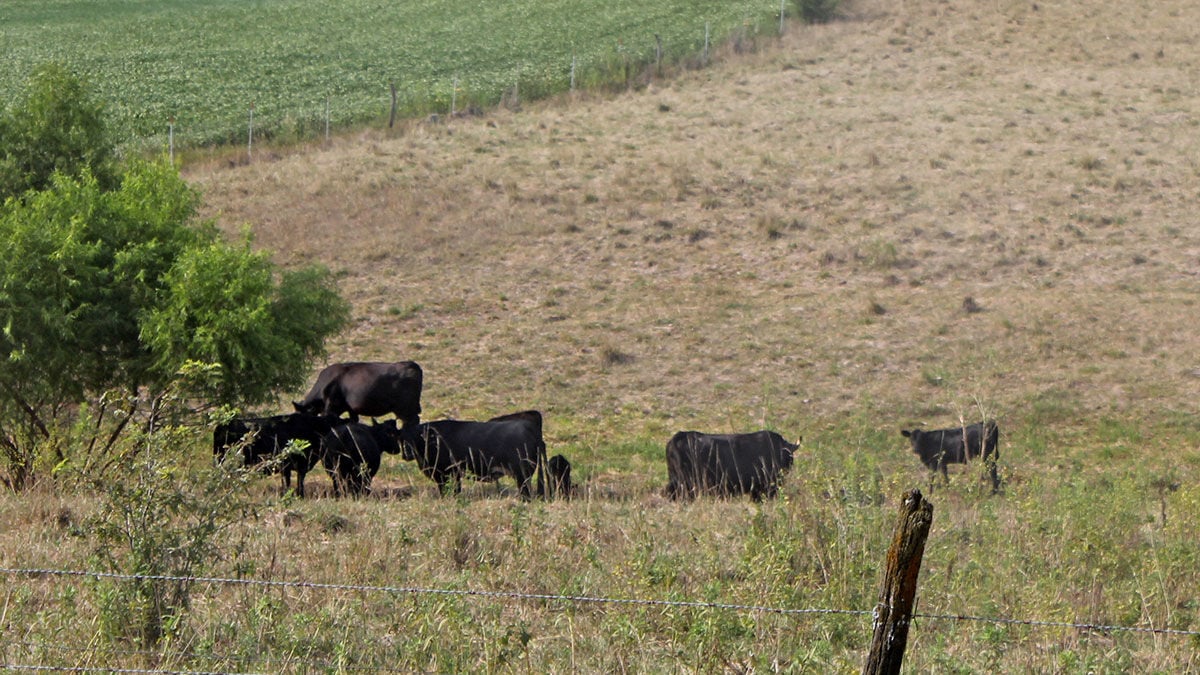
More South Dakota acres are now in an extreme drought condition as lack of moisture and high temperatures continue to impact much of the state. According to the latest U.S. Drought Monitor, nearly 13% of the state is in Extreme Drought (D3), while another 56% follows as Severe Drought (D2).
- Janelle Atyeo
With a background in engineering, Shane Barber designed and refined a sturdy but portable water tank that works for livestock as small as a lamb and as burly as a bison.
- Amy Hadachek
It’s every rancher’s goal to learn how to create more forage per acre, and doing so means resolving tough pasture issues like fescue, weeds, stocking rates, and increasing plant diversity.
- Jager Robinson
One common sighting on a country road is the hay bale. Round or square, you are bound to pass one or endless rows of bales at least a dozen times in any journey. But the storage of those hay bales is often overlooked.
- By Ben Beckman
Alfalfa seeded this spring is ready, or soon will be ready, to cut. Hot dry weather means proper care and management now could have big impacts on cuttings later this year. Use the following harvest guidelines to get the most from your first-year alfalfa.
- By Todd Whitney
Alfalfa is a relatively drought-tolerant forage, but irrigation makes it possible to produce higher yields. This perennial crop does not have specific critical growth stages when it is less sensitive to water stress. If water is not available, the plant will slow or stop growing and go dorma…
- By Melissa Bartels, Nebraska Extension
Insects are causing problems for alfalfa across Nebraska. Stay tuned as I describe what to look for in your fields and what to do if an issue does arise.
- By Jerry Volesky, Nebraska Extension
Memorial Day is a good time to examine the status of hay and forage programs for the year.
- By Brad Schick, Nebraska Extension
Fertilizing warm-season grass is a practice some producers do, but one should consider forage needs, the value of the forage, and fertilizer costs.
- By Ben Beckman, Nebraska Extension
Yellow-green patches in a pasture might look pretty for the uninitiated, but the tell-tale bloom of leafy spurge not a spring sight many of us want to see.
- By Brad Schick, Nebraska Extension
Low soil moisture levels in many areas across the state may mean irrigating alfalfa before the first cutting. Have you considered irrigating early?
- By Todd Whitney, Nebraska Extension
Be careful not to overlook wilting and browning leaves in your alfalfa fields, since this could be a sign of an alfalfa weevil infestation.
- By Ben Beckman, Nebraska Extension
Working on getting corn and beans planted? Don’t look now, but alfalfa harvest is approaching fast.
- Janelle Atyeo
With a background in engineering, Shane Barber designed and refined a sturdy but portable water tank that works for livestock as small as a lamb and as burly as a bison.
- Amy Hadachek
With high protein and low starch, there’s growing interest and economic benefit in using field peas as a locally sourced feedstuff in beef cattle diets. One Nebraska farmer says he can taste the difference, too.
- By Jerry Volesky, Nebraska Extension
Are you planning to plant a summer annual grass, maybe to build hay supply or have some extra grazing? Which one will you plant?
- By Ben Beckman, Nebraska Extension
Do you need to grow more hay for next winter? One way to get that extra hay might be to fertilize your hay meadow this spring. There may still be time.
- By Todd Whitney, Nebraska Extension
Cooler temperatures have slowed spring pasture growth, delayed crop planting and limited cover crop production. So, cattle producers needing forage may consider harvesting small grains such as wheat, rye, triticale and oats as hay or silage.
- By Brad Schick, Nebraska Extension
If you have wetlands, creek bottoms, or just wet areas in pastures, you probably have some reed canarygrass. It is often the first perennial grass to green up in the spring.
- By Ben Beckman, Nebraska Extension
Those looking to get grass or alfalfa seed into the ground this spring are doing so now. Before you fill up the drill and head out to plant, remember to prep the seedbed first!
- By Jerry Volesky, Nebraska Extension
The time for turn-out to our primary summer pastures is coming soon. A couple of important questions are what date to turn-out, and which pastures should be first?
- Amy Hadachek
It’s every rancher’s goal to learn how to create more forage per acre, and doing so means resolving tough pasture issues like fescue, weeds, stocking rates, and increasing plant diversity.
Most Popular
Copyright © 2018 - Powered by AgriCharts, a Barchart.com, Inc. company. Market data provided by Barchart Market Data Solutions.
Information is provided 'as is' and solely for informational purposes, not for trading purposes or advice, and is delayed per exchange requirements. User Agreement applies.
Recently Listed
