


Editor’s note: The following was written by Ethan R. Thies, statewide conservation field specialist with Iowa State University Extension, for the Integrated Crop Management website March 13.
Editor’s note: The following was written by Ethan R. Thies, statewide conservation field specialist with Iowa State University Extension, for the Integrated Crop Management website March 13.

COLUMBIA, Mo. — Early planting remains strongly associated with soybean yield, according to research by University of Missouri state soybean farming system specialist Andre Reis.

COLUMBIA, Mo. — Before applying fungicides, growers should carefully consider the potential return on investment, said University of Missouri Extension State Plant Pathologist Mandy Bish.

What’s the key to growing resilient crops that can survive tough conditions? Researchers at the University of Missouri are getting to the root of it — literally.
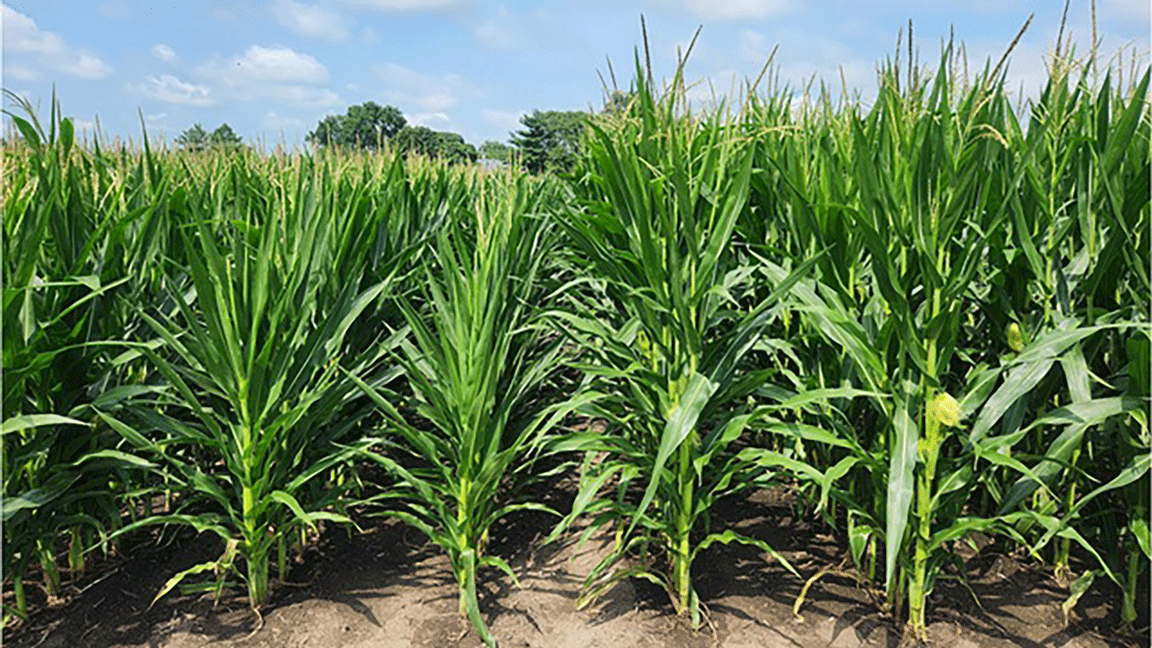
With an increase in severe storms and high winds, row crop farmers are looking for new ways to work with Mother Nature.

As input costs remain top of mind for growers across the country, innovation can help farmers increase productivity while cutting expenses.

Editor’s note: The following was written by Eric Yu and Ryan Miller, University of Minnesota Extension crops educators, for the Minnesota Crop News website Feb. 17.

Multiple days of much warmer than usual conditions in late January and February might have nudged Midwest farmers eager to get ready for planting.
The USDA released its first look at planting expectations for 2026 on Feb. 19 at its Agricultural Outlook Forum as farmers brace for a fourth straight year of losses or small profit margins.

BOONVILLE, Mo. — Pesticide handling remains one of the most hazardous tasks on the farm, says Todd Lorenz, University of Missouri Extension agronomist.

WASHINGTON, D.C. — The Environmental Protection Agency on Feb. 6 reapproved the weed killer dicamba, a pesticide that has raised widespread concern over its tendency to drift and destroy nearby crops, for use on genetically modified soybeans and cotton.

Editor’s note: The following was written by Joe Janzen, agricultural economist and assistant professor in the Department of Agricultural and Consumer Economics at the University of Illinois, for the farmdoc daily website Feb. 9.

With over 12 million tons of nitrogen fertilizer applied annually, according to the EPA, the biggest challenge is how much never makes it into the crop and is lost to volatilization, leaching and runoff.

Corn bred with genes from wild relatives can reshape soil microbial communities and reduce nitrogen loss — with no yield reduction — according to new research from the University of Illinois Urbana-Champaign.

Looking ahead to another growing season, Extension weed scientists and agronomists are focused on efforts to control waterhemp, combat resistance to herbicides, and balance the cost of weed control in a time of high inputs and tight profit margins.

COLUMBIA, Mo. — Haymaking is a game of threes, University of Missouri Extension Forage Specialist Carson Roberts said.

Maximizing the efficacy of glufosinate becomes important for managing resistant weed populations, as well as always using best management practices to keep what herbicides producers have left to use for post-emergent use in soybeans.

CHAMPAIGN, Ill. — Conservation practices affect different farms in unique ways and make different demands of the farmer depending on their operation.

CHAMPAIGN, Ill. — With last year’s export volatility for soybeans still affecting prices, market development was a hot topic at this year’s Illinois Soybean Association Soybean Summit in Champaign Jan. 27-28.

Are insects are simply an unavoidable threat or are they telling growers something important about plant health?

“We have to think about soil as a living system, not just dirt we push around with equipment."

Editor’s note: The following was written by Scott Irwin, chair of agricultural marketing at the University of Illinois, for the farmdoc daily website Dec. 22.

Editor’s note: The following was written by Aaron Hager, University of Illinois Extension weed science specialist, for the farmdoc daily website Jan. 9.

In recent years, substantial progress has been made in understanding biological and genetic sources of variation in feed efficiency of growing cattle consuming energy-dense mixed diets during the post-weaning phase.

Editor’s note: The following was written by Doug Houser, Iowa State University digital agriculture Extension specialist, for the Integrated Crop Management website Jan. 13.
Get up-to-the-minute news sent straight to your device.