





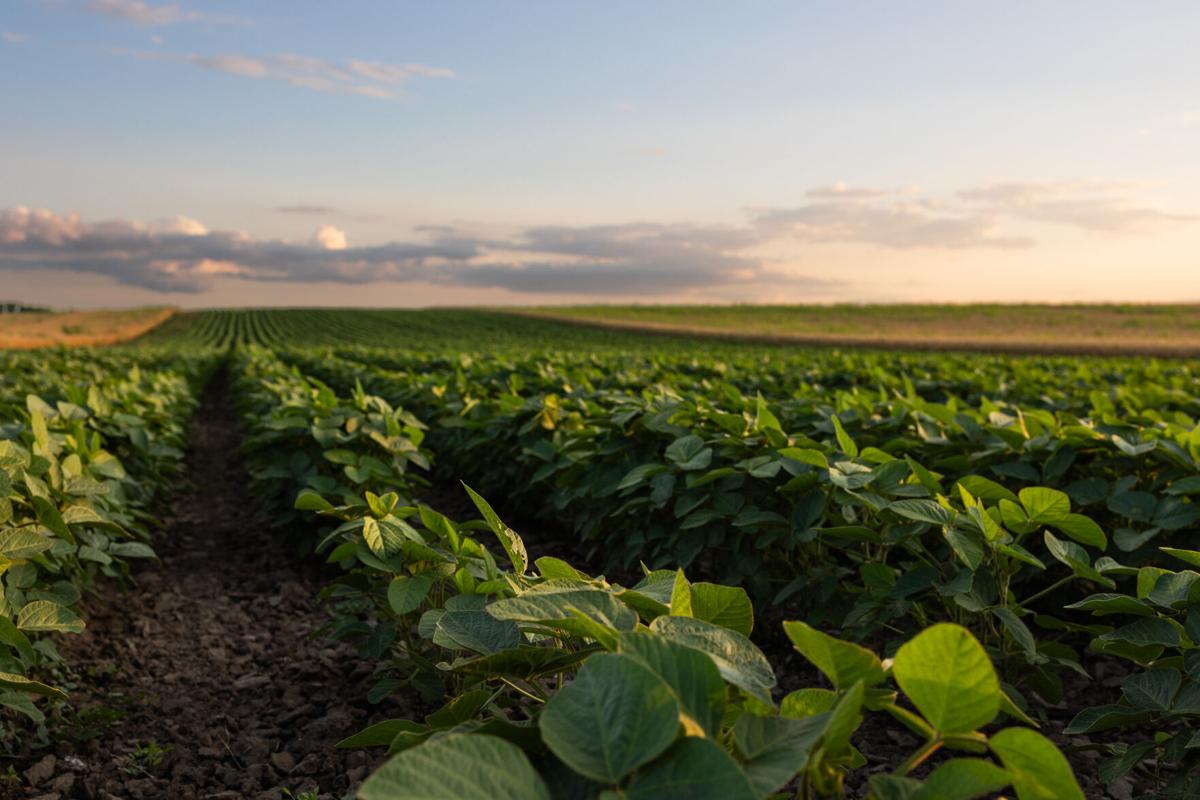
A microscopic enemy could be stealing profits from soybean fields across the upper Midwest and many producers may not even know it's there.
That’s according to John Davies, soybean breeder at the XitavoÒ soybean seed facility in Sabin, Minnesota.
Soybean cyst nematode (SCN), an invisible pest that attacks plant roots, could cost producers a significant portion of their potential yield.
SCN is one of the most devastating pests to soybeans because it quietly robs yield year after year, often without visible symptoms until it’s too late. This microscopic roundworm feeds on soybean roots, forming cysts that disrupt the plant’s ability to take up water and nutrients. As a result, plants become stressed, growth is stunted and yield potential drops significantly.
SCN populations build up in the soil and can persist for many years, making management especially difficult. Even when fields look healthy above ground, yield losses of 10–30% are common, and in heavily infested areas losses can exceed 50%. Because of its widespread presence and ability to adapt quickly, SCN remains the number one yield-limiting pest in soybeans across North America.
"Soybean cyst nematode is everywhere, sucking yield,” Davies said.
The economic impact of this hidden pest cannot be overstated. SCN could cost up to five bushels per acre, a devastating amount when multiplied across every acre of soybeans planted, especially when low commodity prices are already putting financial pressure on producers.
However, new genetic innovations from Xitavo soybean seed are fighting back with promising early results.
At the Xitavo soybean seed-exclusive varieties breeding station in Sabin, Minnesota, researchers are developing varieties that stack traditional resistance with cutting-edge genetic traits to combat this widespread but often undetected threat.
Early results with Xitavo soybean seed have looked very promising for increased yields, Davies said.
However, yield loss is only part of the detrimental story of SCN. Traditional resistance mechanisms lose their effectiveness over time, allowing the pest to become increasingly problematic by adapting to the plant's natural defenses.
That’s what makes the unique genetics of Xitavo soybean seed so critical. Nematodes have adapted to existing genetics, but Xitavo soybean seeds contain genetics not found in any other seed bags.
"What you see there when you buy a bag of seed, it's not going to show up in someone else's bag with a different company name. It is unique," Davies said.
The new genetic approach of Xitavo soybean seed represents a significant advancement in pest management strategy. By combining traditional resistance mechanisms with genetically modified traits, researchers are creating varieties with enhanced protection against nematode damage. This stacked approach provides multiple layers of defense, making it much more difficult for pest populations to overcome resistance.
Early trial results from the breeding program show the potential benefit of this innovation. While results have varied, Davies has seen up to a 15% increase in yield in the Minnesota test plots.
"We have no doubt the increase in yield is really due to the presence of the SCN gene that's working to negate that 10% loss,” he said.
These yield improvements represent more than statistical gains. They translate directly to improved farm profitability during challenging economic times. A 10% yield increase on a 50-bushel field means five additional bushels per acre, potentially adding $50 or more per acre in gross revenue depending on market prices.
The breeding program's approach to combating SCN reflects broader trends in agricultural innovation, where complex challenges require sophisticated solutions. Rather than relying on single-mode approaches, successful pest management increasingly requires integrated strategies that combine multiple modes of action.
For producers dealing with the persistent challenge of SCN, new varieties from Xitavo soybean seed offer hope for recovering lost yield and improving profitability. As the breeding program continues to advance and refine these genetics, producers finally have an effective tool to combat one of soybean production's most costly hidden enemies.
Exclusively distributed by BASF. Xitavo is a registered trademark of M.S. Technologies, L.L.C., West Point, IA.