




Across the generations and from year to year, operators in the ag industry have turned to manure spreaders not only to dispose of their animals’ waste but also to incorporate the organic nutrients into the soil — both of which are important to maximize productivity and efficiency.
“Choosing the correct manure spreader can save you money by performing season after season with minimal repairs and allow for minimal dependence on commercial fertilizers,” said Nicholas Holmes, product manager at Kuhn North America, of the efficiency KUHN customers have grown to love.
Industry-leading precision
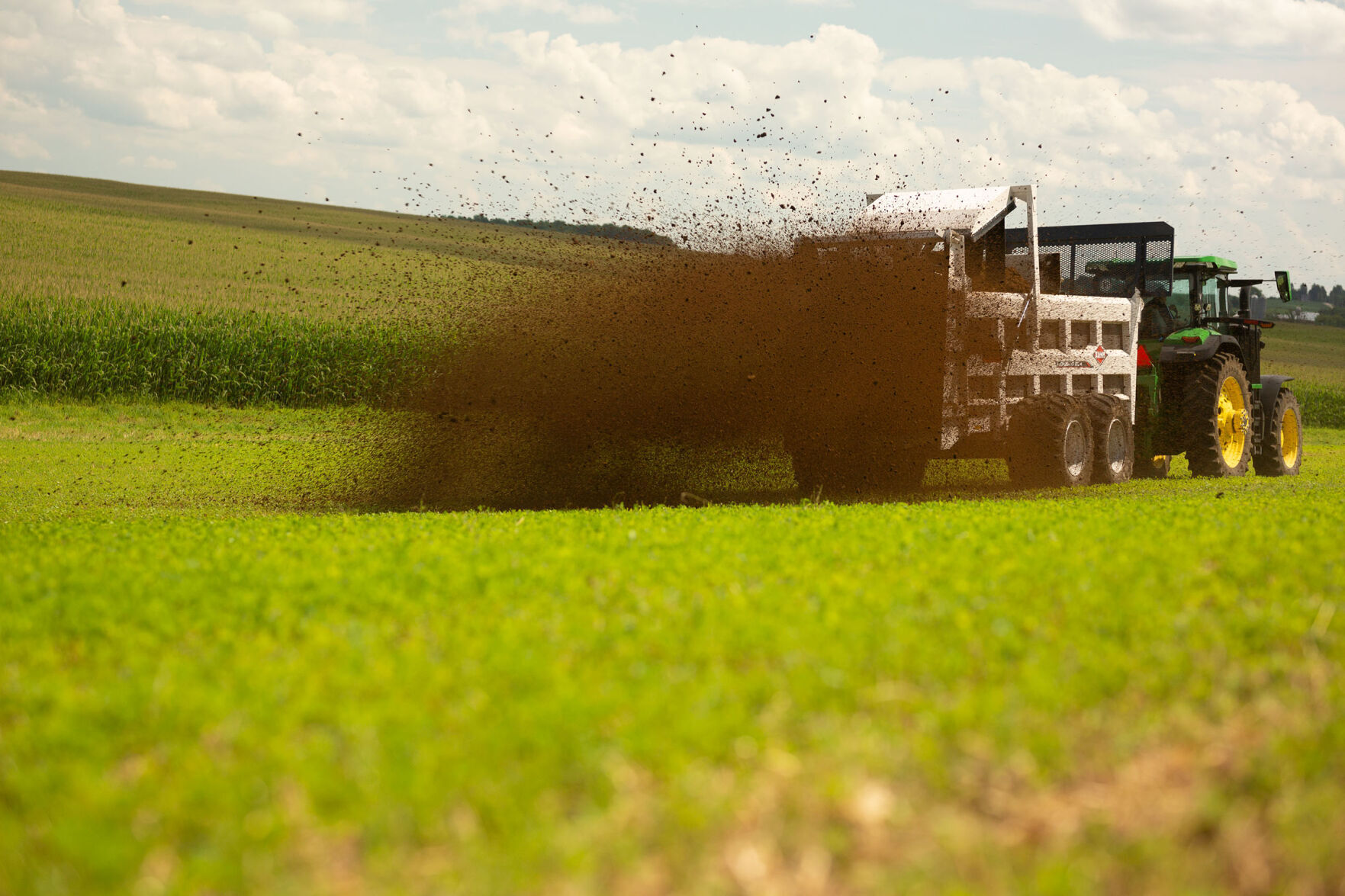
“We’re targeting operators who want the dependability of a KUHN manure spreader plus the added simplicity of fewer moving parts,” said Holmes of the no-apron chain design driving KUHN’s ProPush® Hydraulic Push Manure Spreaders. Instead, a single hydraulic cylinder — coupled with VertiSpread® vertical beaters — allows for efficient hauling and spreading of a variety of solid material including gutter manure, yard scrapings, bedding pack and feedlot manure.
“Material, moisture and application rate are the determining factors when it comes to choosing the right manure spreader,” said Holmes, adding that the ProPush® models excel at spreading drier materials for consistent field coverage.
“We’re talking about bedding material or pen pack, which is very difficult to spread evenly as it tends to be clumpy,” said Holmes of corn stalks and wheat straw, which are no match for KUHN’s vertical beaters — driven by the tractor’s PTO — responsible for tearing material into uniform pieces and spreading it in a 25- to 30-foot pattern to ensure consistent breakdown.
Variable application rates for the ProPush® stem from hydraulic flow. “We can reduce our flow for a lower application rate or increase flow to push manure faster out the back and increase our application rate — up to 25 tons per acre for dry material,” said Holmes.
Designed exceptional performance and durability
Newcomers to the KUHN lineup — the HP 170 M and the HPX 195 — boast increased capacity (up to 950 cubic feet) and incorporate a moving floor design, which reduces tongue area up front and overall length. The latter commercial spreader utilizes a sprung undercarriage, giving larger custom operators and producers access to maximum hauling capacity with the simplicity of a push spreader.
While every operation is different, Holmes and his team believe fall spreading is most ideal. “After the crops are out, we recommend spreading manure and anchoring that material into the soil to avoid losing valuable nutrients to volatilization,” he said, pointing to any extreme — from beating sun to pounding rain — as putting organic matter at risk of depletion.
“It all boils down to capturing and spreading nutrients evenly, so when it comes time to harvest, you can count on a nice, even crop.”
Keen on increasing your soil’s fertility? Learn more about the innovative ag equipment available from Kuhn North America — like the newly expanded line of ProPush® Hydraulic Push Manure Spreaders — by visiting the KUHN website or your local KUHN dealer.