





Optimize your harvest outcomes with pre-harvest equipment preparation.
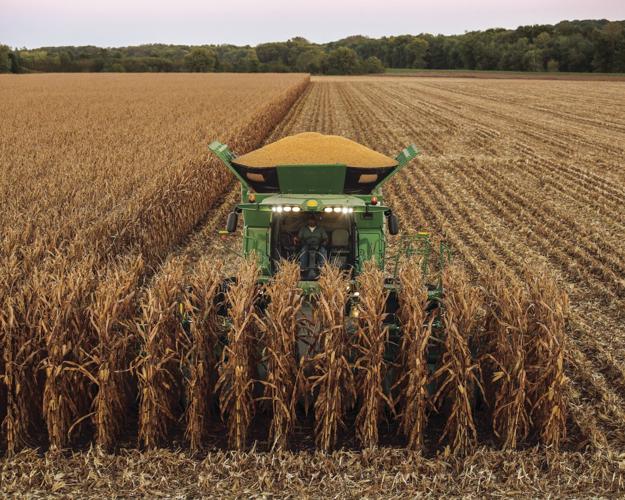
When it’s time to take in the harvest, your equipment is a valuable tool — and ally — to get the job done.
“If you measure crop success by minimal grain loss from machinery damage — even when weather conditions are less than ideal — tools and tech can be part of a winning strategy to set and make ideal harvest goals,” said Kyle Afrank, precision agriculture director at AKRS Equipment in Lincoln, Nebraska.
Follow dealer and manufacturer-recommended service and maintenance schedules as an important part of keeping your farm equipment in tip-top shape.
“When the machine is performing correctly we have less loss,” Afrank said.
Prep the combine
Harvest combines are complex and essential farm tools. With so many moving parts, wear and tear over time can cause “silent” or invisible damage. Unless combines are on a regular maintenance and inspection schedule, you won’t know things are wearing down — or out — until they break.
Outside of the harvest season, AKRS Equipment inspects machines to help keep them running smoothly.
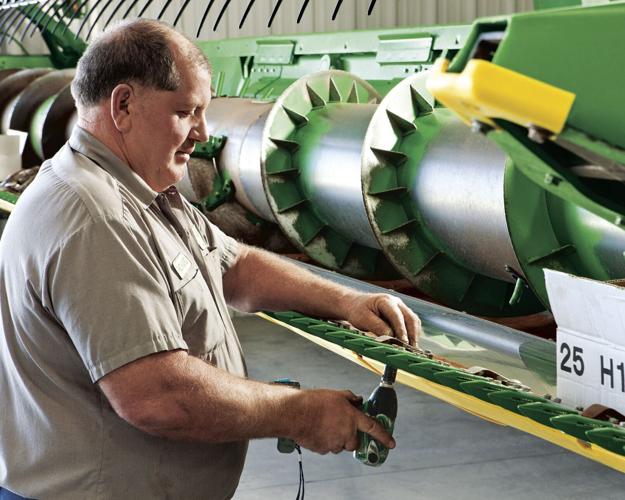
Give your combines and tractors “timeouts” for maintenance and service before harvest season to reduce or eliminate downtime when you need them most. Your AKRS Equipment dealer can help by keeping tabs on equipment trouble codes and “resolve problems before they become a bigger issue,” Afrank said.
A machine or equipment failure during harvest can quickly become expensive. When a crop stands in the field after its prime harvest dates, there’s more risk of harvest loss — including windstorm damage.
“That’s a big part of why we inspect,” Afrank said.
Along with inspections and maintenance, AKRS Equipment offers changes to components to maximize processes like threshing versus cleaning and customizing specs on a crop-by-crop basis.
“When combines go back into the next crop they are set to work correctly, and they’re at specification so they will perform as expected,” he said.

Consider no-till practices
Another reason for pre-harvest inspections and repairs is the growing advent of no-till practices. No-till farming has gained traction in the region’s farm operations.
Some reasons to consider converting some of your land to no-till practices include:
- Lower cost of input
- Less time, labor and lower machine costs
- Easier spring planting cycles
- Naturally good for your soil
“No-till is good for soil health and that’s been the big thing lately, supporting a soil with good biological activity,” Afrank said.
Cover crops help provide nutrients, reduce soil erosion and may even help limit pests in the field until the next crop is planted.
“From a no-till standpoint it starts with the combine pass. When we go out we need to make sure we spread that residue as consistently as possible,” Afrank said.
Smooth and accurate combine operation is even more critical in no-till farming practices.
- Calibrations can be made ready ahead of harvest start times.
- Properly calibrated equipment ensures crop-specific performance.
- Correct crop-specific measurements help estimate yields and results.
AKRS Equipment offers standard operating procedures reviews for customers, which can guide harvest process expectations and help set crop yield goals.
“From Day 1 of harvest, we want [our farmers] successful in the field,” Afrank said.
For more information about AKRS Equipment, visit akrs.com.