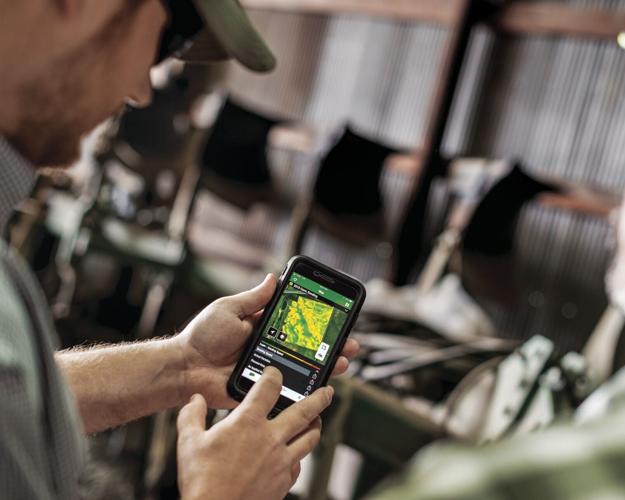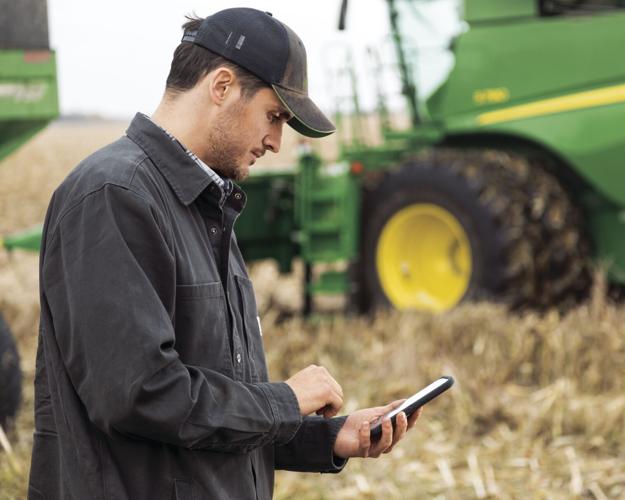






Smartphones could become a 21st century agricultural game-changer.
One of the biggest advancements in farming is the widespread use of smartphones, according to Kyle Afrank, precision agriculture director at AKRS Equipment in Lincoln, Nebraska.
“We have mobile apps to adjust machine settings, help us through operator’s manuals, understand harvest logistics and machine performance and even alert us to issues that might be happening in a machine,” Afrank said.
The Nebraska agriculture sector represents roughly $7.3 billion in 2023, according to the University of Nebraska-Lincoln website, and technology helps keep this crucial industry running efficiently.
“Most machines are connected machines, so logistically we know what is going on with the farm operation, and that’s how the farm manager keeps in touch with the whole operation,” he said.
Smartphones can also track equipment fuel level rates, how far a truck is from a grain elevator and machine performance — all essential factors in keeping the farm running smoothly.
For farm employees new to the industry, smartphones and technology can help soften the learning curve without sacrificing productivity or creating downtime.
Problems with equipment can be communicated to the farm manager or owner the minute the equipment operator notices an issue.
“Even as a dealer, we will get that trouble code so we can help resolve it before it becomes a bigger issue and to eliminate downtime,” he said.
There is a learning curve for planning and using new technology. Farm operators should allow time for education and hands-on experience when bringing on new employees or changing or updating tech, including implementing new farming smartphone apps.
“You just don’t pick up a smartphone at Day One and expect to be an expert on it,” Afrank said.

Self-correction
Cameras on combines can look for foreign material. Machines enabled with farming apps and technology will work to make adjustments automatically, he explained.
Afrank said farming equipment could become entirely self-directed and autonomous over the next five to 10 years, operating itself without a human in the seat at the controls.
Buy new or amend what’s on hand
While buying new provides up-to-the-minute improvements in design and tech, it’s not always necessary to swap out equipment entirely in order to take advantage of tech, apps and upgrades.
“We can adapt and upgrade a lot of the machines we’re running” to keep pace with technology, he said.
Data-driven
Data is crucial to farmers. That is why AKRS continues to focus on assisting its customers in acquiring quality data and showing them how to best use it to improve their operation.
“When the machine is performing correctly, we have less loss,” which means better yields and profits, he said.
As crop yields and losses are recorded, data helps to drive adjustments. That means in addition to machine loss, other potential issues including weather conditions can be factored into account to predict more accurate final crop counts.
“Where the tech has changed — and continues to adapt — is the machine performance side. What is the crop telling us to make machine changes, and how it’s automating the job of the machine,” Afrank said, “and one of the most important tools is that smartphone.”
For more information about AKRS Equipment, visit akrs.com.