



A Uniquely Different Approach to Product Placement
Digging into Root Architecture with Root Reveal™
If your seed company categorized hybrids by root types, would it matter to you?
We think so.
Every industry has a common set of prevailing assumptions. In the seed industry, it’s how corn products are described and recommended. For more than 40 years, we have described corn products by the same specific set of attributes that aid in placement, and it’s time for a change.
That’s why Beck’s launched Root Reveal™ Research—to provide growers with the best recommendations on hybrid management. To do this, Beck’s team set out to begin understanding corn plants differently and learning how the root architecture and root volume of each hybrid in their lineup impact performance. These efforts aim to spark a change in industry standards of how corn products are characterized and recommended to growers.
“The efforts of our Root Reveal Research will offer farmers more knowledge of product placement, and crop management, said Jim Schwartz, director of research, agronomy, and PFR for Beck’s. “We’re digging deeper to provide farmers with more knowledge about the products they’re planting and how root architecture and size impact variables like nitrogen utilization, population, and stress response.”
Product description looks at static information that describes specific attributes of hybrids to aid in placement. The goal is to revolutionize methods of characterization by proactively looking at what influences the hybrid to perform at its highest potential in the soil and environment where it is placed. These insights will provide farmers with unique, hybrid-specific information to create actionable insights to help them improve their yield potential.
Today, products are recommended to farmers because they are believed to be the best hybrid based on factors like soil type, placement flexibility, standability, and whether they excel in minimum or no-till scenarios. Beck’s goal is to offer farmers additional data to support whether a hybrid will perform based on root architecture and volume and how those variables affect performance in various management practices.
“A hybrid may be an excellent performer, but if a farmer doesn’t change his practices to fit its characteristics that performance may not meet his expectations,” said Craig Moore, Beck’s Corn Lead. We want to offer actionable insights, visuals, and descriptions to enhance their experience when selecting hybrids. Then the farmer can say, ‘What can I influence in my management practices to get maximum performance from the products I’m planting?’”
Does Root Architecture Matter?
Research shows that root volume impacts corn yield by as much as 50 Bu./A., depending on the soil fertility systems.* For every 1,000-plant increase in planting population, root volume declines by 2.5%. For the last 20 years, we’ve increased seeding rates by an average of 400 plants/A. Therefore, on average, root volume has decreased by 1% each year.
This data leads us to believe that different root sizes and architectures respond differently to population and fertility placement. To quantify this theory and better understand how to evaluate these root systems, Beck’s set out to evaluate root architecture in a uniquely different way to make improved recommendations to growers.
The seed industry has dabbled in understanding different root angles. What it has not done is examine the correlation between root characteristics (specifically structure and volume) and nutrient management and then deliver a recommended product and nutrient management plan to customers. Beck’s saw a need to quantify data on root mass, size, and architecture to understand how hybrid variation in root characteristics is influenced by population and how this variation impacts tolerance to stress and nitrogen uptake.
Root Reveal Research
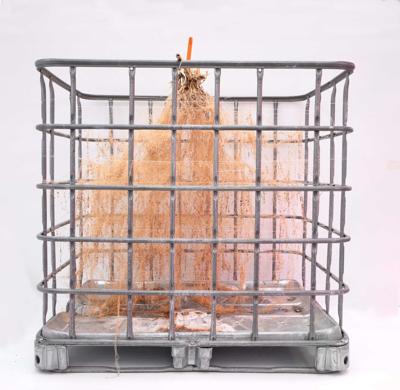
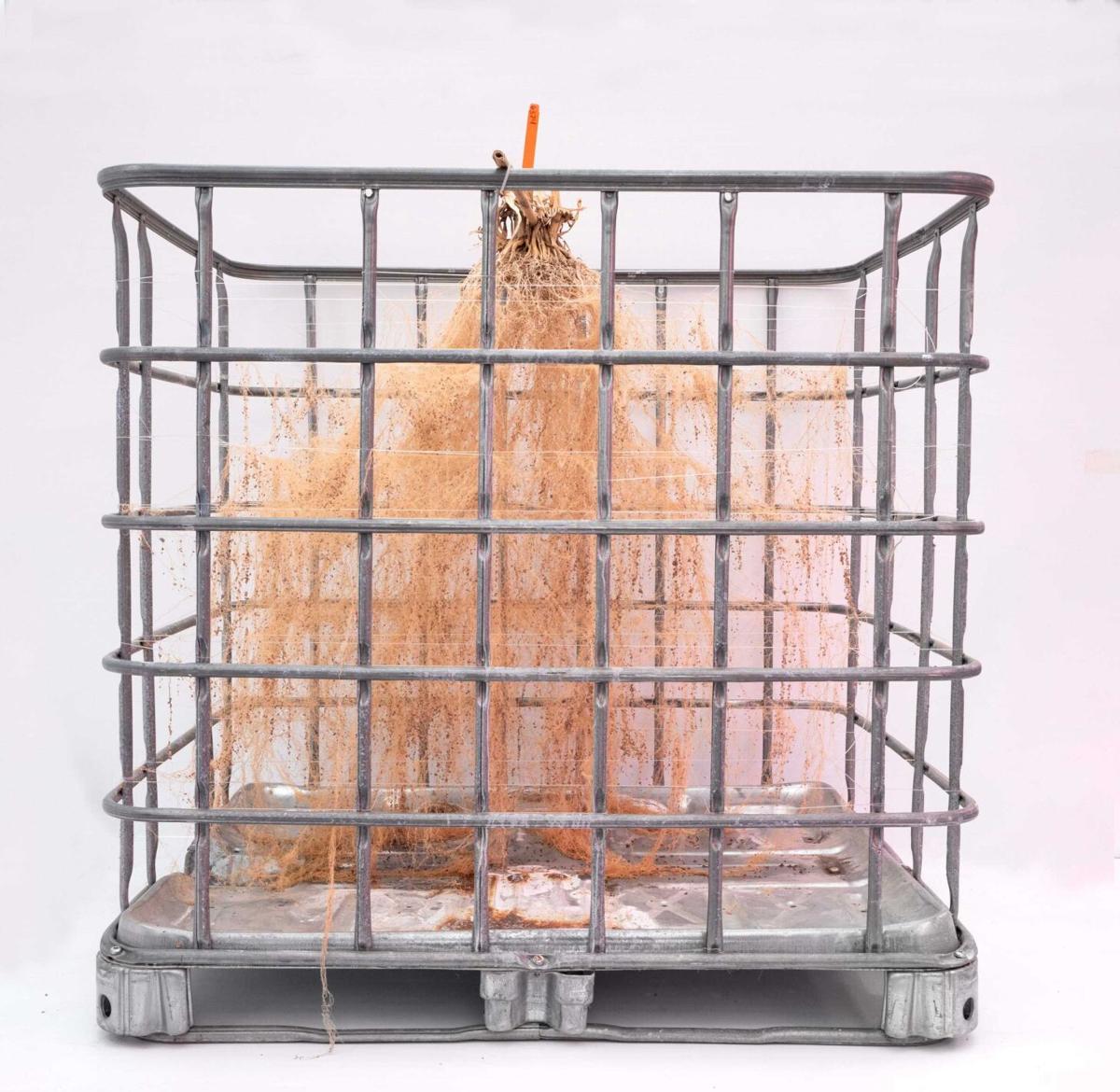
A critical component of Beck’s Root Reveal Research is their Root Boxes. Each box contains a single corn hybrid that is watered and fed the same amount of nitrogen. Once the plants reach tassel, they are cut off from water and nutrients and left to dry. When unwrapped, Beck’s researchers are left with incredible visual demonstrations of various root systems’ volume and architecture that will help identify differences farmers may see in product performance relative to root architecture, fertilizer placement, stress tolerance, nitrogen placement, and population management.
Beck’s plans to evaluate their entire hybrid lineup through their Root Box protocol to assess the top 1 ft. of each hybrid’s root structure to classify and characterize their architecture and volume. They are also in the process of evaluating past proven performing hybrids in root boxes to see if there is a causational link between root architecture and specific management variables that will help them make better product placement recommendations to farmers.
To learn more about Beck’s revolutionary research visit beckshybrids.com/research/root-reveal-research.