





In a downturned ag economy, growers may be tempted to cut costs on herbicide programs to save a few bucks.
But saving a few bucks upfront may cost significantly more in the end.
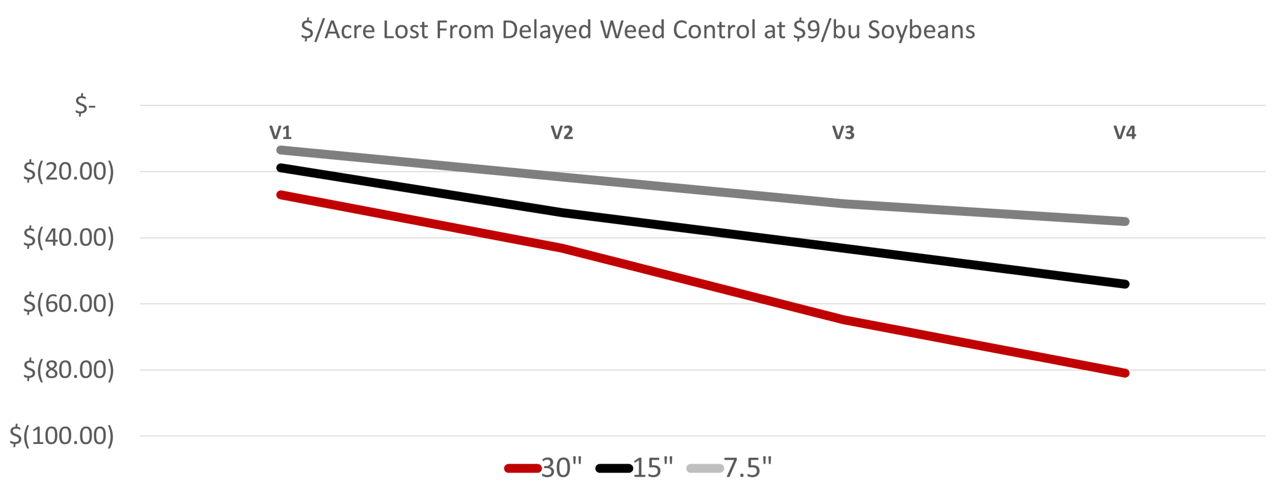
Technical experts warn that skimping on weed control, from cutting herbicide application rates to using herbicides with short residuals, could end up being far more expensive in the long run, potentially costing growers up to $70 per acre in yield losses.
"In one instance, if you delay your control, you're losing anywhere from $15-20 on the low end to $70 an acre in a real disaster scenario," said Bill Verbeten, technical service manager for FMC. "Even in 30-inch row soybeans, growers who skip or minimize their preemergence herbicide program could be giving up $40 per acre at $9 beans."
The math becomes clearer with the realization that these losses would easily cover the cost of a strong herbicide program based on an overlapping residual strategy, Verbeten said.
For growers with narrow-row beans, yield hits from early-season weed competition still could amount to roughly $20 per acre in lost revenue.
Start with a strong foundation
The key to maximizing return on investment in herbicide programs starts with establishing a solid foundation through a preemergence application. "You have to start strong and stay strong. You can't skip the residual piece. You just can’t,” Verbeten said.
Verbeten, and his colleague, Ryan Hunt, also an FMC technical service manager, recommend looking for two critical qualities when building herbicide programs: length of residual control and broad-spectrum activity against target weeds. Products containing multiple modes of action provide better protection against resistant weeds while extending control throughout the growing season.
"The more modes of action, the merrier," Hunt said.
Products like the Authority® herbicides from FMC contain industry-leading multiple modes of action and provide some of the longest residual control of any preemergence herbicides on the market, Verbeten said.
Long-Term Implications of Short-Term Savings
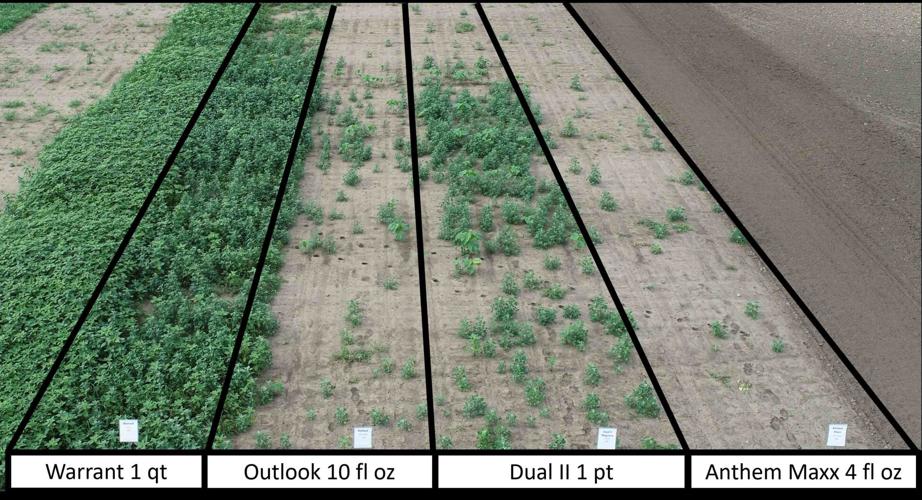
One common misstep growers make is opting for cheaper herbicides with shorter residual activity, which may only provide 2-3 weeks of control, Hunt said.
When weeds break through early in the season, especially problematic species like waterhemp, postemergence rescue treatments can often prove ineffective, Verbeten said.
If weeds get beyond 3-4 inches tall, it’s too late. No postemergence application can rescue the crop by that point.
"You need to start clean and stay clean," Verbeten said. “Growers have to extend that residual weed control without a lapse in herbicide coverage. Leveraging a solution like Anthem® MAXX herbicide as part of their subsequent postemergence application will help soybean fields stay weed free through to canopy closure.”
The consequences of cutting corners extend well beyond a single growing season. Weed pressure can increase and create management challenges that can persist for 5-10 years or more.
This can lead to heightened weed resistance, increased labor and equipment costs, and perhaps most importantly, reduced yields, decreased quality, and a loss of market value, all significantly impacting growers’ bottom lines.
Drought considerations
The National Weather Service reports that drought conditions are expected to persist in many areas of the upper Midwest. This makes proper weed control even more critical. Weeds compete with crops for limited soil moisture, potentially magnifying yield losses in dry conditions.
"The more weeds you have, the more it's going to hurt you because you've got less water available for the plants to take up. More competition in dry conditions leads to worse outcomes," Hunt said.
Looking Ahead
Hunt and Verbeten indicated that new herbicide technologies are in development that could be "game-changers" for controlling challenging weeds like waterhemp and palmer amaranth. These products will reportedly introduce new modes of action not currently used in American soybean acres.
For the 2025 season, however, the message remains clear: investing in proven overlapping residual herbicide programs with multiple modes of action — like an Authority herbicide followed by Anthem MAXX herbicide — remains the most economically sound strategy, even in challenging times.
"An ounce of prevention is worth a pound of cure when it comes to weed control. If you can have a pound of prevention, it's worth a ton of cure,” Verbeten said.