





Forage growers looking for more flexibility, higher quality and increased yield potential have a proven option to add to their growing portfolio. HarvXtra Alfalfa gives growers more choices in how they manage their forage program while potentially improving their bottom line, according to industry experts and area growers.
"The number one benefit we've found is the flexibility it offers growers," says Emily Meccage, director of research and development at Forage Genetics International, developers of HarvXtra Alfalfa.
HarvXtra’s flexibility allows growers to choose between maximizing quality, maximizing yield, or finding a balance between the two” Meccage said. Growers can manage weather delays or prioritize other on-farm jobs that need to get wrapped up without worrying about quality loss.
Higher quality and consistency
Due to decreased lignin production, HarvXtra Alfalfa provides more fiber digestibility than conventional alfalfa, Meccage said.
Product researchers and developers have been able to reduce lignin production in the plant by approximately 7%.
Lignin is an indigestible component of the cell wall which typically limits fiber digestibility in conventional alfalfa varieties. By decreasing lignin content, HarvXtra increases overall fiber digestibility without compromising plant structure or standability.
A Goodwin, South Dakota, dairy grower who runs a large operation has switched to growing 100% HarvXtra Alfalfa and has reported significant benefits.
“He points to the consistency in forage quality as a major advantage,” Meccage notes. “His nutritionist even commented that he rarely needs to adjust rations between cuttings because the quality remains so consistent throughout the season.”
Herd health
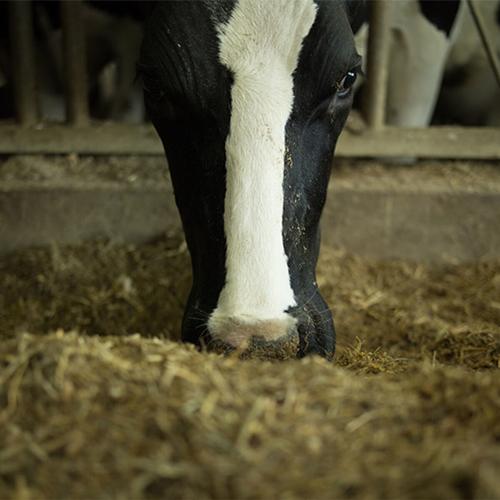
The improved fiber digestibility also benefits herd health. The fiber from alfalfa is critical for proper rumen function, while the higher digestibility can support increased dry matter intake and milk production efficiency. Meccage said the South Dakota grower saw an improvement in his overall cow performance, including higher milk fat and increased milk poundage. In fact, feeding trials showed a 2.6-pound increase in milk per cow per day compared to conventional alfalfa.
Increased yield
Research from the University of Minnesota has shown that delaying harvest by five to seven days can increase yield by up to 20% while maintaining quality comparable to conventional alfalfa cut earlier. This flexibility has allowed some growers to reduce the number of cuttings per season while maintaining or improving overall yields.
Long-term research has also demonstrated additional benefits from reduced cutting frequency. Over a four-year period, HarvXtra Alfalfa stands cut three times per year instead of four showed approximately 30% higher yields.
Think of a gas tank, Meccage said,
“’like a vehicle stores fuel in its tank, alfalfa stores energy in its roots and utilizes that energy when it regrows. Repeated cuttings never allow the energy stored in the roots to completely refill.
The more often it’s cut, the more the plant has to utilize its energy to regrow.
The longer the alfalfa is allowed to grow, the “gas tank,” i.e. its energy source, gets closer to full.
This leads to faster regrowth and better disease resistance.”
Harvest flexibility
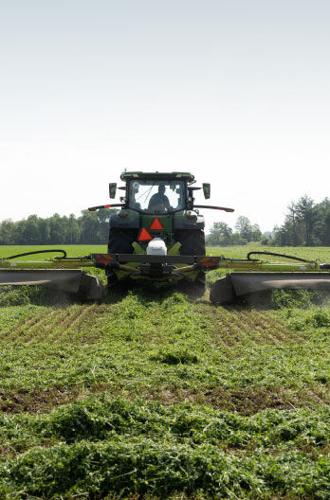
With an increased harvest window, HarvXtra growers have increased flexibility when it comes to cutting times, especially beneficial when inclement weather ruins plans to cut.
The flexibility to extend cutting intervals has provided both economic and lifestyle benefits for growers. One farmer in Northwest Iowa was able to eliminate an entire cutting while maintaining forage quality.
"He told me he can actually enjoy the Fourth of July with his family now. He doesn't have to worry about being out harvesting." Meccage said.
Wide variety
Whether growing alfalfa for dairy, beef, or commercial hay operations, HarvXtra offers advantages for multiple agricultural sectors. Commercial hay growers can choose their market, Meccage said.
"You can target dairy quality hay by focusing on higher push for yield if you're selling into the beef market," she said.
The technology is also promising for beef operations, particularly in the growing beef-on-dairy sector where growers aim to maximize growth rates. The higher digestibility and consistent quality of HarvXtra can help optimize genetics in these programs.
Alfalfa also has many positive benefits in a crop rotation by improving soil health.
When it comes to soil health and cover crops, alfalfa is the gold standard, Meccage said.
As a perennial, alfalfa allows better nutrient and water mobilization through the deeper soil layers and it adds nitrogen back to the soil.
Alfalfa not only provides improvements in soil health but can also improve growers’ bottom line, as well, Meccage said.
There have been a host of studies across the U.S. that show when alfalfa stands were terminated when the plant was healthy it can provide anywhere from 100 to 200 pounds of nitrogen to the following crop the next year.
“That’s a huge cost savings, especially when rotating to corn or wheat,” Meccage said.
Getting started with HarvXtra Alfalfa
For growers interested in exploring HarvXtra for their operation, an online calculator tool is available to help evaluate potential benefits based on individual farm parameters. While the calculator provides a good starting point, Meccage recommends following up with a sales team member to discuss specific operation needs and management strategies.
As growers face ongoing challenges with input costs and labor availability, technologies like HarvXtra offer options for improving efficiency while maintaining or enhancing forage quality. Whether maximizing quality for cattle or boosting yield in commercial hay operations, HarvXtra provides the flexibility to choose management strategies that best fit individual operations.
Learn more at HarvXtra.com.